
Most sports cars deliver a one-two punch: a thrilling drive followed by a financial gut check the moment you leave the dealership. Five years later, the average new car holds on to just 44.6% of its original sticker price, and high-performance machines often bleed value even faster. So why is one American icon stubbornly refusing to follow that script?
The Chevrolet Corvette doesn’t just retain value—it embarrasses rivals in the depreciation game. According to Kelley Blue Book’s 2025 Best Resale Value Awards, the Corvette is projected to keep 61% of its original value after five years. That puts it second overall among all vehicles sold in the U.S., trailing only the Toyota Tacoma (64.1%), a pickup with a near-mythical reputation for durability. No other sports car comes close.
For perspective, the Corvette outruns every coupe, roadster, and exotic on sale, flipping the script on what enthusiasts expect from a performance car’s bottom line. Let that sink in: a mid-engine American V8 sports car is playing in the same resale sandbox as a bulletproof Japanese truck.
The Dollars Make Sense
A deep dive into real-world transactions backs up the projections. According to sales tracked on Classic.com, a 2020 Chevrolet Corvette C8 Stingray has averaged $63,175 over the past 12 months. That’s barely shy of its original MSRP even after five years on the road—concrete proof that demand for the mid-engine Vette is more than hype.
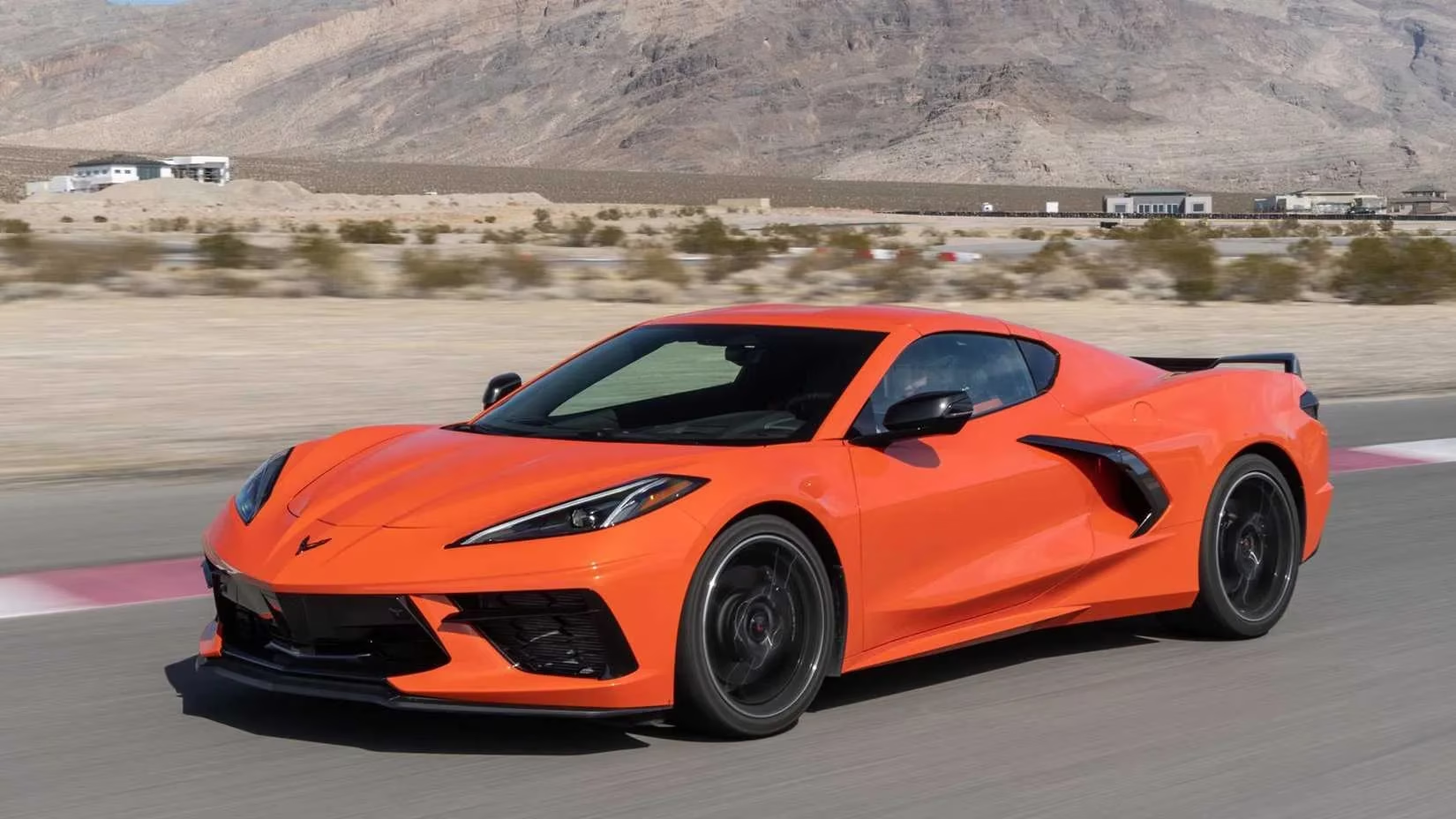
What’s behind this bulletproof residual? A combination of heritage, accessible performance, and a model range that now spans from the naturally aspirated Stingray to the fire-breathing ZR1X.
-
Stingray – $70,000 (490 hp, 6.2L LT2 V8)
-
E-Ray – $108,600 (655 hp hybrid AWD)
-
Z06 – $120,300 (670 hp, 5.5L flat-plane crank V8)
-
ZR1 – $183,400 (1,064 hp twin-turbo V8)
-
ZR1X – $207,395 (track-focused extreme)
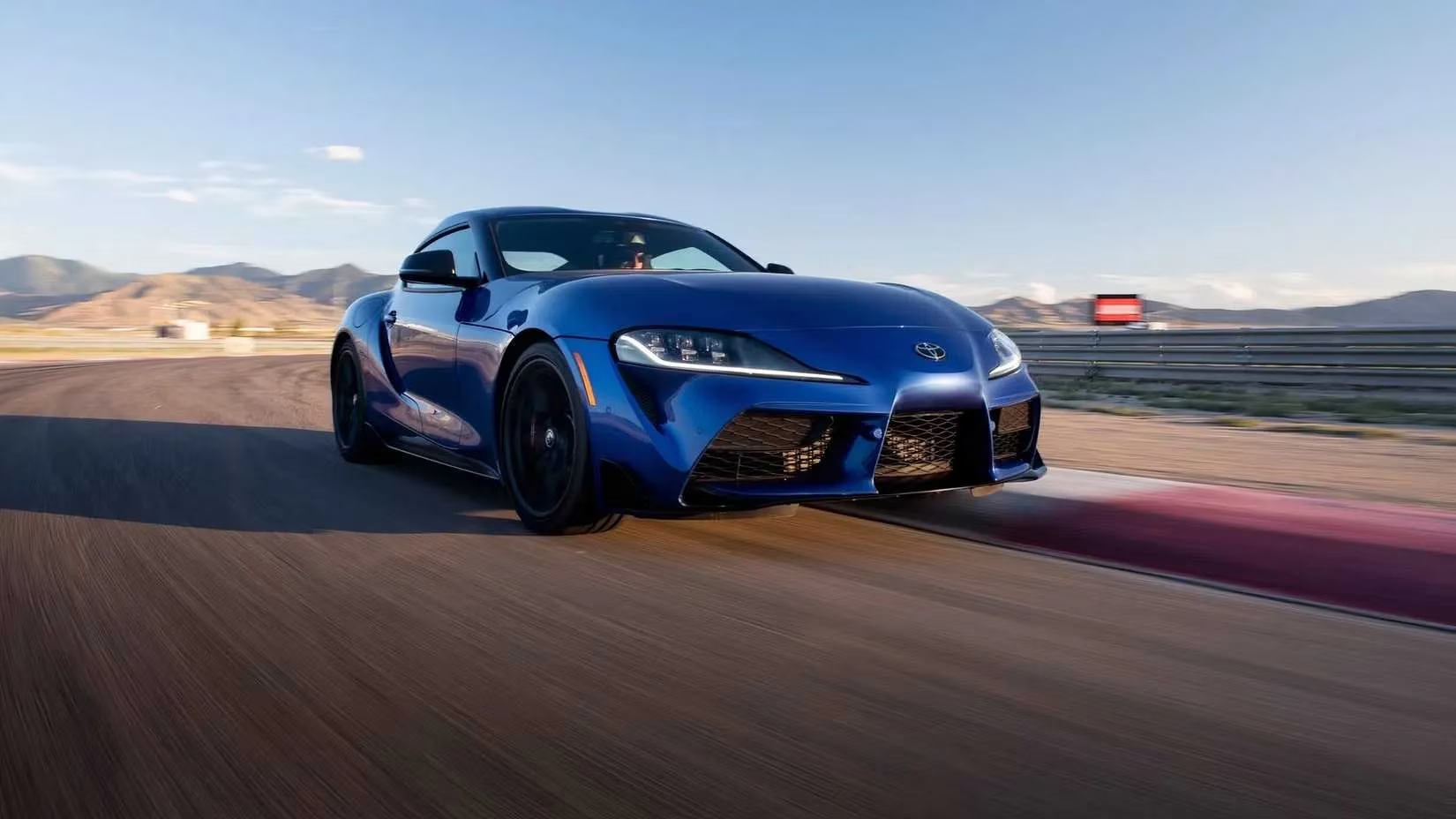
These aren’t cheap toys, but the projected resale means every dollar stretches further. Compared with European rivals that routinely lose half their value in the same period, the Corvette is a financial sanctuary. Even the Porsche 911 (53.8%) and Toyota GR Supra (53.7%), both valued for their engineering and reliability, trail the Corvette by nearly eight percentage points—a gap that translates into thousands of dollars.
Why the Corvette Wins the Resale War
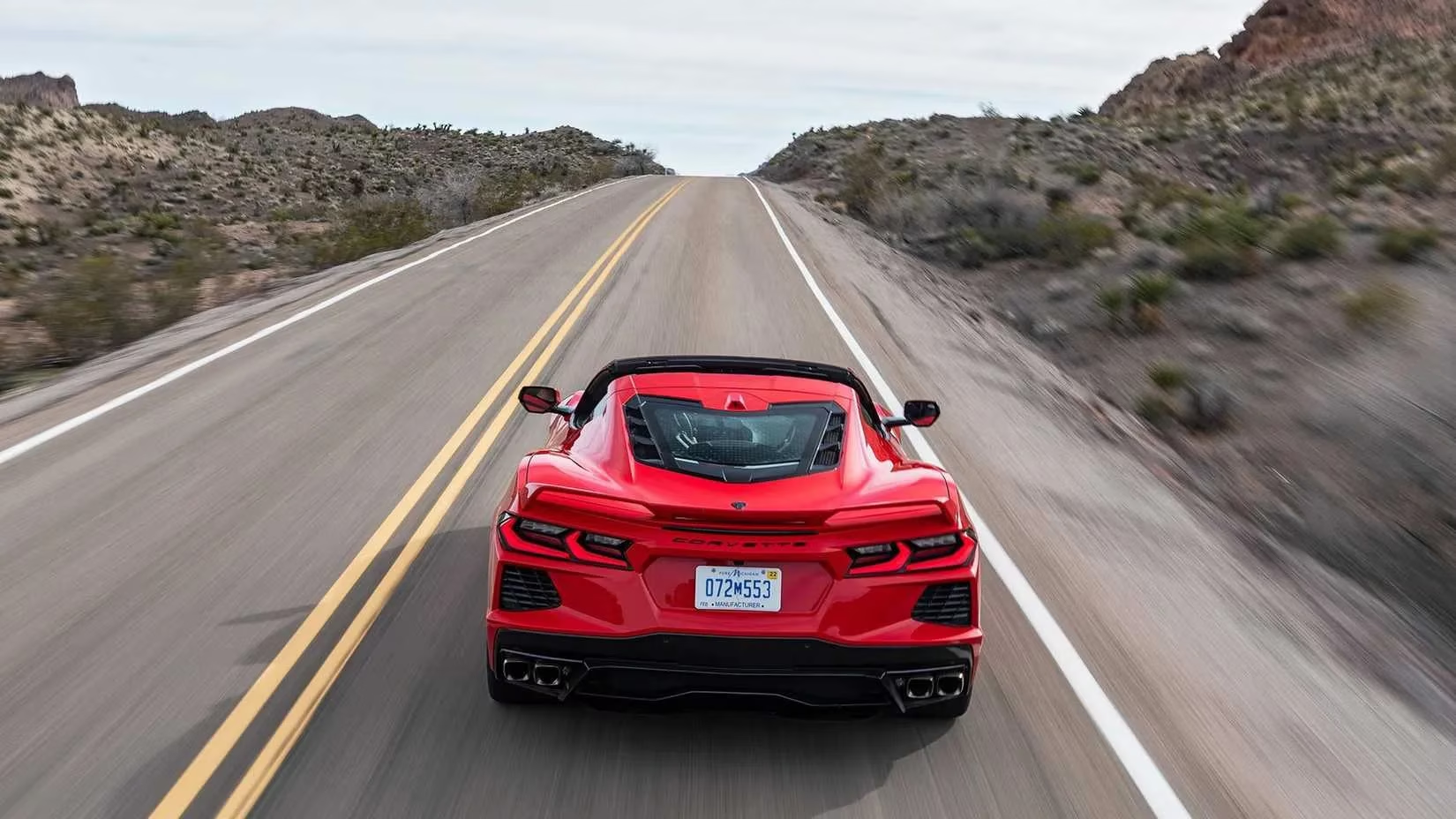
The secret isn’t just speed. The Corvette’s resale muscle is rooted in 70 years of uninterrupted legacy. It’s America’s sports car, and that badge of honor carries weight. Loyalty from die-hard enthusiasts and a constant stream of first-time buyers keeps the used market hungry for clean examples.
Then there’s the value proposition. A base Stingray delivers 490 hp and a 0–60 mph time of 2.9 seconds—performance that embarrasses exotics costing twice as much. European alternatives like the Ferrari Roma or Porsche 911 Carrera might offer similar thrills, but their entry points and running costs are far higher. The Corvette undercuts them while still putting up serious numbers on a track.
Chevrolet has also smartly diversified the lineup, ensuring there’s a flavor for every enthusiast. The hybrid E-Ray introduced all-wheel drive for the first time in Corvette history, while the Z06’s 5.5-liter flat-plane crank V8 screams to 8,600 rpm. At the top, the ZR1 and ZR1X push output into hypercar territory. This breadth maintains showroom buzz and fuels future collectability.
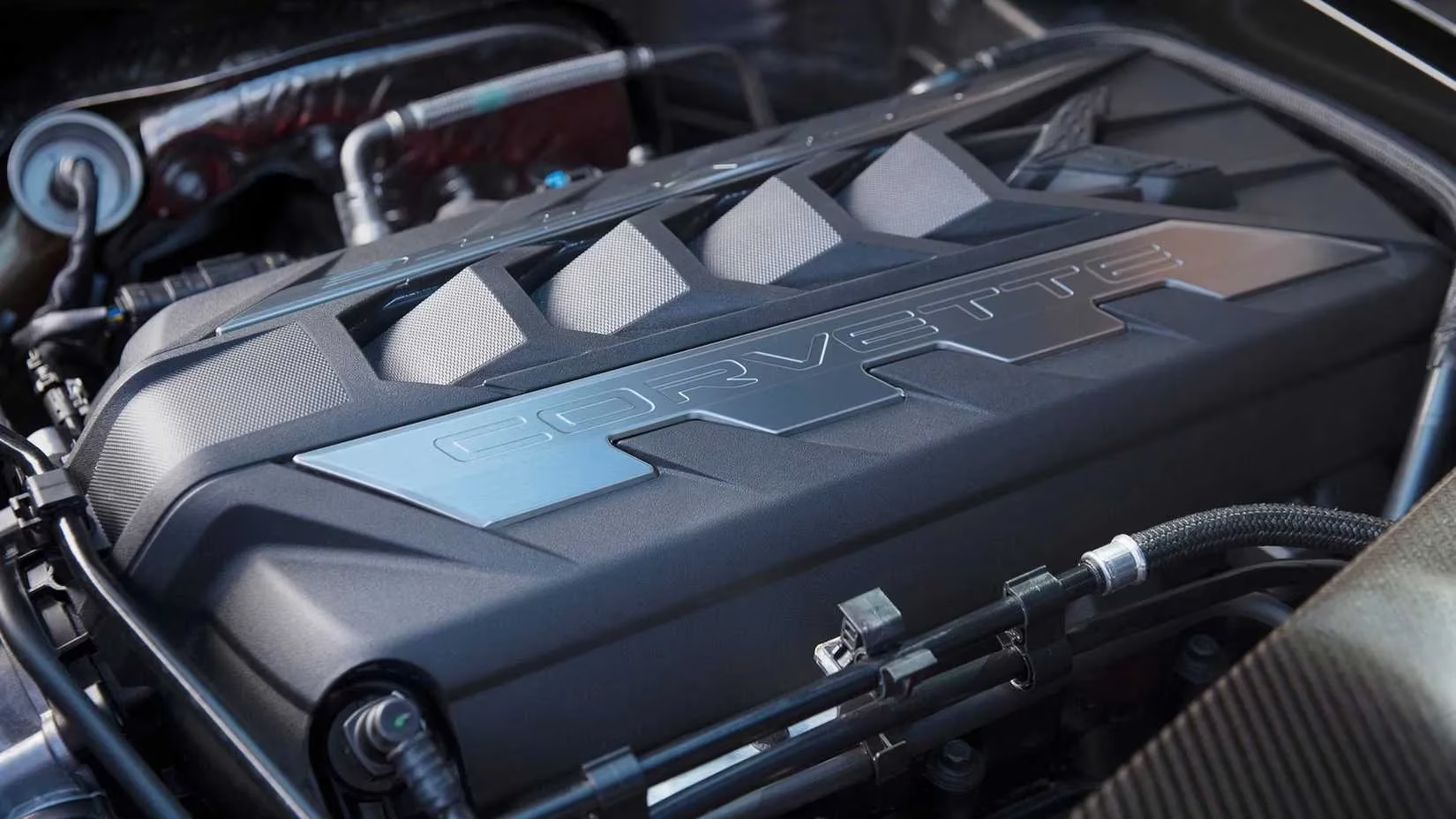
Specs for the base 2020 Stingray reinforce why it’s such a complete package:
| Specification | Detail |
|---|---|
| Engine | 6.2-liter LT2 V8 |
| Power | 490 hp / 465 lb-ft |
| Transmission | 8-speed dual-clutch |
| Curb Weight | 3,647 lbs |
| 0–60 mph | 2.9 seconds (with Z51 package) |
| Top Speed | 194 mph |
The Competition Can’t Keep Up

Kelley Blue Book’s data leaves no room for debate. The Chevrolet Corvette’s 61% five-year residual outpaces the Porsche 911 (53.8%) and Toyota GR Supra (53.7%) by a comfortable margin. When you’re dealing with six-figure MSRPs, an 8% difference can mean $8,000–$10,000 more money in your pocket at trade-in time.
The Porsche 911 enjoys a legendary reputation for precision and everyday usability. The GR Supra, starting at a lower $57,500, leans on Toyota’s durability halo. Both are desirable. Neither, however, commands the same resale grip as the Corvette. Why? Because the Corvette strikes a unique balance: American muscle with exotic-rivaling performance at a price that doesn’t require a trust fund.
To be fair, the Corvette isn’t flawless. Owner forums detail transmission leaks, occasional overheating under heavy load, and interior squeaks that remind you of GM’s build shortcuts. Electrical gremlins and fuel system hiccups pop up, too. But the aftermarket support is vast, and the community is fanatical. Buyers know there’s always a shop, a parts catalog, and a fellow owner ready to help—confidence that props up used prices.
What This Means for Buyers and Collectors
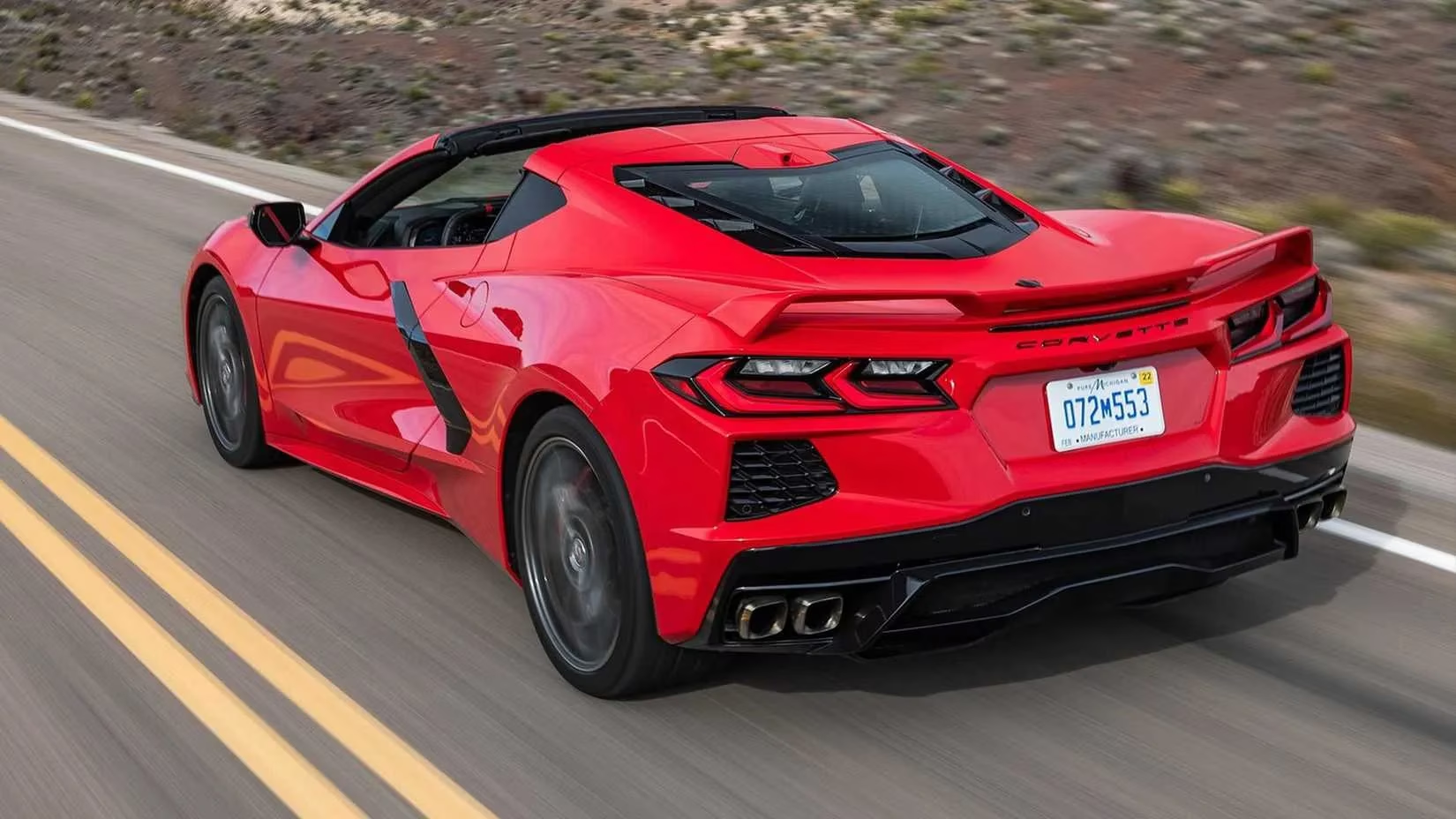
For everyday buyers, the Corvette’s resale value spells lower total ownership costs. A $70,000 Stingray today is projected to fetch around $43,000 after five years. Compare that to the average new car, which would be worth barely $31,000, and the savings are obvious.
Collectors have even more reason to pay attention. Special trims like the Z06, ZR1, and ZR1X carry an aura of exclusivity that should push resale values beyond the 61% baseline. The Z06’s flat-plane crank V8 already has a cult following, while the low-production ZR1X could become a halo collectible of the mid-engine generation. These cars won’t just hold value—they might appreciate.
Of course, risks exist. The automotive world is racing toward electrification, and big-displacement V8s face tightening emissions laws and potential fuel cost spikes. Yet history suggests that nameplates with deep cultural roots often resist such market shifts. Even as EVs gain share, there will always be buyers chasing the thunder of a naturally aspirated V8. The Corvette’s emotional appeal isn’t something you can measure on a spreadsheet—but it shows up clearly in resale data.
At the end of the day, the Chevrolet Corvette isn’t just a symbol of American performance. It’s a financial anomaly: a sports car that treats your wallet as kindly as it treats a winding back road. In a segment where depreciation is often the scariest number on the spec sheet, the Corvette proves that owning a world-class performance car doesn’t have to mean setting your money on fire. For buyers and collectors in 2026, that’s rare ground to stand on—and it makes the mid-engine Vette the safest bet in the garage.
Comments