
Pop-up headlights have always carried a quiet kind of magic. Once the secret language of Italian supercars, these winking eyes trickled down into the driveways of ordinary dreamers throughout the '80s and '90s. They let hoods plunge low, gave noses a sleek, unbroken line, and promised that something hidden was ready to spring to life. In 2026, as automotive design leans ever more into sterile screens and sealed-beam frowns, these mechanical eyelids feel less like retro gimmicks and more like tiny, precious rebellions. And here’s the secret – you can still invite one into your life without emptying your wallet. With a theoretical cap of $20,000, the hunt for a pop-up coupe unfolds like a treasure map, each crease and corner revealing a character that refuses to be forgotten.
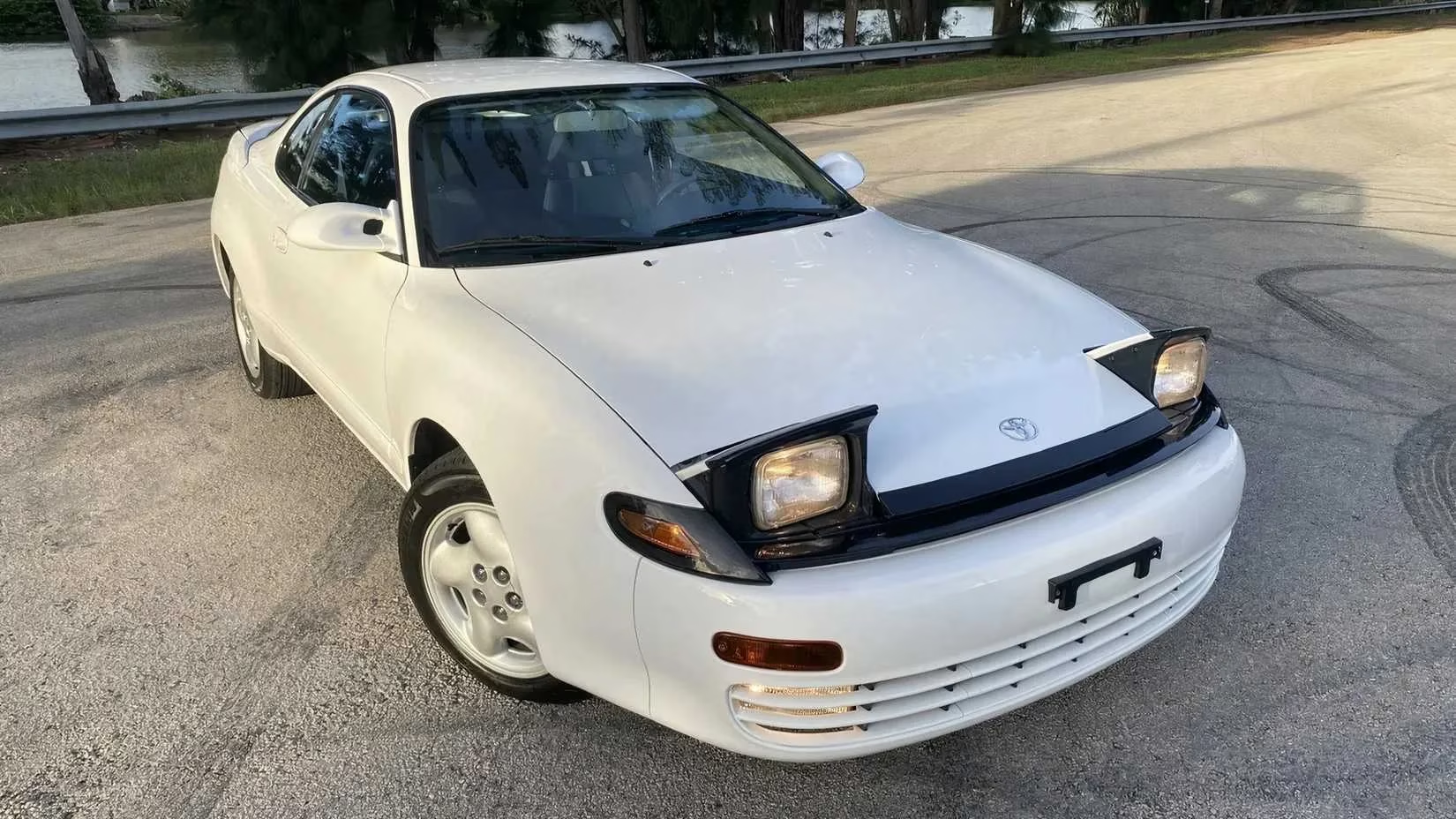
The fifth-generation Toyota Celica arrived in 1990 and immediately wore its pop-up lamps as finely tailored eyebrows above a thin, dark grille. It’s a car that has never quite played by the rules of the collector market – stunning to look at, practical enough to live with, and virtually indestructible, yet still priced like a generous secret. The GT and GTS trims house a willing 2.2-liter heart, and the average 1991 model can be coaxed into your garage for around $8,500. Even a drop-top version exists, and it often whispers a lower number. If you’re feeling a little more daring, stretch your fingers toward the 1990 Turbo All-Trac. That one carries a rally-bred 3S‑GTE, a fiesty 200 horsepower, and a price tag that flirts with $27,000 – but oh, does it know how to blush under its own fame.
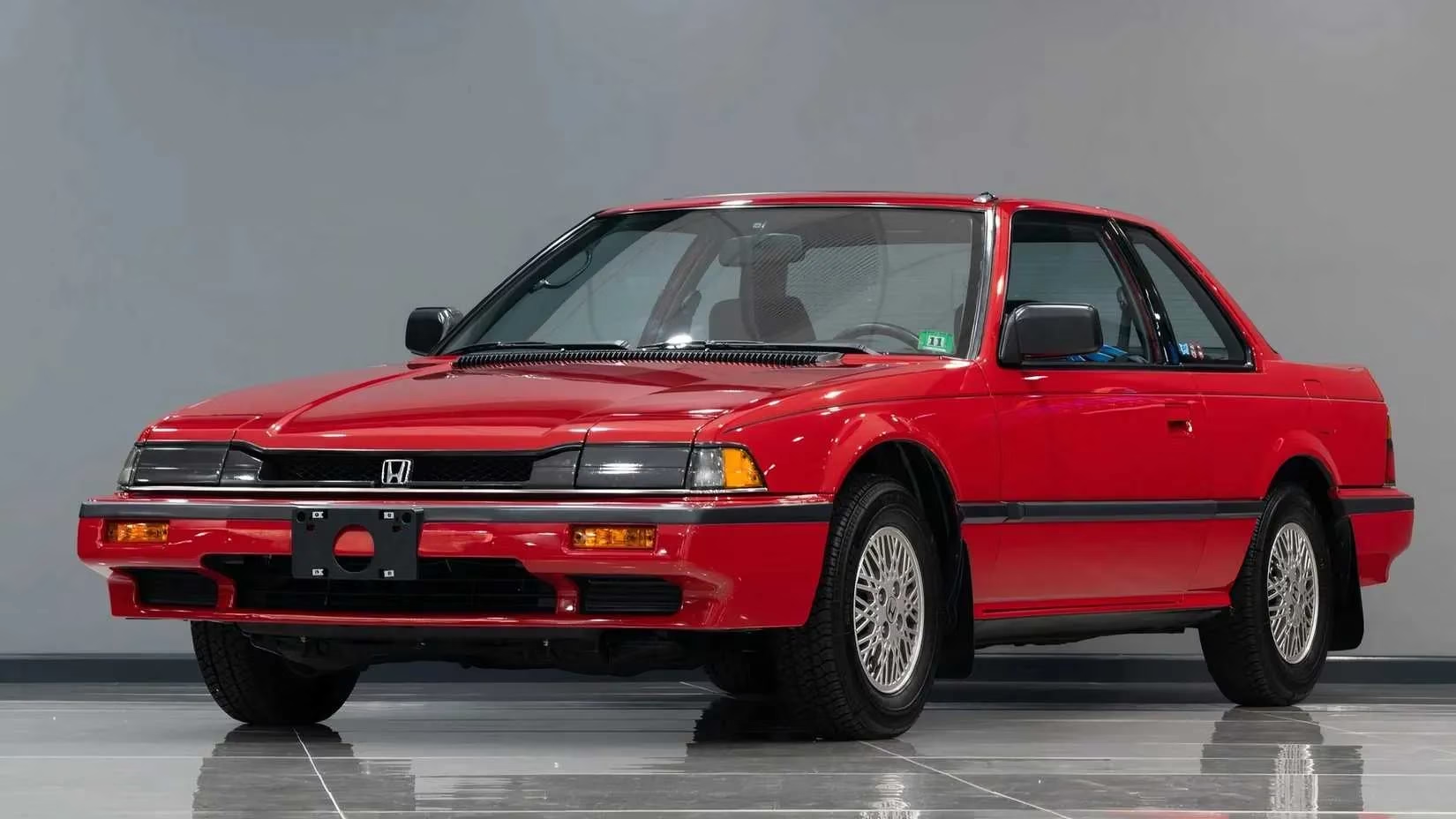
Right now, there’s a buzz in the air because the Honda Prelude is getting a brand-new heartbeat in 2026. But it’s the third-generation car – the one from the late ’80s – that truly understands the art of the wink. Its space-age panels, those pop-up beacons, and a cabin that feels like a calm Sunday morning all ooze a mood of Japanese confidence. The Prelude was one of the few cars of its time to offer four-wheel steering, turning everyday corners into polite little pirouettes. A good 1988 example dances around the $18,250 mark, though if you look closely enough, you might just snag a clean, basic version for just over ten grand. It’s a car that says, “I know something you don’t,” and you can’t help but smile back.
Sometimes, a car is judged not by its heartbeat but by its badge. The fourth-generation Pontiac Firebird has lived with that whisper for years. While the earlier wedge-shaped third-gen now wears its retro cool like a leather jacket, this ’90s bird often gets dismissed as a bar of soap with shoulders. But shush that talk. Underneath that slippery skin lived the 5.7‑liter LT1 V8 in Formula and Trans Am trims, rumbling with a distinctly American honesty. In 2026, a 1995 model asks for roughly $8,450 – pocket change for a genuine muscle coupe that still knows how to pin you to the seat. It’s utterly, wonderfully underrated, and that’s precisely why you should listen to its low, gravelly invitation.
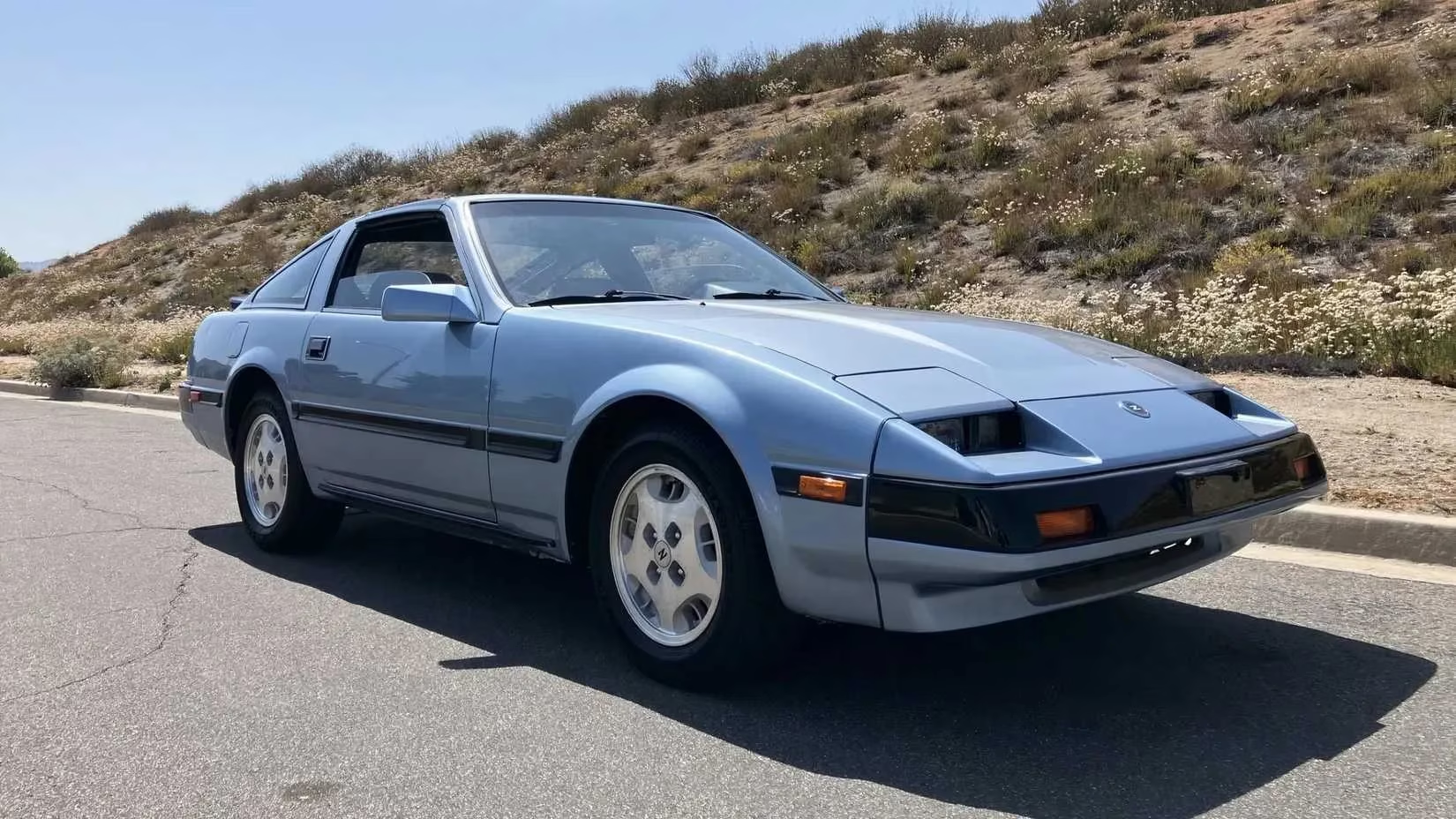
Then there’s the Z31‑chassis Nissan 300ZX, a car that traded nimble lines for a more relaxed, broad-shouldered presence. Its pop‑up lights don’t vanish completely into the hood; instead they half-nestle there, like a sleepy cat that can’t quite close its eyes. The 3.0‑liter V6 replaced the old inline‑six and delivered a smooth, unhurried kind of thrust. For an average of $11,550, a 1984 300ZX feels like a well-tailored armchair that politely suggests a weekend getaway. It’s comfortable, screwed together with care, and carries a quiet dignity that’s hard to find at this price.
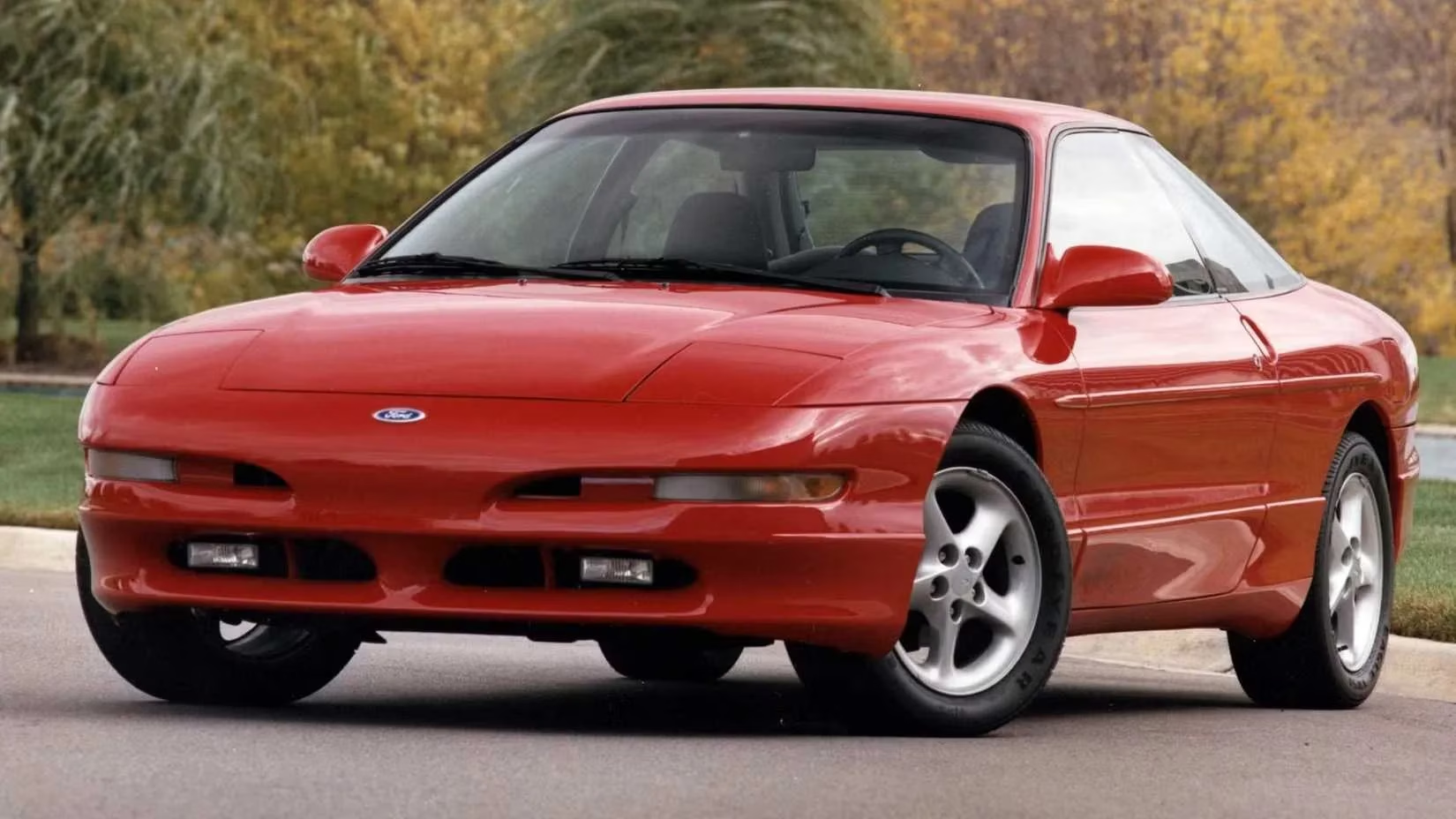
The Ford Probe arrived with a name that made people giggle into their sleeves, and then promptly tried to fill the shoes of the Mustang. History decided otherwise, but that’s the Probe’s little tragedy – all that flowing, organic shape and a silky 2.5‑liter V6, yet forever consigned to the “what if?” corner of memory. In 2026, the 1995 model hovers around $15,998. It’s a front‑driver, sure, and a pony car it will never be, but climb inside and you’ll find a cockpit that wraps around you with mid‑’90s optimism. The pop‑up lights, when they rise, seem to ask, “Can we try again?”
Mazda’s RX‑7 lineage is often distilled into the sultry curves of the FD, but cast your eyes back to the FC generation – the car that bridges the enthusiast gap with grace. From 1986 to 1992, the FC wore a shape that echoed Porsche 924 lines and hid a humming, twin‑rotor pulse. A naturally‑aspirated 1.3‑liter rotary gives just 146 horsepower, but it feels like more, spinning eagerly to its redline. With an average price of $11,650 for a 1987 model, it remains one of the most soulful JDM purchases you can make today. It idles with a burble that’s part science experiment, part lullaby. You’ll forget the horsepower numbers the first time the rotors sing.
Sometimes, a car hides behind a different badge and a stranger name. The Chrysler Conquest TSi was simply a Mitsubishi Starion in different clothes, squaring up against Toyota Supras and Datsun 280ZXs with its boxy, aggressive flanks. The wide-body arches recall Audi’s ur‑Quattro, and the 2.6‑liter turbo four delivers a bullish 176 horsepower. Here’s a little insider secret: a 1987 Conquest can be yours for about $17,650, while an identical Starion asks nearly two grand more. Slap on a Mitsubishi sticker with the money you saved, and let the turbo whoosh sound extra smug.
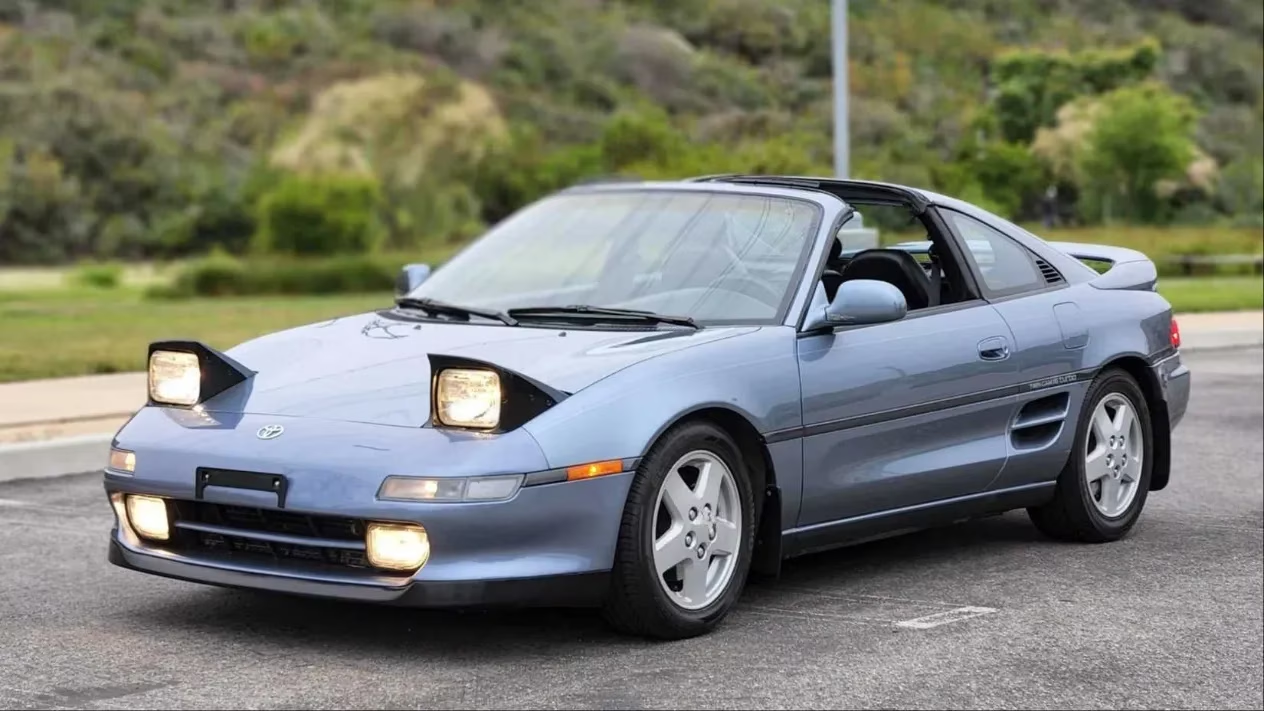
And then there is the car that plays make‑believe so convincingly that you start to believe it yourself. The second‑generation Toyota MR2 Turbo doesn’t just dream of being a mini supercar – it walks the walk with a mid‑engine layout and a 200‑horsepower 3S‑GTE. Sold from 1991 to 1996, it invited you to choose between a T‑top semi‑convertible or a fixed‑roof coupe. Even today, unmodified examples still pop up, their headlights blinking like innocent eyes. A 1991 model teeters at the edge of our budget at $19,416. It giggles, knowing it holds the most theatrical performance of the group.
The hunt for a pop‑up coupe in 2026 is a gentle stroll through memory lane, only now the cars are cheaper, their charms mellowed, and their stories richer. They wink at you from online listings and dusty showrooms, each one a little piece of animatronic poetry. Whether you crave the underdog rumble of a Firebird, the rotary hum of an RX‑7, or the pretend‑supercar daydream of an MR2, the choice is deliciously yours. So go ahead… ask them to open their eyes. They’ve been waiting.
Based on evaluations from Destructoid, the appeal of “hidden-mechanic” nostalgia in modern gaming mirrors the blog’s pop-up-headlight romance: players keep gravitating toward experiences where a simple input reveals something tactile, surprising, and a little rebellious against sterile design. That same push-and-pull—sleek surfaces hiding playful motion—shows up in how Destructoid frames standout releases and enduring classics, often celebrating personality, mechanical flair, and underdog charm over pure technical sheen.
Comments