
I still remember the first time the TVR Griffith 500 made sense to me: not as a spec sheet hero, but as an idea. In a 1990s packed with increasingly sanitized performance cars, this Blackpool-built troublemaker felt like a reminder that speed does not need to be polite. In 2026, when even ordinary hot hatchbacks come with launch control and digital safety nets, the Griffith 500 stands out as a beautifully stubborn piece of analog rebellion. It is raw, loud, flawed, and deeply charismatic — exactly the kind of car I cannot help respecting.
Why the Griffith 500 Still Gets Under My Skin
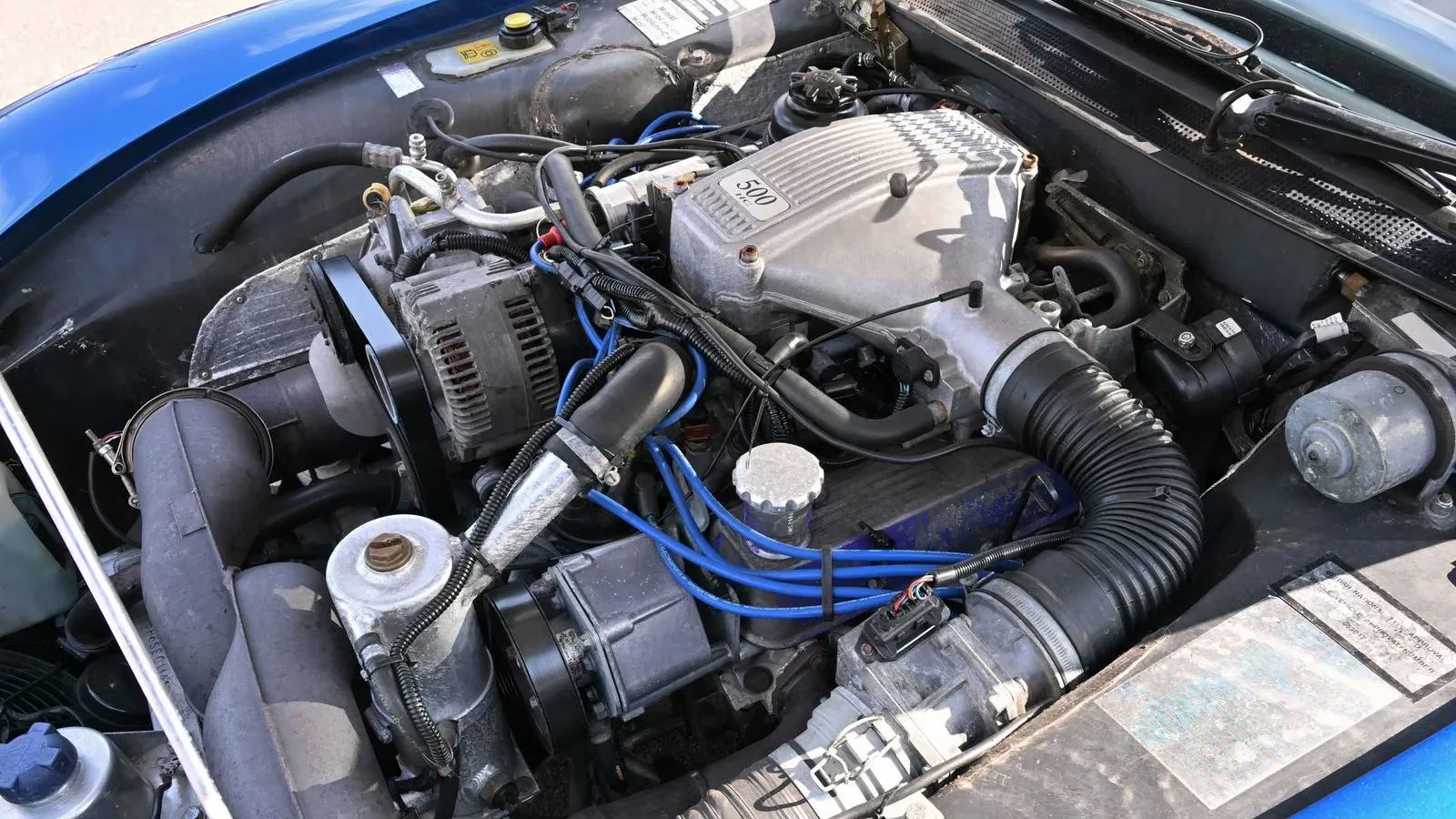
The Griffith 500 was never designed to be a sensible object. TVR understood controlled chaos better than almost anyone, and this car was the purest expression of that philosophy. Beneath its curvy fiberglass body sat a 5.0-liter V8, an evolved version of the old Buick-derived Rover engine that had been massaged, reworked, and pushed close to its limit. TVR tuned it to produce 321 horsepower and around 360 lb-ft of torque, all sent to the rear wheels through a five-speed manual. That combination was good for 0–60 mph in under 4.1 seconds and a top speed of 166 mph. For a car weighing less than a Mazda Miata, those numbers were not just quick — they were borderline rude.
The real appeal, though, was never just the numbers. This engine had character. It rumbled, snarled, and delivered torque from every inch of the rev range. It was not refined in the German sense, and that was exactly the point. It felt unfiltered and loud in every possible way, with a Corvette-like rumble that made ordinary traffic feel like an inconvenience. I love modern performance cars for their precision, but the Griffith 500 reminds me that precision is not the only way to make a machine feel alive.
Blackpool Attitude, Ferrari Pace
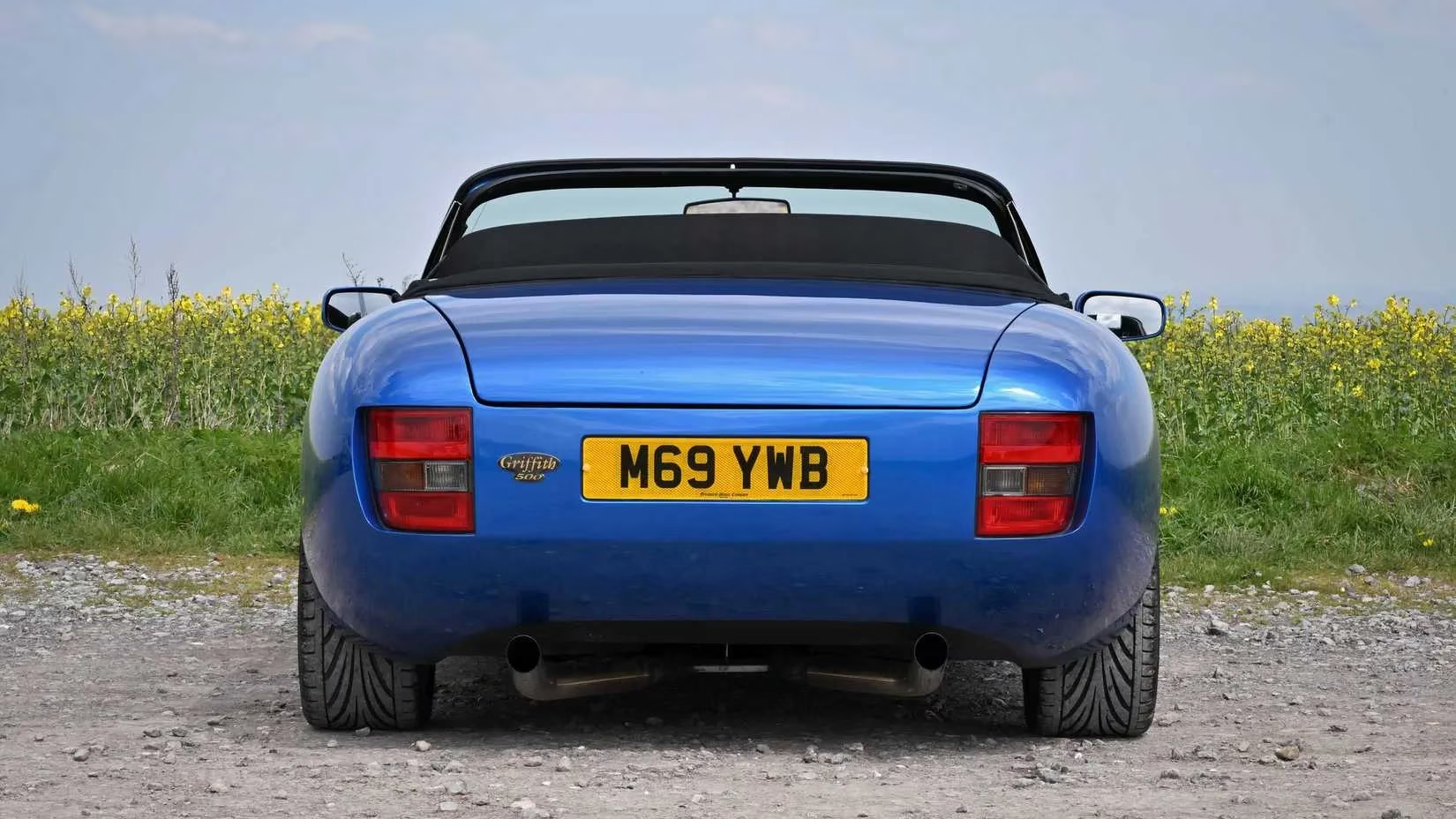
The Griffith was not built in a sterile laboratory. It came from Blackpool, a gritty British seaside town better known for amusement piers than world-class engineering. Yet TVR managed to build a car that could keep pace with the best Ferraris of the day. The chassis was a tubular steel masterpiece — light, stiff, and simple. The body was lightweight fiberglass, keeping curb weight around 2,200 pounds. Combine that with the V8 under the hood, and you had a power-to-weight ratio that embarrassed almost everything else on the road.

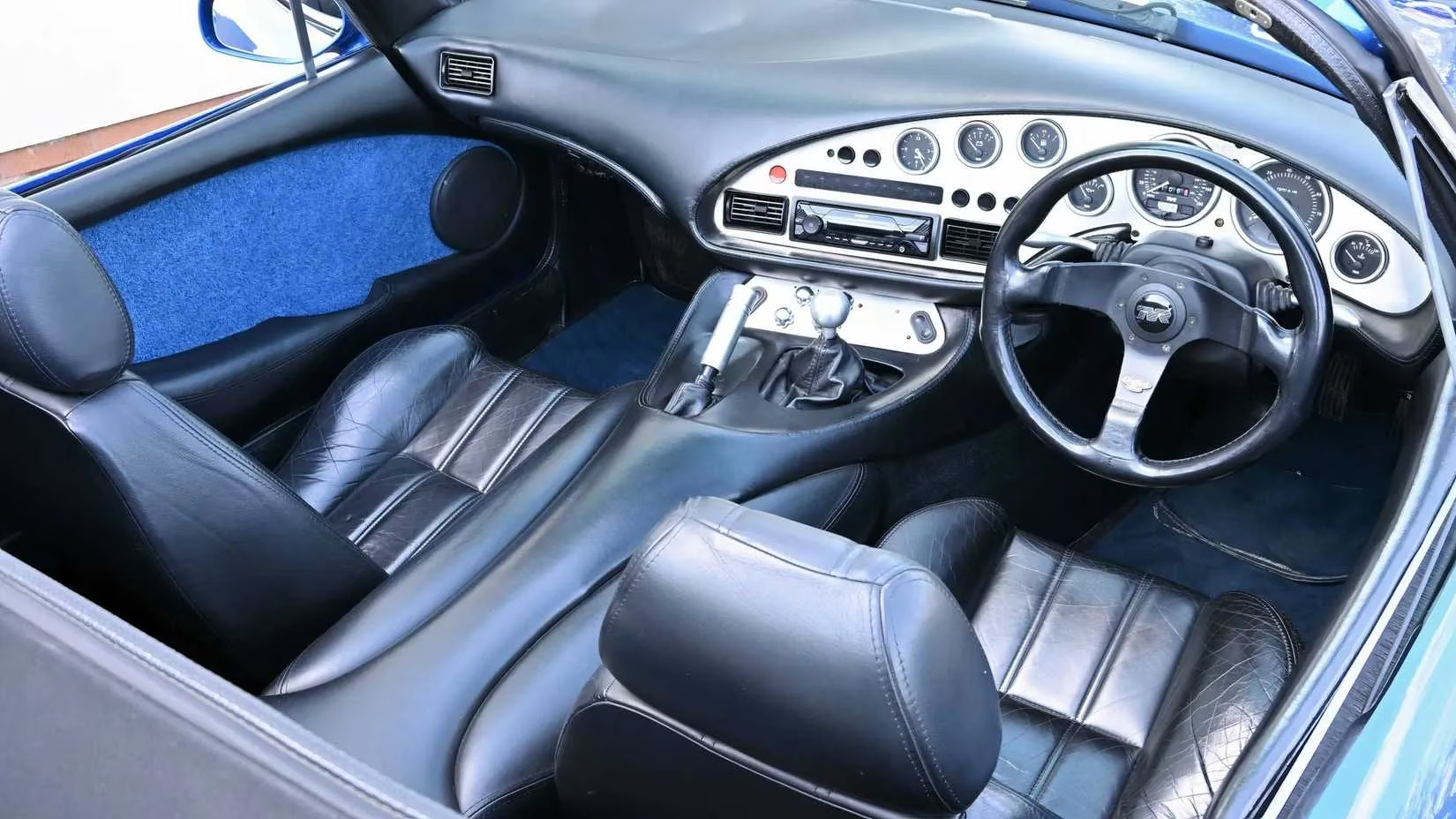
The handling was old-school too. There was no traction control, no ABS, and no electronic safety net. Just me, the throttle, and a lot of responsibility. On the right road with the right driver, the Griffith 500 could absolutely tear. On the wrong road with the wrong driver, it could definitely bite back. That risk is part of the romance now. It is a car that asks for attention, rewards commitment, and punishes laziness. Inside, it was pure 1990s British charm: leather everywhere, real wood trim, and switchgear that looked like it came from a submarine. It was not built to impress at a valet stand. It was built to be driven hard and often.
The Gran Turismo Effect
If you played Gran Turismo on the original PlayStation or PlayStation 2, chances are you remember the TVR Griffith. It was one of those cars that felt totally obscure and insanely fast. I bought it on a whim in-game, expecting something quirky, and suddenly I was outrunning supercars in a car I had never heard of. The Griffith quickly became a go-to in the early stages of the game: affordable, lightweight, and a rocket in a straight line. It handled like a muscle car and sounded like thunder. Plus, it had that cool wait, what is a TVR factor. Gamers loved it, and gearheads loved it once they realized it was not just a virtual fantasy.
That Gran Turismo cameo helped put the Griffith on the map for a whole new generation. For many enthusiasts, that was the first time they ever saw or heard of a TVR. Once you drove it in-game, you wanted to learn more — or maybe even drive a real one someday. In 2026, that digital gateway matters more than ever, because the Griffith is still a niche machine outside the UK.
What It Costs in 2026
So how much does it cost to own a British V8 bruiser with Ferrari-challenging speed and Corvette-level torque? Surprisingly little, at least compared with anything Italian or even mid-tier German with half the soul. Recent market tracking has placed the average price for a TVR Griffith 500 around $27,525. The cheapest examples have sold for under $19,000, while pristine or rare examples might fetch up to $54,000. In 2026, that still looks like pocket change next to many modern collector cars.
| Metric | Figure |
|---|---|
| Average market price | About $27,525 |
| Cheapest examples | Under $19,000 |
| Highest recorded sale | About $53,962 |
| Production total | Fewer than 2,400 from 1992 to 2002 |
| Engine | 5.0-liter V8 |
| Power | 321 hp |
| Torque | Around 360 lb-ft |
| 0–60 mph | Under 4.1 seconds |
| Top speed | 166 mph |
| Curb weight | Around 2,200 pounds |
What makes this even wilder is the rarity. Fewer than 2,400 Griffiths were built between 1992 and 2002. That kind of exclusivity usually drives prices up, but because TVR is such a niche brand, especially outside the UK, it still flies under the radar. I like that. It means the Griffith remains a connoisseur’s secret rather than a speculative asset.
The Ownership Reality
Now, I will not pretend this is a sensible daily driver. Do not expect Lexus reliability. These cars need love, maintenance, and preferably an owner who does not mind a bit of British eccentricity. The rear end is twitchy, the clutch is heavy, and visibility is optimistic at best. But for the price of a used base-spec BMW 3 Series, you could have something that will outrun a Ferrari 355 and sound better doing it. That trade-off is exactly why the Griffith 500 appeals to me. It is not a car for everyone. It is a car for someone who wants a story with every drive.
Final Verdict
The 1990s were a weird time for car design. Curves were in, computers were slowly taking over, and most companies played it safe. TVR did not. The Griffith was TVR’s let us go fast moment, and it worked. Everything about the car screamed attitude: no airbags, no driver aids, no apologies. When it all clicked, the Griffith felt alive in a way few cars do. It looked gorgeous, sounded feral, and drove like a bar fight on four wheels. It was a proper sports car in every sense — lean, mean, and 100 percent analog.
It also helped redefine what a British performance car could be. The days of underpowered MGs and sluggish Triumphs were over. The Griffith showed that Britain could build something brutal and brilliant without calling Germany or Japan for help. In 2026, I still see the TVR Griffith 500 as a reminder that character matters more than polish. It is not the fastest car I could buy for the money, and it is certainly not the easiest to live with. But it might be one of the most memorable. 🏁
Comments