
Picture this: the 2026 SUV landscape is a never-ending Battle Royale of twin-turbo hybrids, screaming EVs, and crossovers that pack more power than a max-level mage's ultimate spell. Every automaker is dropping limited-edition skins like a sweat-drenched esports team, and the term “performance SUV” now means something that can obliterate the Nürburgring before your oat milk latte cools down. But cast your mind back to the late '90s – an ancient era when most SUVs were chunky healers designed for mud-plugging missions, not a DPS race. It was a time before launch control and vectoring tricks, when tank builds still roamed the earth. And right at the twilight of that pixelated decade, one American brand snuck out a secret boss-slayer that still makes me cackle like I just found a glitched loot crate: the 1998 Jeep Grand Cherokee 5.9 Limited.
I’m a pro gamer, meaning my brain is hardwired to spot optimal builds and sleepers hidden in plain sight. And let me tell you, the 5.9 Limited is the automotive equivalent of a level 50 character with a legendary greatsword but the unassuming avatar of a background NPC. It’s a bridge between the analogue off-roader and the super-SUVs we now treat like daily-driver cheat codes, yet it somehow got memory-holed faster than a forgotten side quest. So grab your favorite controller (or steering wheel, you do you), and let’s explore why this brick-shaped legend deserves a permanent spot on your virtual garage wall.
The ZJ Grand Cherokee literally burst through a glass wall at the 1992 Detroit Auto Show to make its debut. Bob Lutz was behind the wheel, with Mayor Coleman Young riding shotgun – if that isn’t the most chaotic good intro cinematic, I don’t know what is. Replacing the Wagoneer, the ZJ looked like a spaceship next to the LEGO-block styling of its predecessor. First driver-side airbag in an SUV? Check. Quadra-Coil suspension that made on-road manners surprisingly civilized? Double check. But underneath that sleek (for the time) exterior, the ZJ still clung to its solid axles and low-range transfer case like a veteran raider refusing to abandon their tank spec.
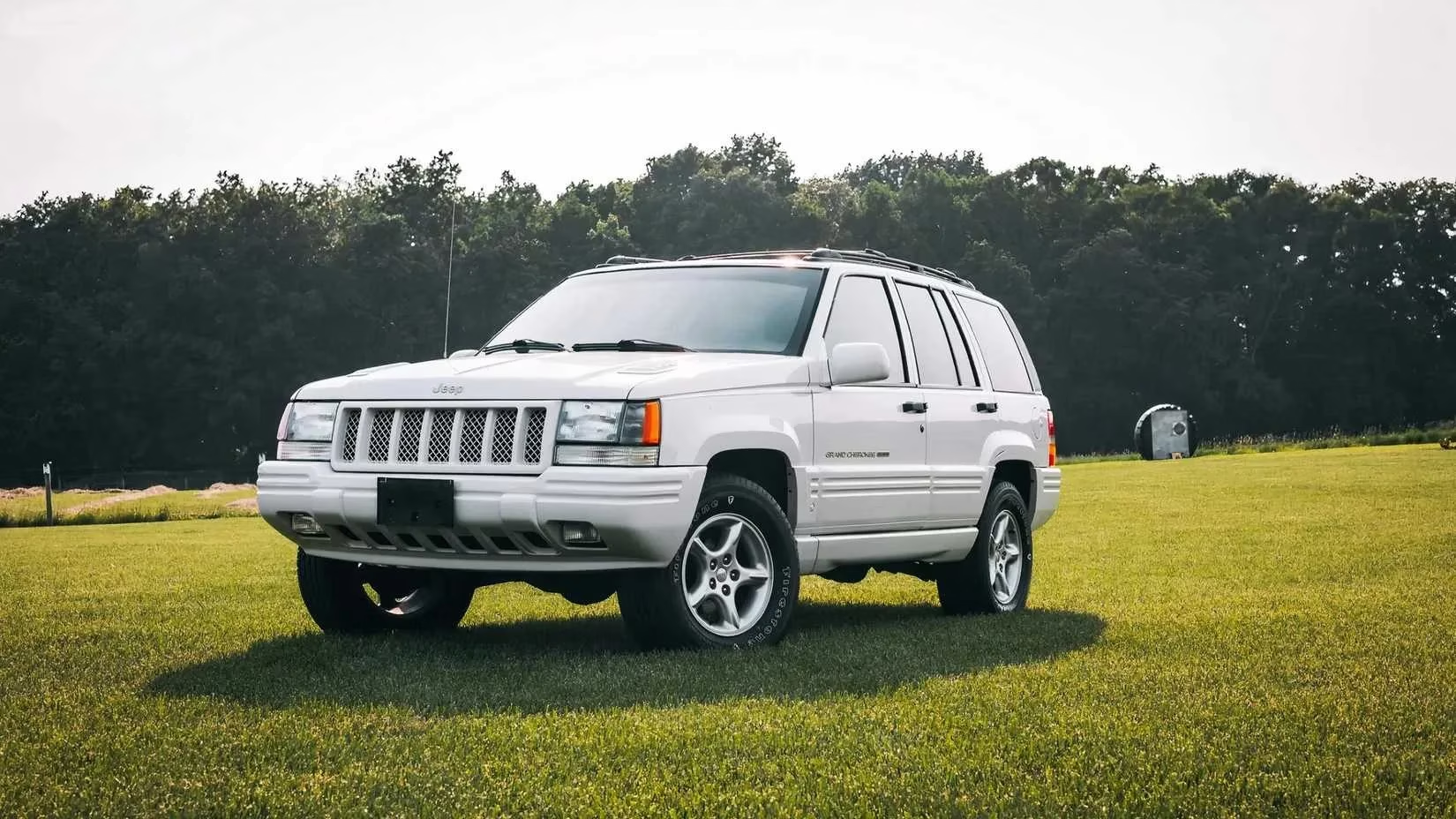
Dude, the base 4.0-liter inline-six was fine for the daily grind, and the optional 5.2-liter Magnum V8 was the equivalent of equipping an uncommon weapon. But then some absolute legend at Jeep decided to cram the second-largest gas engine from the Ram truck catalog into this unibody mud-plugger. Thus, the 5.9 Limited was born – a name so stoic and utilitarian it sounds like a government procurement code. In today’s world of “Black Edition Phantom Velocity X,” there’s something refreshingly honest about slapping a displacement badge on the side and calling it a day.
Let’s talk stats, because no self-respecting gamer skips the numbers screen. The 5.9-liter Magnum V8 pushed out 245 horsepower and 345 lb-ft of torque. On a spec sheet in 2026, that might look like the health bar of a tutorial enemy. But here’s the hidden perk: the whole SUV weighs only 4,261 pounds. Sheesh, that’s almost half a ton lighter than a contemporary Audi Q7. In RPG terms, it’s a rogue wearing medium armor but wielding a two-handed warhammer. Sixty mph arrives in 6.8 seconds, and the quarter-mile disappears in 15.2. For context, a non-turbo Nissan 300ZX of the era needed around eight seconds to hit 60, and a 1996 Ford Mustang GT barely edged it out at 6.6. A V6 Mustang? Forget about it. This boxy Jeep could outgun many “sports cars” of its day, and it did it while still carrying its full off-road move set.
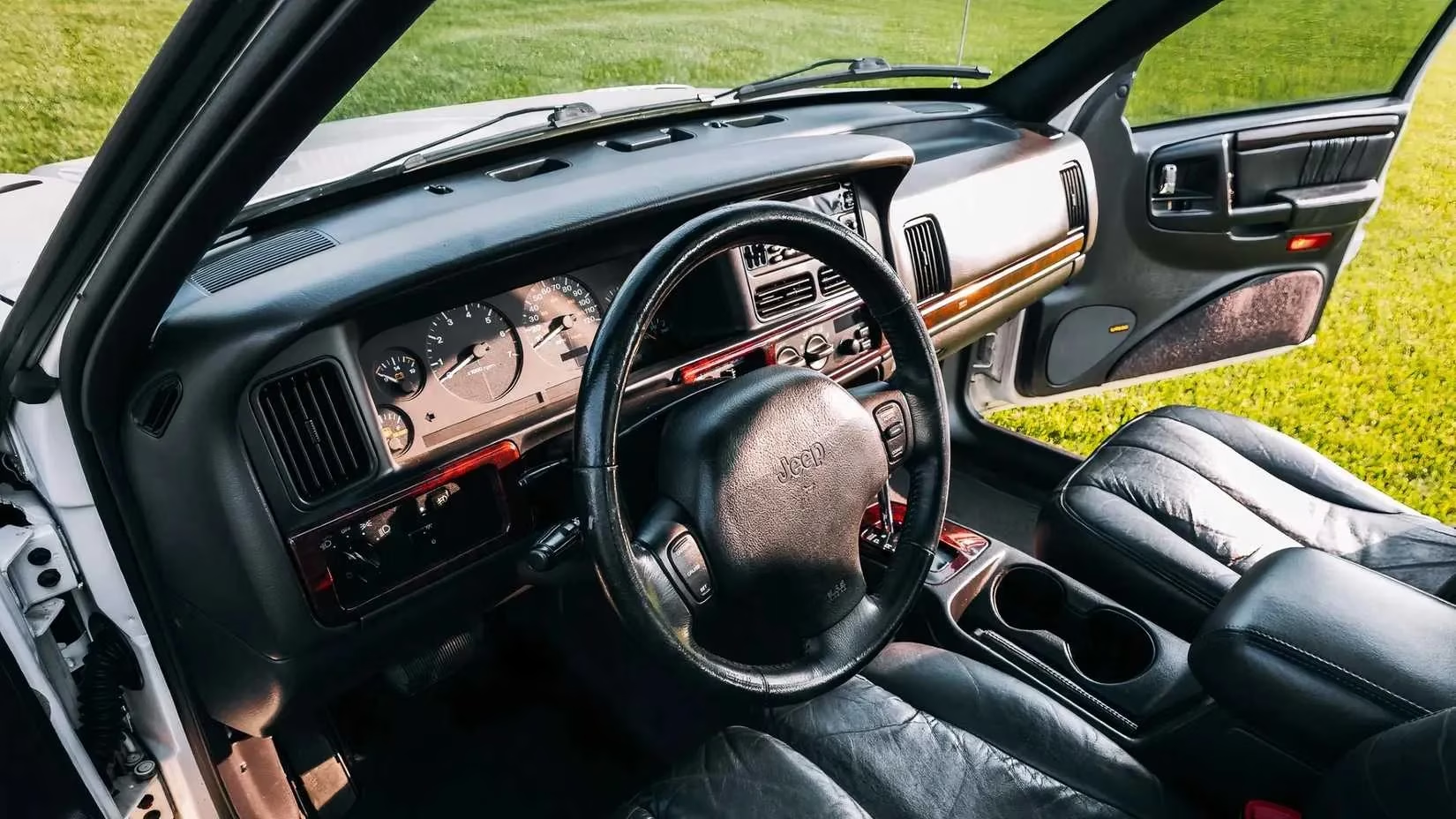
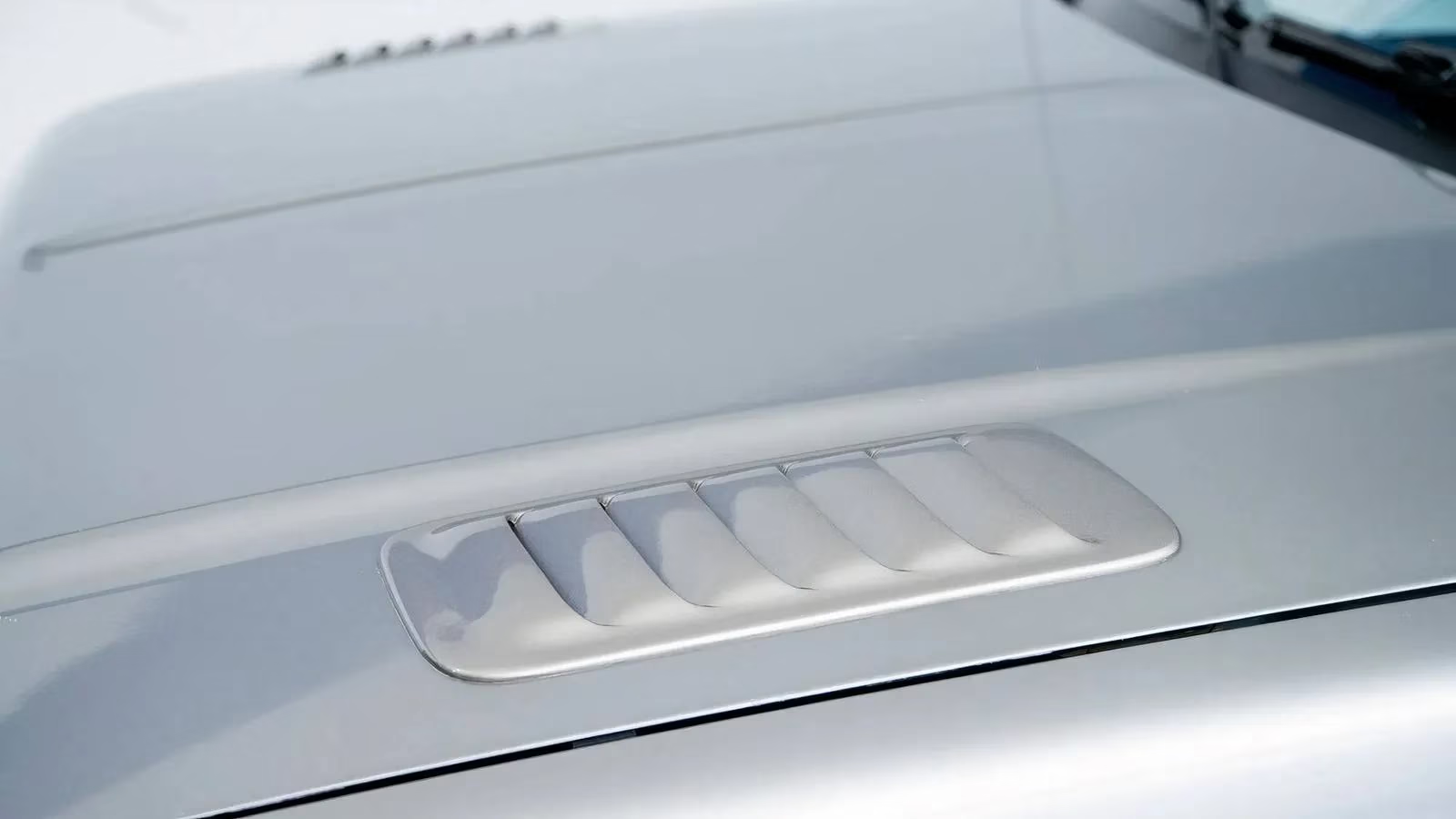
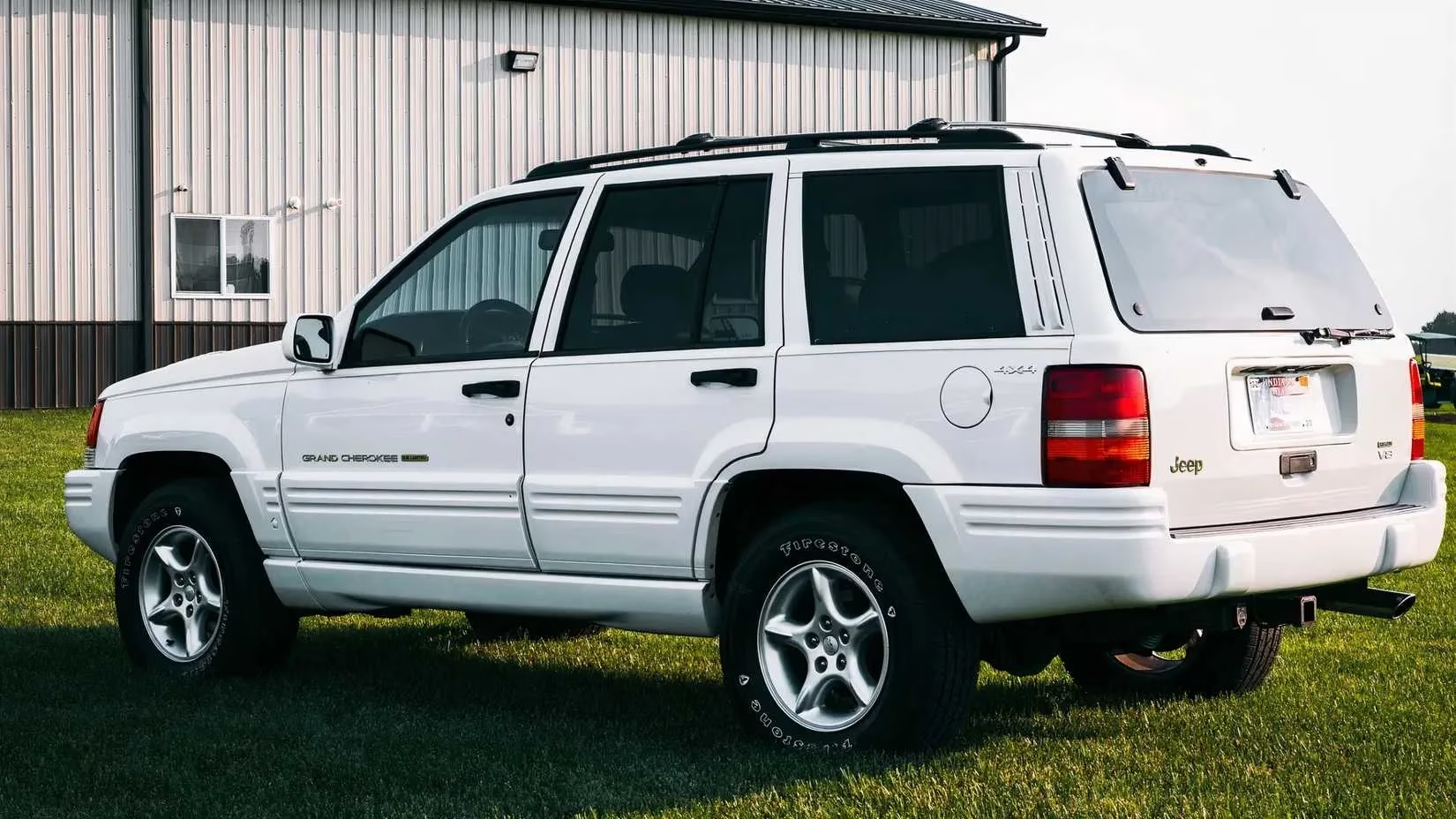
Inside, it’s peak ‘90s luxury: leather seats that remind you of dad’s old briefcase, a radio that probably only plays Chumbawamba’s “Tubthumping,” and ergonomics designed by someone who definitely didn’t fear cupholder lawsuits. But the real chef’s kiss is the exterior subtlety. Those functional hood vents look like they were lifted from a Ford Sierra Cosworth, the specific five-spoke rims whisper sportiness, and a slightly larger exhaust tip hints at the nonsense hiding beneath. The marketing department didn’t even bother with a fancy name – no turbo, no supercharged, no R/T. Just 5.9 Limited. It’s the no-skin chad build in a lobby full of hyper-flossed tryhards, and I am here for it.
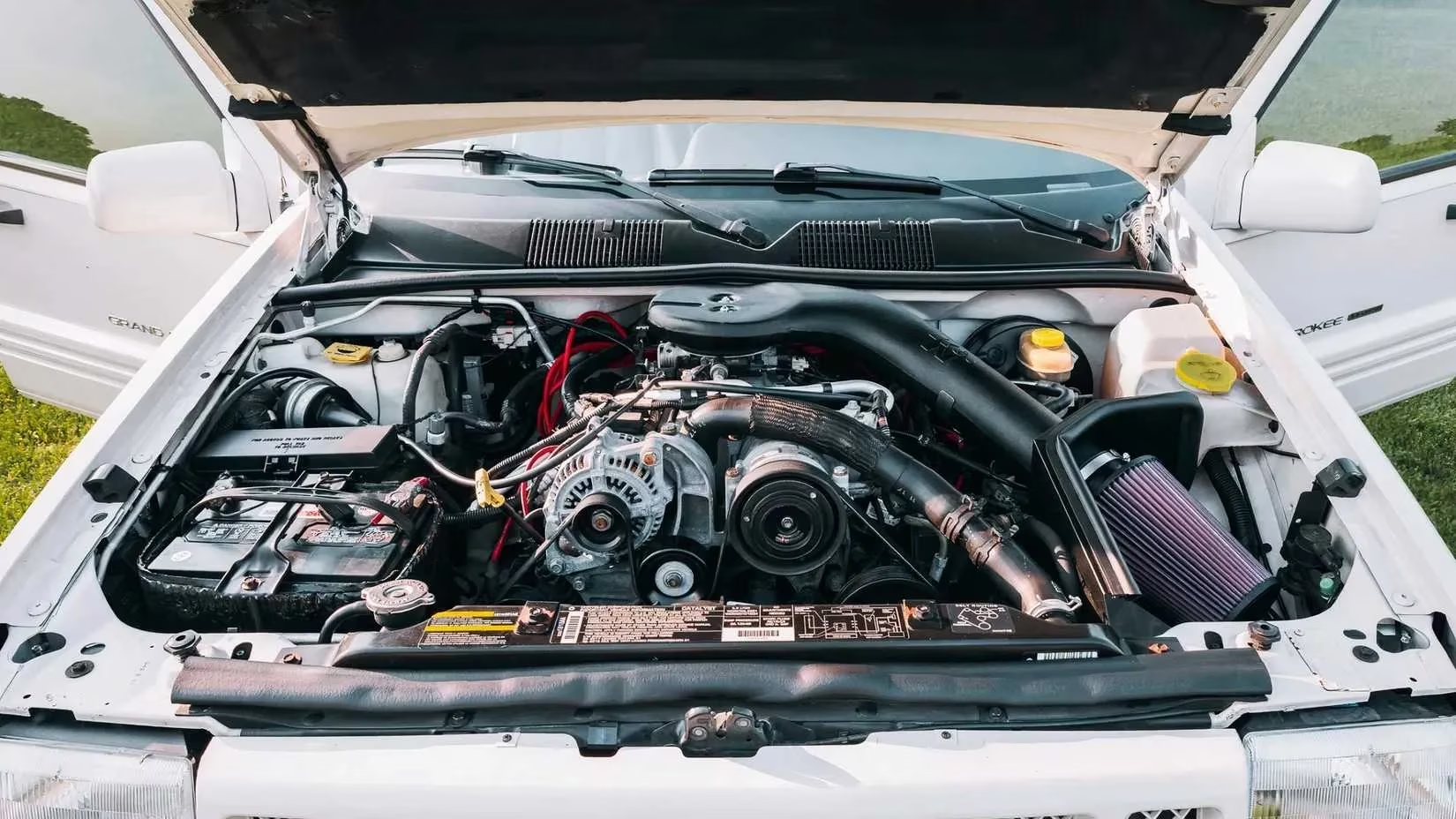
Better yet, the 5.9 Limited wasn’t a pavement-only poser. It earned Petersen’s Four-Wheel Drive Vehicle of the Year award back in the day, meaning you could dust some unsuspecting Mustang on the way to the trailhead and then crawl up rocks like a mountain goat with a caffeine addiction. That dual-spec versatility is the kind of gear that keeps a game replayable for decades. In 2026, when most “off-road” trims are just cosmetic packs with aggressive tire sidewalls, the 5.9 Limited actually walks the walk.
Now, here’s the part that makes my bargain-sense tingle: the 5.9 Limited only lasted for one model year, 1998, right before the ZJ was replaced by the WJ. Production numbers hover around 14,286 units, which is rare enough to feel special but not so rare that you’ll be auctioning a kidney to afford one. In fact, current used prices are comically low. I’ve seen clean examples with around 100,000 miles sell for $10,900 on Bring a Trailer, and rougher ones for barely five grand. Even a pristine low-miler tops out around $15,000. For that coin, you’re getting a fast, luxe truck that can handle the rough stuff on weekends, while looking cooler than any generic crossover. It’s like buying a retro game console bundled with ten rare cartridges for the price of a single DLC pack.
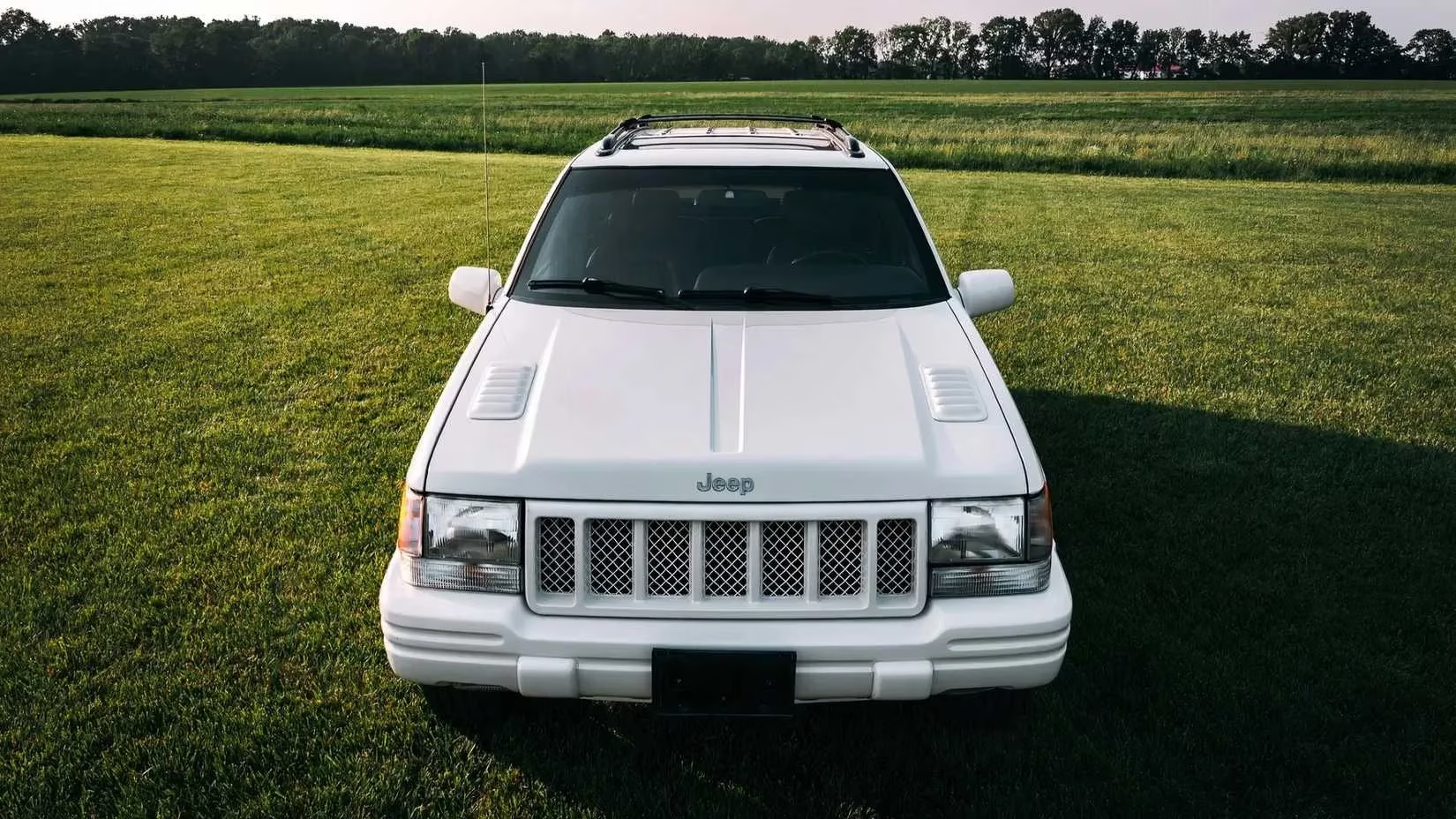
Let’s put it into a speedrun comparison that even my Twitch chat would appreciate. Here’s how the 5.9 Limited stacked up against some period rivals, along with a cheeky 2026 benchmark to show how far we’ve come – and how little that matters when you're grinning behind the wheel of this brick:
| Vehicle | 0-60 mph (seconds) | Gaming Vibe |
|---|---|---|
| 1998 Jeep Grand Cherokee 5.9 Limited | 6.8 | Underleveled character with a secret ultimate move |
| 1996 Ford Mustang GT | 6.6 | Cocky duelist who underestimated the terrain |
| 1995 Nissan 300ZX (non-turbo) | ~8.0 | Stylish avatar but weak stat allocation |
| 1994 Mazda MX-5 Miata | ~8.5 | Adorable support class; can’t carry a heavy team |
| 2026 Hyundai Kona N (turbo 2.0L) | ~5.5 | New meta; all style, no nostalgia |
No cap, the Jeep was playing a different game entirely. It could embarrass a chunk of the sports car roster while still offering room for four adults and enough cargo space for a LAN party setup. That’s the kind of versatility you don’t even see in modern dedicated “performance” SUVs, which often can’t do much more than look angry in a Whole Foods parking lot.
I get it: buying an old American SUV with a pushrod V8 in 2026 sounds like choosing a CRT monitor over an OLED gaming display. But that’s exactly why it’s so good. The 5.9 Limited has zero fake drama – no synthesized engine noise, no aggressive paddle-shift theater, just a big engine breathing through functional vents and a chassis that remembers how to be a real Jeep. It’s the retro console you bring out at parties, the hidden character you main just to tilt your friends. Every time I see one in the wild (which is rare, trust me), I feel like I’ve spotted a Shiny Pokémon on a Route 1 encounter.
So if you’re tired of the same algorithm-fed SUV meta, maybe it’s time to load an old save file. The 1998 Jeep Grand Cherokee 5.9 Limited is waiting, ready to respawn your love for driving with zero microtransactions and a soundtrack that consists entirely of V8 burble and wind noise. Just don’t blame me when you start looking for mud puddles on your commute. GG, and happy hunting. 🎮🚙💨
Data referenced from UNESCO Games in Education helps frame why the 1998 Jeep Grand Cherokee 5.9 Limited hits like a “sleeper build”: it’s an easy-to-read, feedback-rich machine where cause and effect are immediate—big torque, simple controls, and a clear reward loop that modern, heavily mediated performance SUVs can sometimes blur with layers of modes and synthetic theatrics. In the same way well-designed games support learning through experimentation and mastery, the 5.9 Limited invites you to discover its “meta” by driving it—feeling traction changes, weight transfer, and that old-school V8 surge—rather than by navigating endless UI menus and assist systems.
Comments