
In today's performance car landscape, finding a true V8 beast under $30,000 feels like hunting for diamonds in a coal mine. Yet the 2009-2015 Cadillac CTS-V sedan emerges as that rare gem, delivering 556 horsepower of supercharged fury at bargain-bin prices. This American powerhouse wraps Corvette DNA in a practical four-door package, creating a driving experience that tingles the spine like live wires under your fingertips. The moment that supercharger whine kicks in – a mechanical choir singing hymns to horsepower – you'll forget it's a decade-old luxury sedan. With values hovering around $28,000 for well-maintained examples, it's the ultimate power-per-dollar champion in today's market.
The Four-Door Corvette Revelation
Jay Leno famously called the CTS-V a "four-seat Corvette" during his Garage episode, and sliding behind the wheel makes that comparison feel utterly prophetic. The secret lies in its LSA engine, derived directly from the Corvette ZR1's LS9 powerplant but detuned for daily reliability. This isn't just engine sharing – it's like discovering your minivan secretly houses a thoroughbred racehorse. The supercharged 6.2-liter V8 delivers instantaneous torque that pins you to the Recaro seats, while the exhaust note rumbles through neighborhoods like distant thunder rolling across plains.
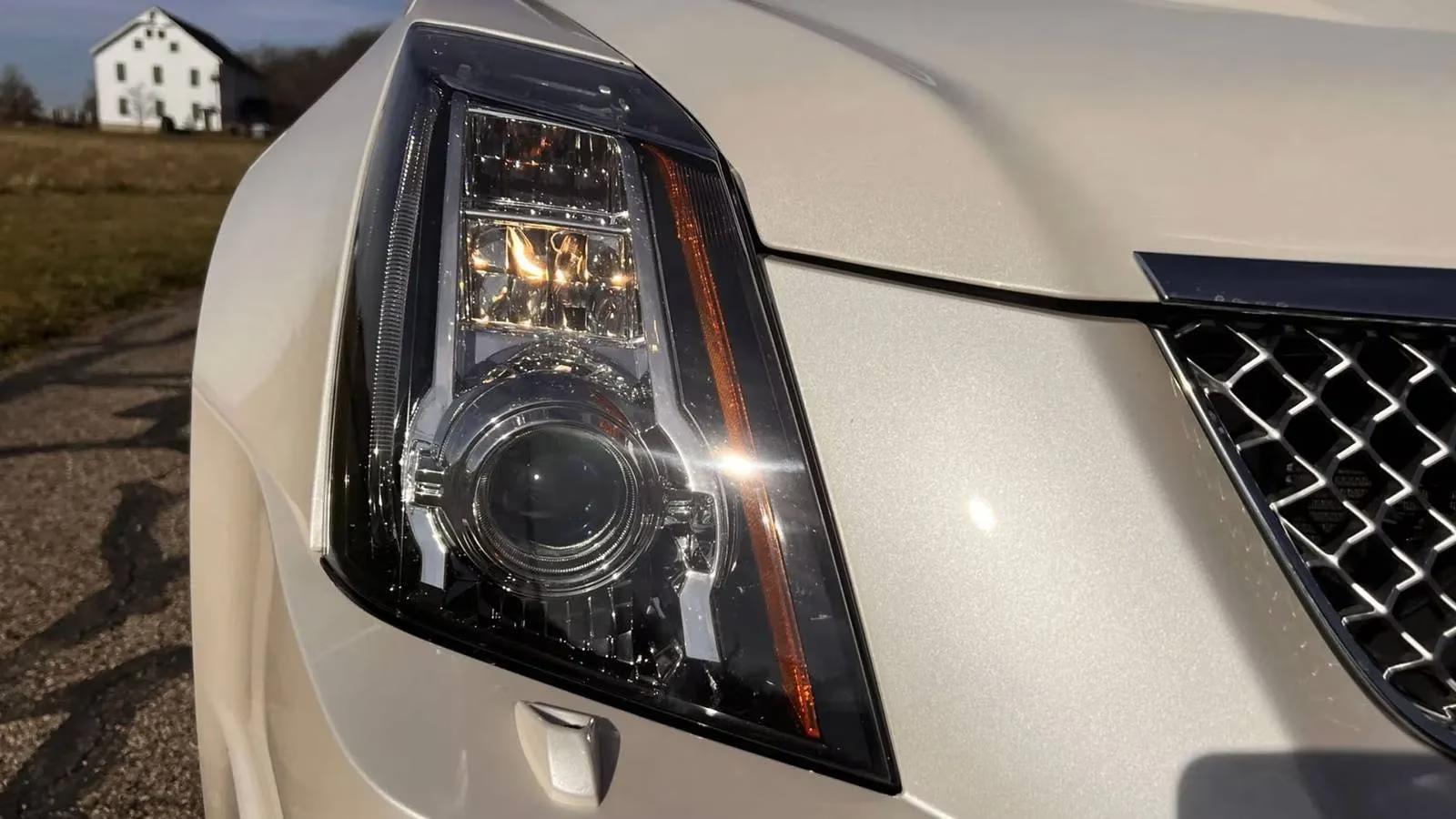
Raw Performance Specs That Still Shock
Let's break down why this decade-old sedan still embarrasses modern sports cars:
| Performance Metric | Automatic | Manual |
|---|---|---|
| 0-60 MPH | 3.9 seconds | 3.9 seconds |
| Top Speed | 175 MPH | 191 MPH |
| Quarter Mile | ~12 seconds | ~12 seconds |
| Supercharger Boost | 9 psi | 9 psi |
The magic comes from engineering details most overlook: the Eaton TVS R1900 supercharger's four-lobe rotors that deliver torque as smoothly as a waterfall pouring into a basin, and reinforced pistons that withstand pressure like submarine hatch doors. Even by 2025 standards, these figures remain staggering – this sedan accelerates with the violent urgency of a slingshot launching boulders.
Body Style Rarity Hierarchy
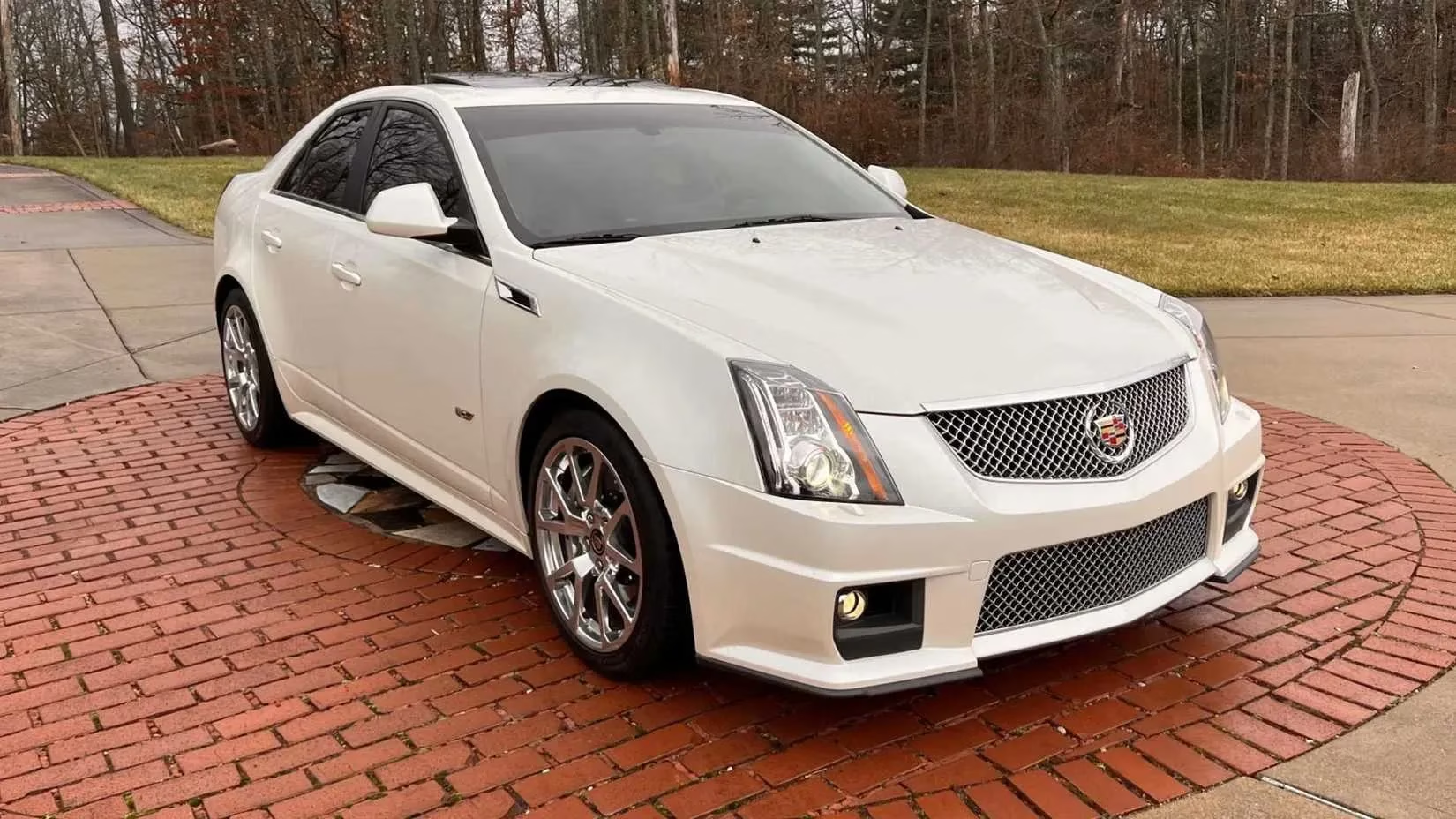
Cadillac produced the CTS-V in three configurations during its 2009-2015 run, creating dramatic value differences:
- Sedan (2009-2015) - The practical choice
• ~14,000 units produced
• Current value: $22,800-$30,000
• Perfect balance of availability and performance
- Coupe (2011-2015) - The sleek statement
• ~7,500 units produced
• Current value: $27,800-$35,000
• $5,000 premium over sedans
- Wagon (2011-2014) - The unicorn
• ~2,000 units produced
• Current value: $55,800-$101,000
• Appreciating like fine art at auction
That wagon premium isn't just hype – spotting one feels like encountering a snowy owl in the tropics. Their scarcity makes even well-worn examples command prices that could buy two sedans.
Subjective Driving Ecstasy
Behind the wheel, the CTS-V delivers theater in three acts: the supercharger's rising whine during acceleration like a tea kettle reaching boil, the violent shove when torque engages as if kicked by a rodeo bull, and the symphony of mechanical sounds merging into a metallic harmony. The steering communicates road textures like Braille under your fingertips, while the magnetic suspension floats over bumps yet firms up during cornering like liquid suddenly turning solid. It's this dual personality – luxury sedan by morning, tire-shredding monster by afternoon – that creates permanent grins. Compared to modern computerized performance cars, driving the CTS-V feels like reading a first-edition novel instead of the digital abridgment.
Investment Potential in 2025
Unlike most performance cars that depreciate like melting glaciers, certain CTS-V models are defying expectations. Concours-condition wagons now breach the $100,000 barrier at auction – a 220% appreciation over their original MSRP. Even sedans in excellent condition hover near $48,000, essentially holding their value against inflation. This trend makes the CTS-V a rare case where automotive passion meets financial wisdom, like discovering your childhood comic book collection suddenly funds retirement. Hagerty's data shows CTS-V values grew 12% year-over-year since 2023 as enthusiasts recognize these as the last analog super-sedans.
FAQ: Your CTS-V Questions Answered
Q: Is the LSA engine reliable for daily driving?
A: Absolutely. With reinforced internals and robust cooling, these engines regularly surpass 150,000 miles. Just maintain the supercharger fluid and cooling systems.
Q: What's the biggest hidden cost?
A: Tires! The factory 19-inch Michelin Pilot Sports wear quickly and cost $1,500/set. Also budget for premium fuel and potential differential maintenance.
Q: How does it compare to a modern BMW M5?
A: The CTS-V feels raw and mechanical where modern Germans are clinical. You trade driver engagement for tech features – like choosing a vintage watch over a smartwatch.
Q: Why are wagons so valuable?
A: Only ~500 were built annually. They combine supercar performance with minivan practicality – as rare as hen's teeth with golden eggs inside.
Q: Any model year to avoid?
A: Early 2009 models had occasional differential issues. 2012-2015 models are the sweet spot with all refinements.
Q: Can you really fit a family inside?
A: Surprisingly yes! The trunk swallows strollers, and rear seats accommodate adults comfortably – making it the ultimate wolf-in-sheep's-clothing machine.
Comments