
Long before the world obsessed over hybrid hyper-SUVs and electric torque wars, the recipe for a truly quick utility vehicle was disarmingly simple: take a family hauler, bolt in an engine that belonged in a muscle car, and let physics sort out the rest. It was a recipe that Porsche perfected with the Cayenne Turbo S at the turn of the millennium, a machine that turned the Nürburgring into an oversized school run. Yet Porsche’s reign as the king of speed-tall-ride-height was far shorter than anyone expected. The fastest SUV of the 2000s wasn’t born in Stuttgart. It rumbled out of Detroit with all the subtlety of a stun grenade in a library, and it wore a badge that once symbolized muddy trails rather than quarter-mile glory.
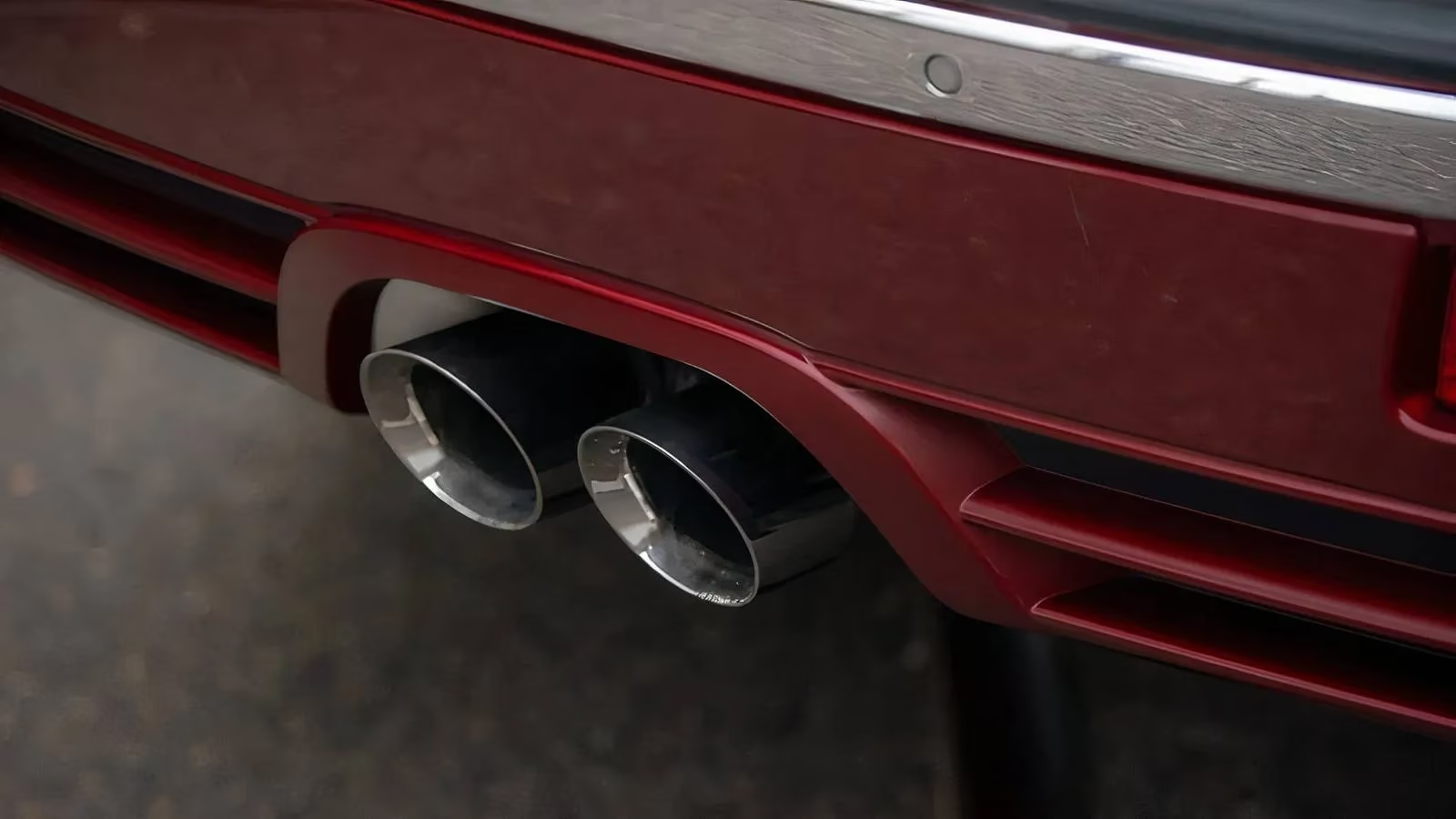
When the Jeep Grand Cherokee SRT8 launched for the 2006 model year, it landed like a thunderclap on a clear day. The automotive world had grown accustomed to the Cayenne’s rounded flanks and precision engineering, but nobody anticipated that Jeep’s Street and Racing Technology division would transform a rugged off-roader into a steroid-laced thoroughbred. The SRT8 didn’t just challenge the status quo; it body-slammed it. Under the sculpted hood sat a 6.1-liter HEMI V8, a bored-out, high-compression evolution of the venerable 5.7-liter unit. With 432 horsepower and 420 lb-ft of torque, this engine was more than just numbers on a spec sheet — it was a declaration of war. To put that figure in perspective, a Ferrari 360 Modena of the same era squeezed out 400 horsepower from its 3.6-liter V8. The Jeep, weighing nearly 4,800 pounds and shaped like a brick, could reach 60 mph in 4.5 seconds, identical to the Prancing Horse. The Porsche Cayenne Turbo S, with a 550-horsepower twin-turbo V8, needed 4.7 seconds to hit the same mark. The big American had effectively outrun physics itself, like a rhinoceros given the heart of a cheetah.
The engineering behind this lunacy was anything but improvised. SRT engineers crafted a bespoke transfer case by marrying the front half of one Jeep unit to the rear section of a heavier-duty case, keeping weight down while ensuring the hardware could withstand brutal all-wheel-drive launches. Under normal driving, only a whisper of torque — five to ten percent — trickled to the front wheels, preserving a rear-biased character that made the SRT8 feel more like a muscle car in hiking boots. When traction demanded it, the system could seamlessly shovel as much power forward as needed, turning the Grand Cherokee into an all-weather missile. The suspension received SRT-tuned dampers and unique anti-roll bars, while massive Brembo four-piston calipers hid behind forged 20-inch aluminum wheels wrapped in Goodyear run-flat tires. Jeep even sculpted a new front fascia and side sill extensions to reduce lift and generate downforce at the SRT8’s 152-mph top speed — aerodynamics for a vehicle that started life as a wagon for boulder fields.
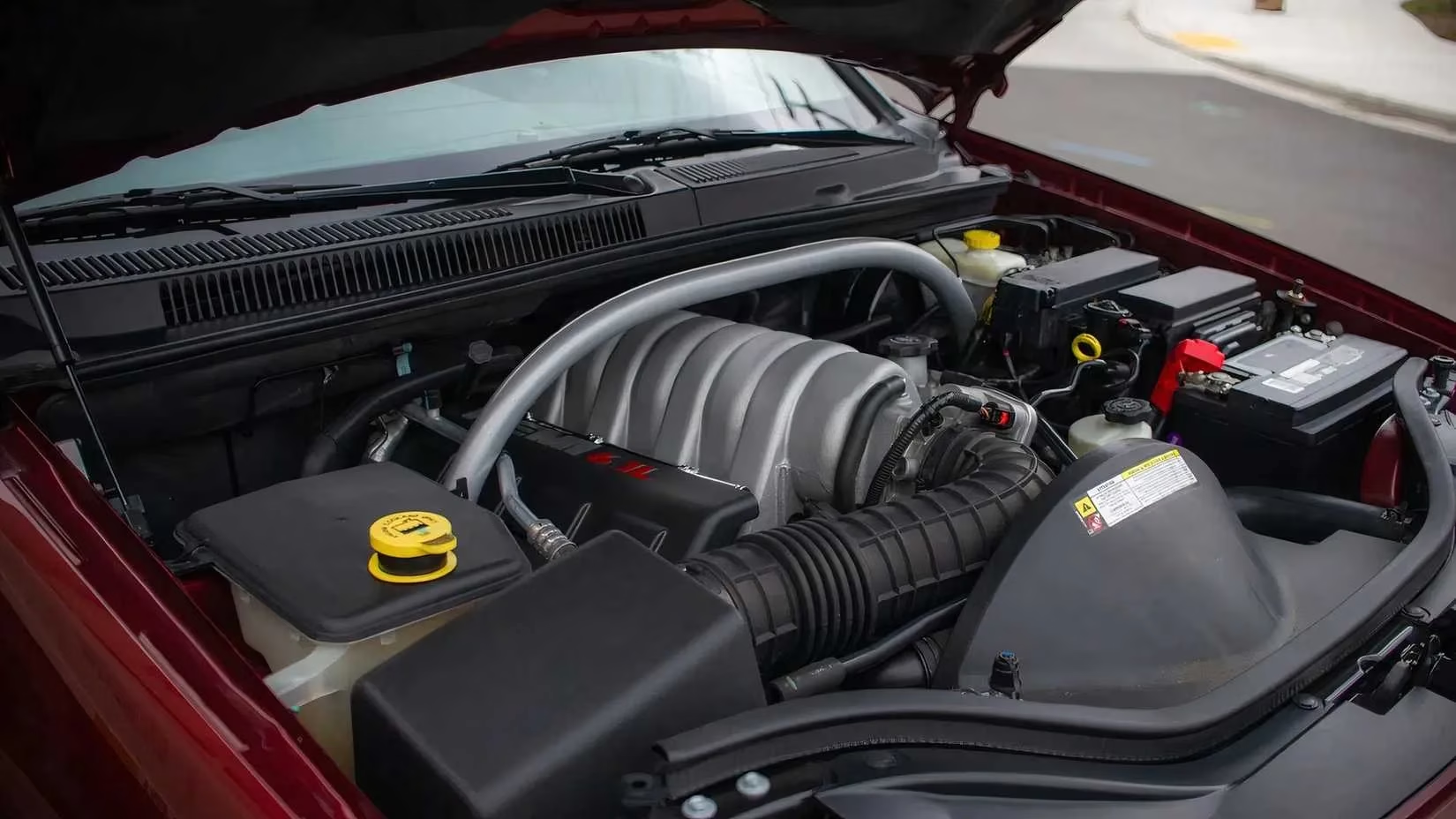
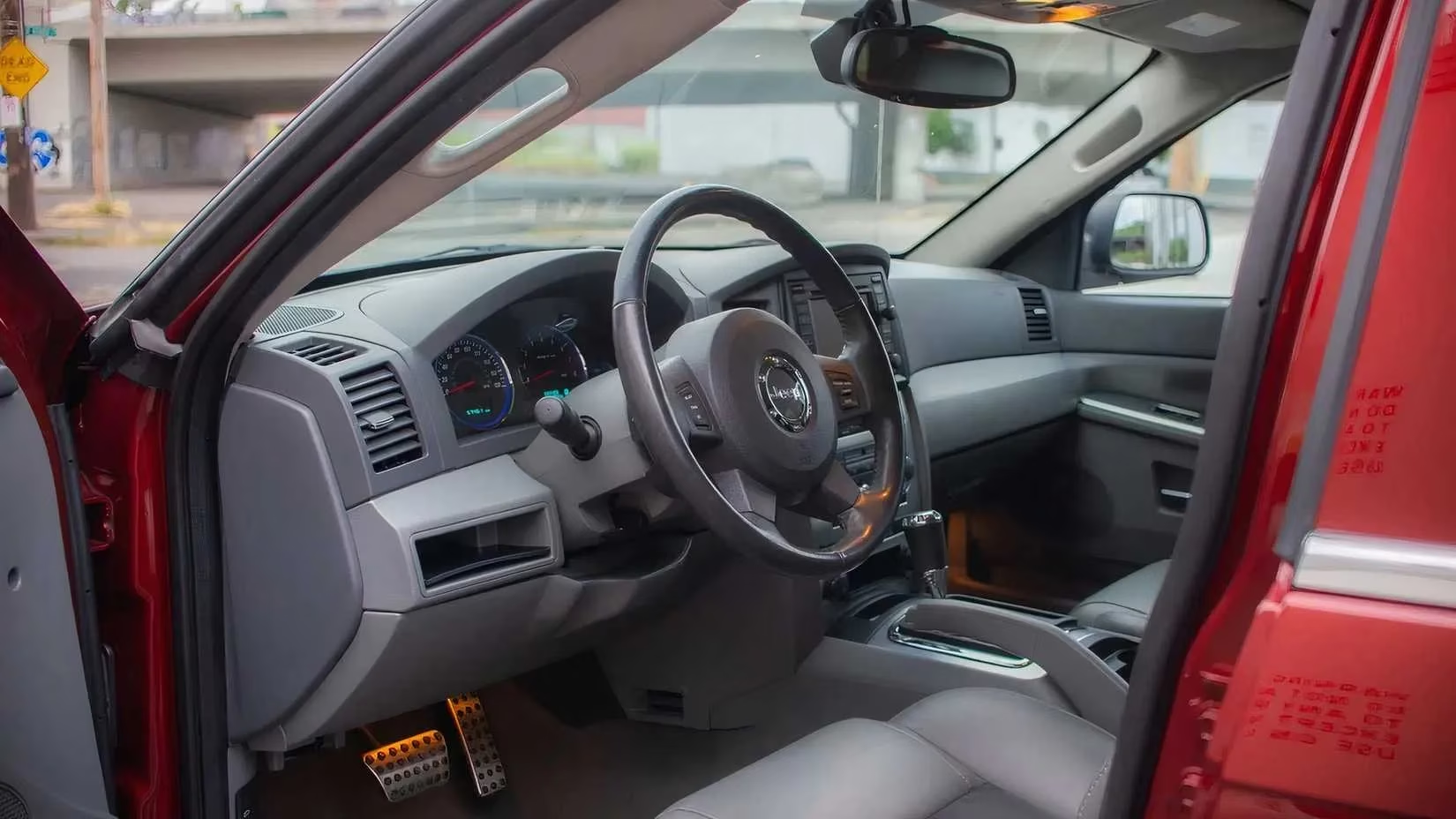
On the road, the experience was as visceral as a heavyweight boxer breaking into a sprint. The five-speed automatic might sound archaic by today’s standards, but it channeled the HEMI’s fury with an urgency that felt almost mechanical, like a series of precisely timed hammer blows. Few things in the mid-2000s could match the SRT8’s ability to devour an open highway while swallowing an entire family’s luggage and a Labrador retriever without complaint. It was, in essence, a practical weapon that could humble a 911 off the line and then crawl over a rocky campsite the next day. This duality felt almost like a secret handshake among enthusiasts — owning an SRT8 meant you understood that speed didn’t have to be fragile.
Now, in 2026, the passage of time has turned these once-revolutionary machines into legends with remarkably attainable price tags. When new, the Grand Cherokee SRT8 started at just $33,995, a figure so absurdly low that it made the $112,415 Porsche Cayenne Turbo S look like a financial fever dream. Even today, with the classic car market inflating values for oddball performance icons, a well-kept 2006 example averages around $23,243, while the 2010 models creep up to $26,750. The Porsche, meanwhile, has depreciated like a stone dropped into a deep lake — a 2006 Cayenne Turbo S now hovers near $20,757, less than a fifth of its original sticker price. Both offer supercar-chasing thrills for used-economy-car money, but the Jeep carries a different kind of aura. It’s the underdog that roared, the pugilist that punched far above its weight class without needing a Stuttgart crest to validate its existence.
Decades can blur many things, but the SRT8’s legacy remains as crisp as a cold morning in Detroit. It reminds us that automotive greatness often comes from the most unexpected places, and that sometimes a fired-up HEMI and a devil-may-care attitude are all you need to rewrite the rulebook. For those who seek a used super SUV in this electric-dominated era, the choice between a depreciated Porsche and an overlooked Jeep isn’t just about costs or spec sheets. It’s about choosing between a polished scalpel and a battle-axe that still carries the scent of tarmac-devouring fury. One of them holds the crown of the fastest SUV of the 2000s, and it doesn’t even have a turbocharger — it has a soul, forged in pushrods and audacity.
Comments