
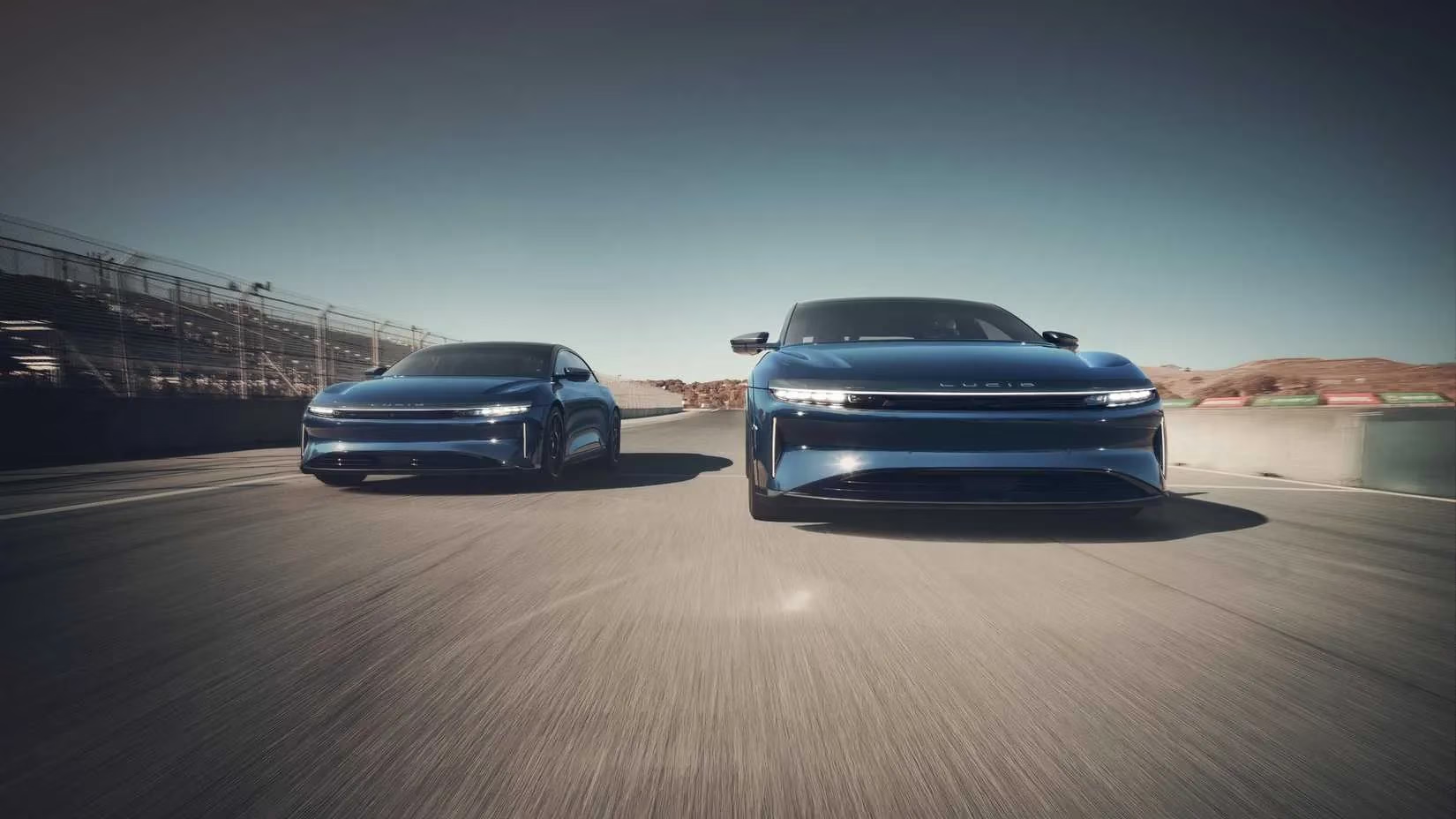
For generations, the American performance sedan has been a creature of delightful contradiction—a four-door family hauler with the soul of a dragstrip bully. Names like the Cadillac CTS-V and Dodge Charger Hellcat wrote their legends in supercharged V8 fury, their exhaust notes a rolling thunder that shook windows and stirred hearts. Then, as the calendar pages turned to 2022, a newcomer from California tore up that script entirely. The Lucid Air Sapphire rolled onto the stage not with a roar, but with the eerie hush of a predator that had no need to announce itself. It didn't just challenge the old guard; it consumed them like a silent lightning bolt that outran the thunder. In the span of a few flawless launches, this electric sedan became the fastest American four-door ever built, leaving hardened gearheads rethinking everything they believed about speed.
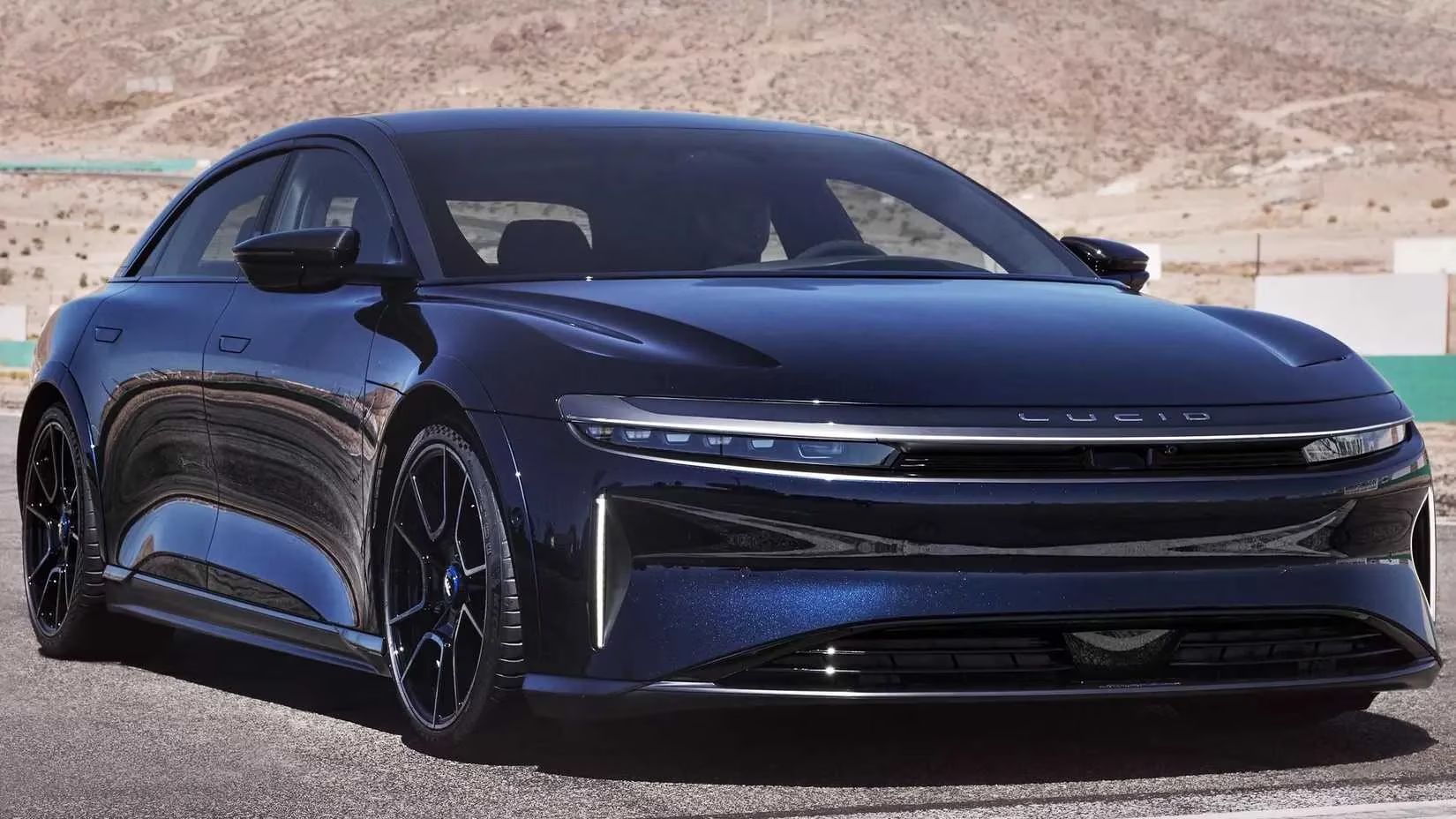
On paper, the Sapphire deals in numbers that belong to a different universe. Lucid Motors claims a 0–60 mph sprint of 1.89 seconds—a figure that, to the uninitiated, feels like a typo. The quarter-mile vanishes in under nine seconds, often around 8.95, with a trap speed hovering near 158 mph. Top speed? An ungoverned 205 mph. To contextualize this, imagine a Bugatti Chiron, a Rimac Nevera, or a Ferrari SF90 Stradale straining to keep pace, then realize this Lucid seats five adults and offers a 427-mile range on a full charge. The acceleration is so immediate and violent that automotive journalists routinely describe it not as a push but as a sudden rewiring of space itself—like being plucked by an invisible giant’s finger and flung forward with zero hesitation. It’s a sensation that traditional combustion engines, with their need to build revs like winding up a clockwork toy, simply cannot replicate.
At the core of this brutality lies a tri-motor powertrain: one motor up front, two at the rear, conspiring to deliver 1,234 horsepower and 1,430 lb-ft of instant torque. This isn’t just straight-line sorcery. The dual rear motors enable torque vectoring, independently feeding power to each wheel with a precision that makes the sedan dance through corners like a ballet dancer on pointe shoes. Where a heavy, V8-powered brute might lumber through a chicane, the Sapphire pirouettes, its carbon-ceramic brakes and specially developed Michelin Pilot Sport 4S tires working in concert with an aerodynamic package that keeps the car planted at triple-digit speeds. The result is a four-door that thinks it’s an all-wheel-drive supercar—no compromise, no apology.
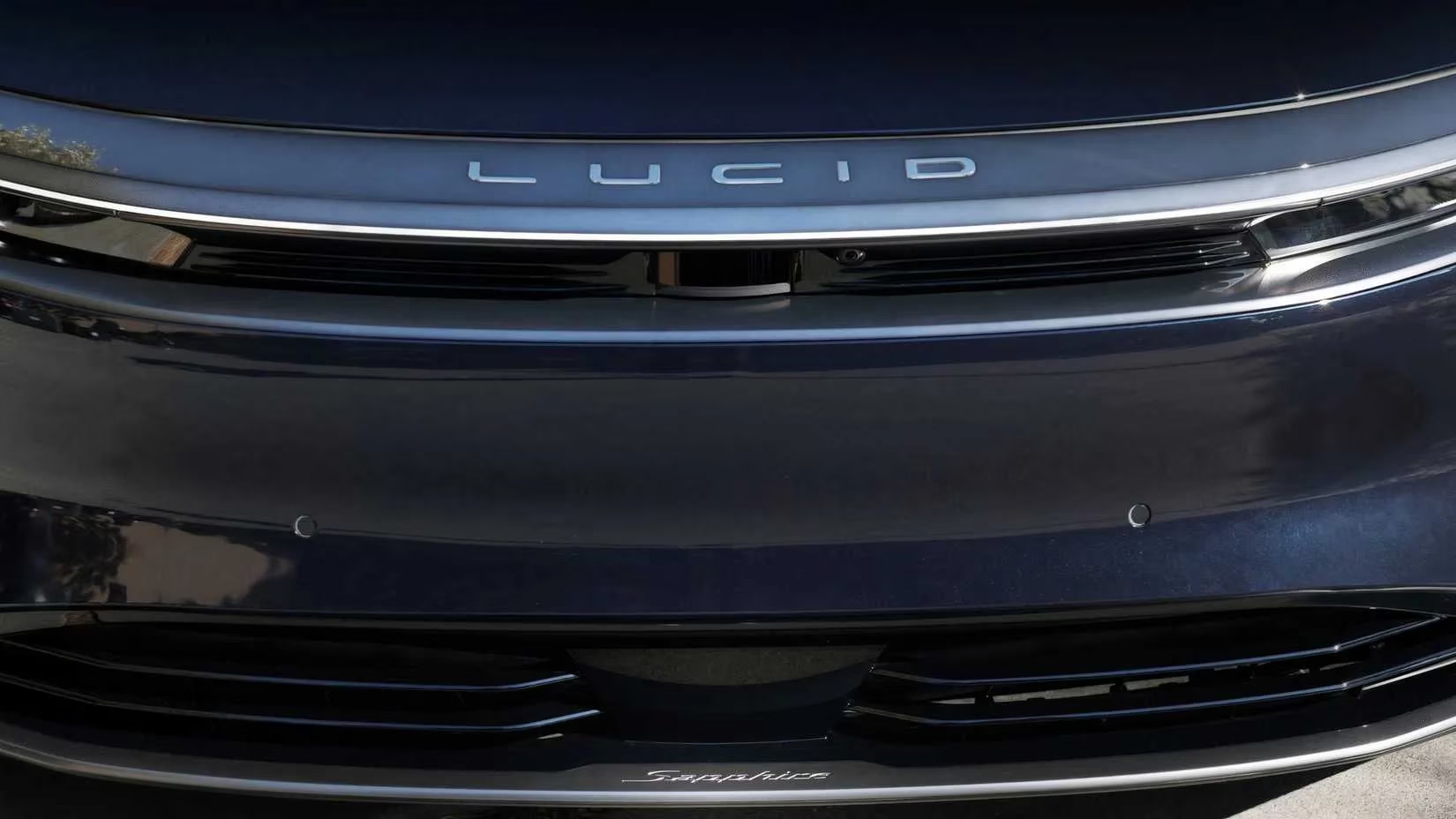
To understand how a company barely old enough to attend its own prom could dethrone a century of combustion glory, one must rewind to 2007. Lucid Motors began life as Atieva, a modest battery and powertrain developer working behind the scenes for other automakers. For years, it was a whisper in the industry’s ear, a laboratory of electrons rather than a builder of dreams. Then in 2016 came the pivot: a rebranding into Lucid Motors, with the audacious goal of crafting its own luxury EVs. Investment from Saudi Arabia’s Public Investment Fund flooded in, drawn by the prospect of a direct Tesla rival. By 2020, the Lucid Air debuted, and the Casa Grande, Arizona, factory began to hum. The Sapphire emerged as the brand’s hyper-performance halo car, a shark that had grown silently beneath the waves before breaching into the spotlight.
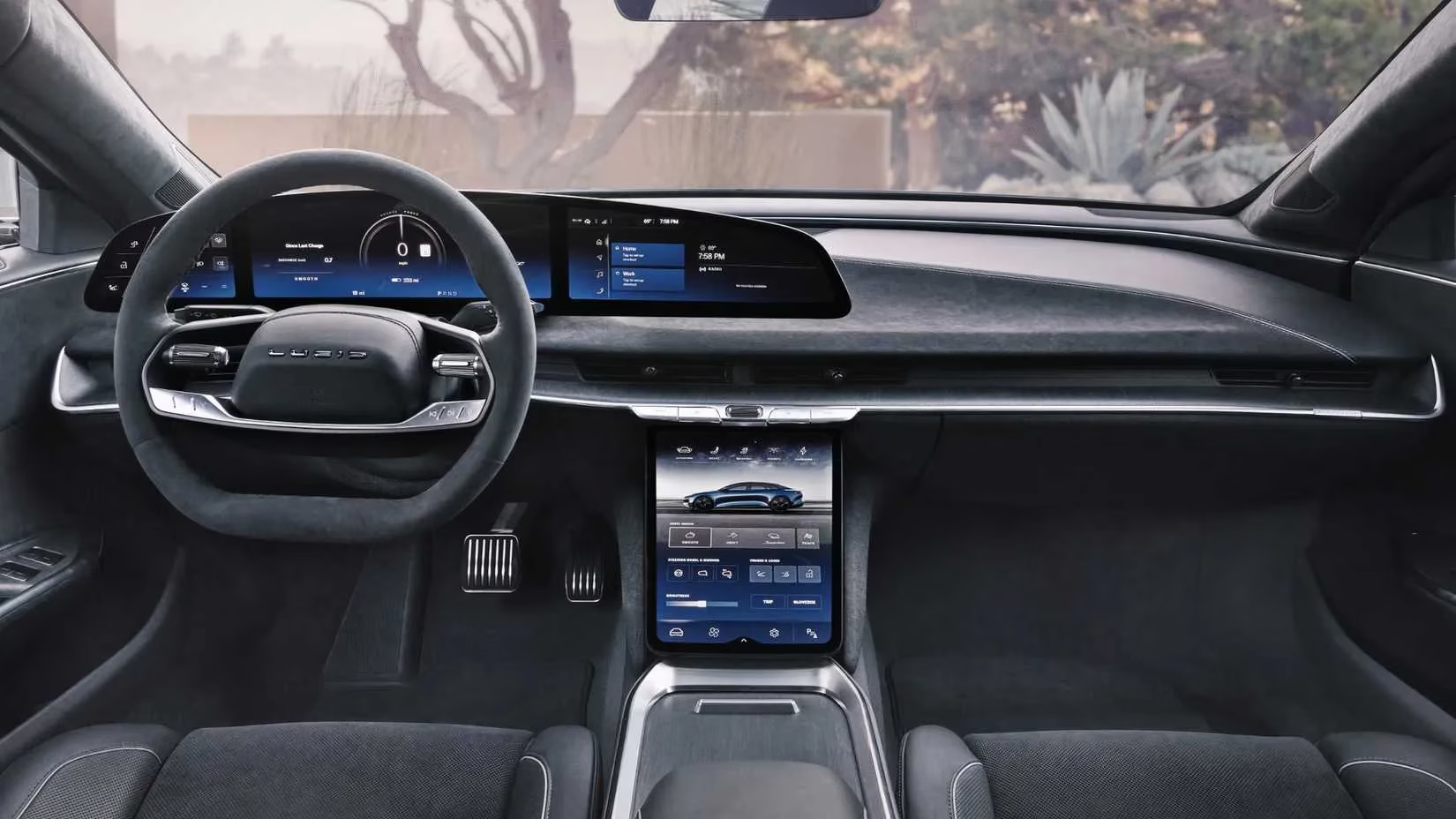
Yet beneath the record-shattering persona lies an interior that would make a Bentley blush. Step inside the Sapphire, and the narrative flips from racetrack brutality to sanctuary-like opulence. Sculpted sport seats wrapped in premium leather and Alcantara, a vast Glass Cockpit display, and a 27-speaker Surreal Sound system cocoon the driver in what feels less like a car cabin and more like a concierge chamber at a five-star hotel. There is no stripped-down, roll-cage harshness; instead, the adaptive suspension soaks up broken pavement in Smooth Mode, then hardens into a focused scalpel when Track Mode is engaged. This duality is the Sapphire’s greatest magic trick—a vehicle that can ferry four adults to a luxury dinner in utter tranquility, then humiliate a Porsche 911 Turbo at a stoplight without breaking a sweat.
Of course, the Sapphire’s reign is not without its philosophical friction. For purists, the absence of a rumbling V8 symphony, the lack of vibration through the steering wheel, and the eerie silence at full throttle feel like a betrayal of what American performance was built upon. The old guard sees it as an iceberg—smooth and elegant above the waterline, freighted with immense, unseen power below—but one that leaves the senses slightly unfulfilled. Yet there is a growing tribe of enthusiasts who value performance in its rawest form, divorced from nostalgia, and they have embraced the Sapphire as the definitive expression of modern speed. At $249,000, it may not be cheap, but when a hypercar costing three times as much struggles to match its numbers, the value proposition becomes almost absurd.
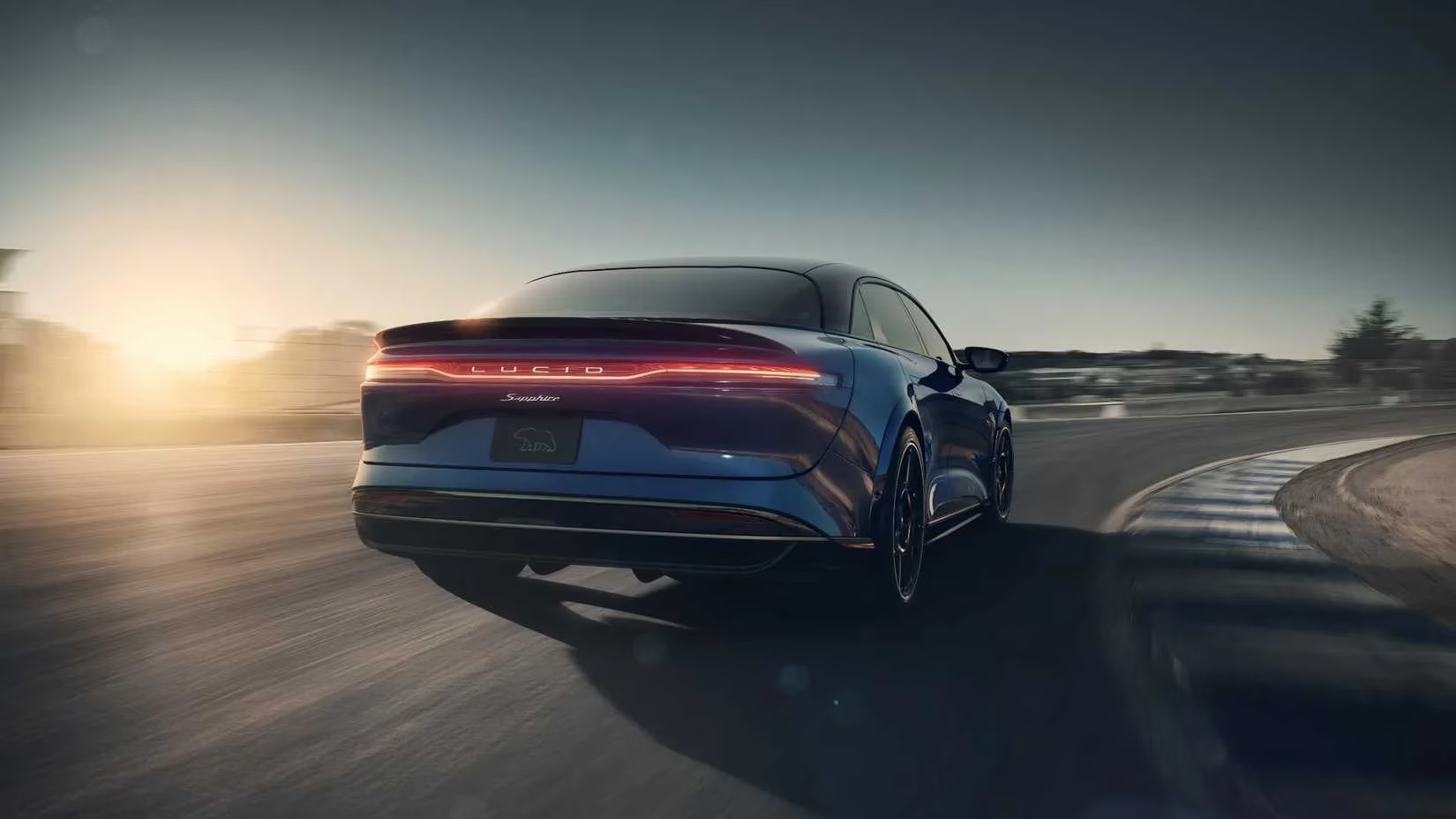
The Lucid Air Sapphire stands as a watershed moment that nobody can ignore. It has shown that the fastest American sedan ever forged doesn’t need pistons, crankshafts, or the stink of high-octane fuel—just a torrent of electrons and a fearless disregard for tradition. As the automotive world inches deeper into the electrified 2020s, the real question isn’t whether EVs can truly compete; it’s whether Detroit’s giants, with their fire-breathing V8s or their own fledgling EVs, can ever reclaim the crown that a young upstart from Newark has so decisively stolen. For now, in 2026, the Sapphire is a gleaming testament to the fact that America’s future of speed is already here, and it whispers rather than screams.
Comments