
Minivans traditionally occupy the practical but uninspiring end of the automotive spectrum \u2014 boxes designed solely to move people and cargo from A to B with minimal excitement. In 2007, Mercedes-AMG shattered that stereotype in spectacular fashion by shoehorning the same hand-built 6.2-liter V8 found in its most potent sports sedans into the luxury R-Class, creating a vehicle that remains one of the most fascinating curiosities in performance car history.
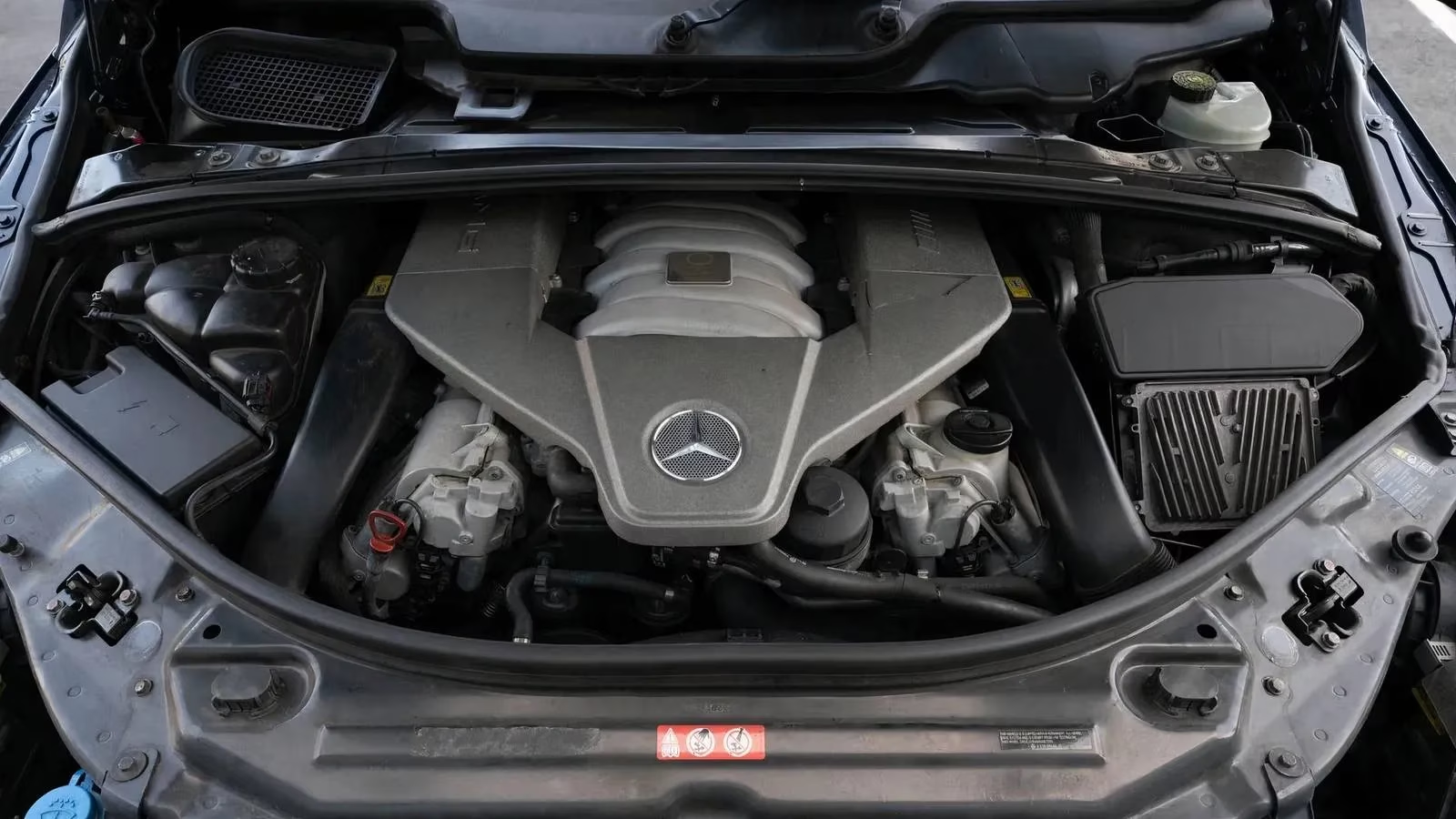
The Beast Under the Hood
The Mercedes-Benz R63 AMG 4MATIC is anything but ordinary. The standard R-Class was already a niche offering, blending minivan proportions with luxury-car pretensions, but the AMG variant elevated the formula to absurd extremes. Under the sculpted hood sat the fabled M156 6.2-liter naturally aspirated V8, the same powerplant that endowed the contemporary C63, E63, and CLS63 with thunderous performance. Output was rated at 510 hp and 465 lb-ft of torque, channeled to all four wheels through Mercedes\u2019 robust 4MATIC system.
This mechanical combination yielded astonishing results for a seven-seat family hauler. The R63 could launch from a standstill to 60 mph in just 4.6 seconds, a figure that easily outpaced many dedicated sports cars of the era. While several luxury SUVs now exceed that pace, in the mid-2000s such acceleration from a vehicle weighing nearly 5,000 pounds was almost unheard of. Top speed was electronically governed to 155 mph, yet buyers who opted for the AMG Driver\u2019s Package saw that limiter raised to 171 mph \u2014 a velocity entirely unreasonable for a minivan, and all the more wonderful for it.
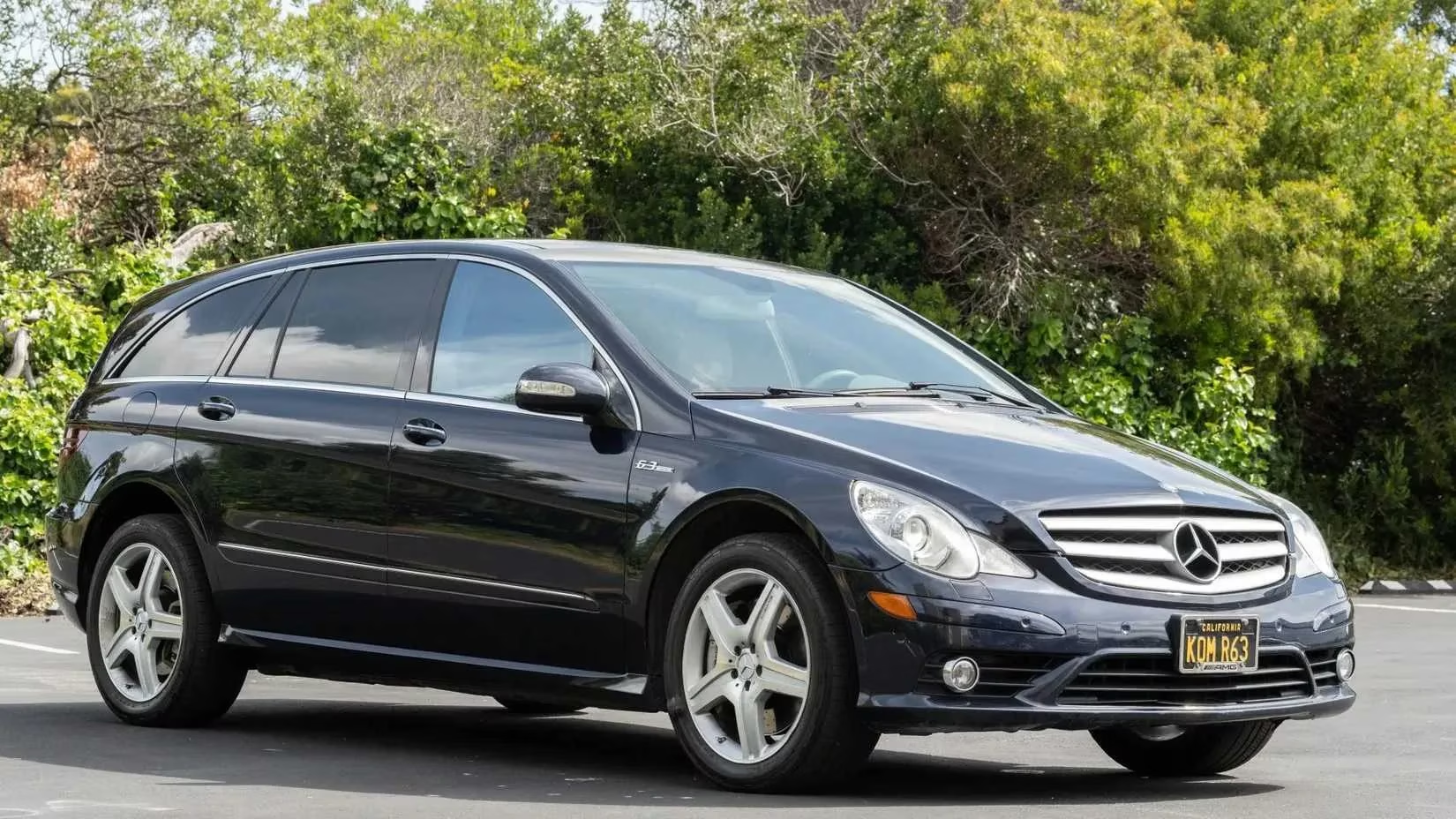
A Sales Disaster Turned Collectible
Despite its conceptual brilliance, the R63 AMG was a commercial catastrophe. The R-Class itself failed to find a substantial audience, perceived as an awkward middle ground between wagon, SUV, and minivan. The AMG version, a niche within that niche, suffered even more. Its mighty V8 could not mask the platform\u2019s considerable heft when attacking corners, and the astronomical purchase price deterred all but a handful of eccentric buyers.
Mercedes pulled the plug after a single model year. Official production records indicate only around 200 units were ever sold worldwide. To put that figure into context, Ferrari built over 1,300 F40s, making the humble R63 genuinely rarer than one of the most celebrated supercars of all time. In the years since, this extreme rarity has transformed a sales flop into a coveted curiosity among collectors.
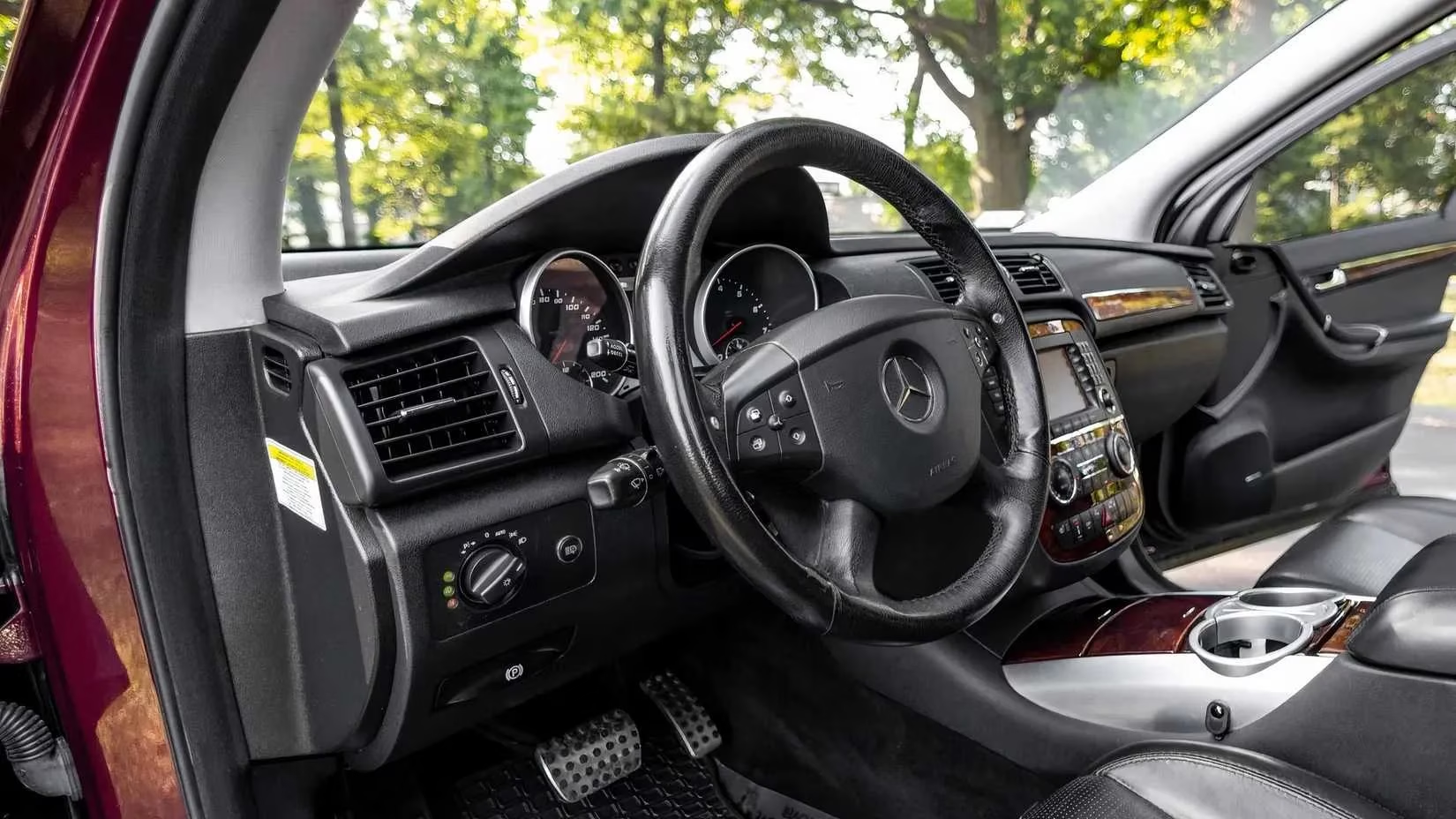
As of 2025 and into 2026, well-maintained examples still trade hands for surprisingly attainable sums. Auction data suggests an average sale price below $40,000, with some needing cosmetic attention changing hands for as little as $23,000. This represents a remarkable entry point into genuine AMG V8 ownership with a story unlike any other. Whether these undervalued quirks eventually appreciate into six-figure territory remains an open question, but the trajectory of other low-production AMG oddities suggests the window may not remain open forever.
Modern Minivans That Are Surprisingly Quick
The R63 AMG may stand alone as the fastest production minivan ever created, but several contemporary offerings prove that practicality need not preclude brisk acceleration.
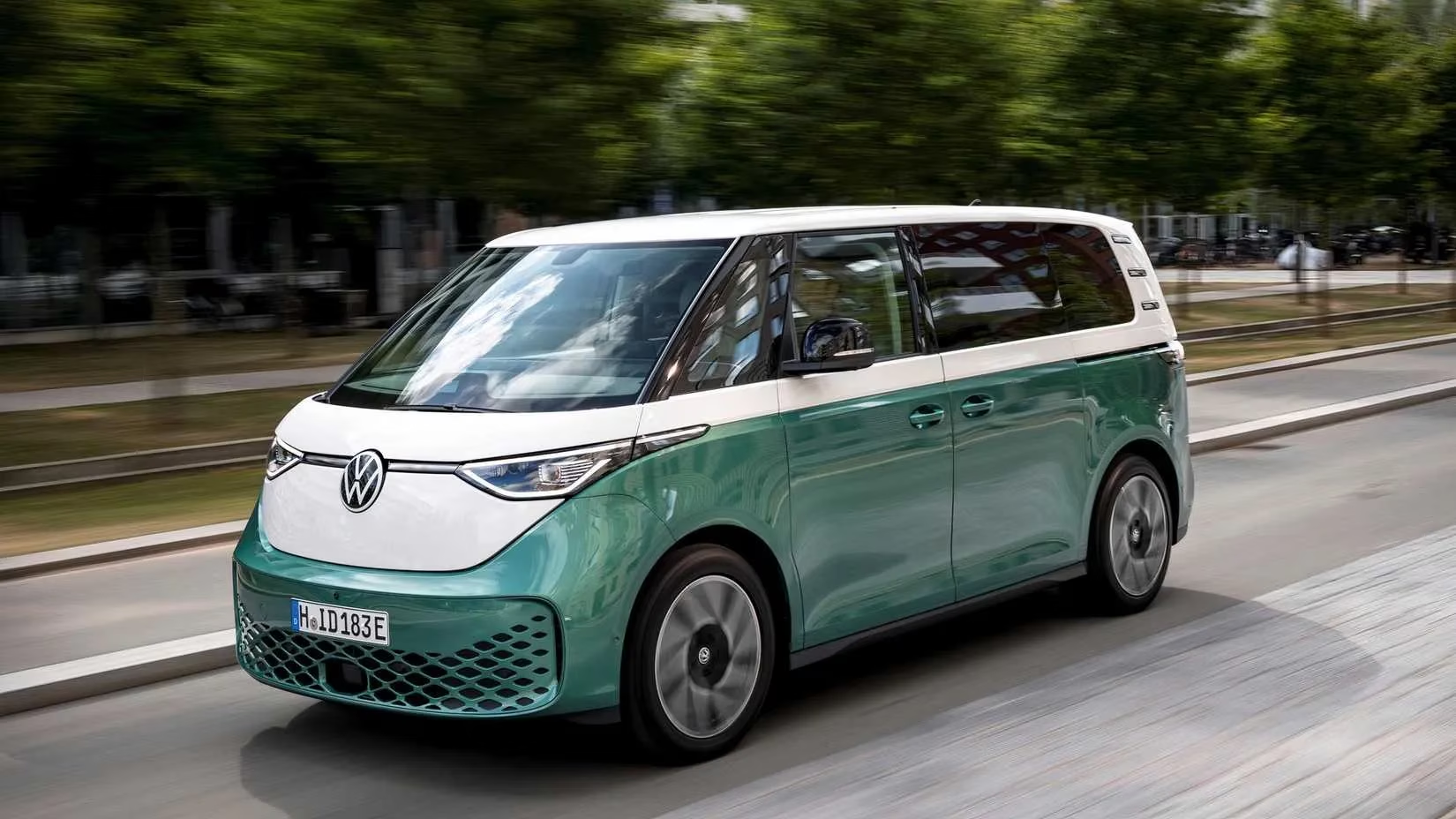
The Volkswagen ID. Buzz GTX currently wears the crown among factory-built speedsters. Its dual-motor electric setup propels the retro-styled van from 0-60 mph in 5.5 seconds, making it the quickest showroom-fresh minivan anywhere in 2026. While opinions remain mixed regarding its infotainment usability and real-world range, its straight-line punch is undeniable.
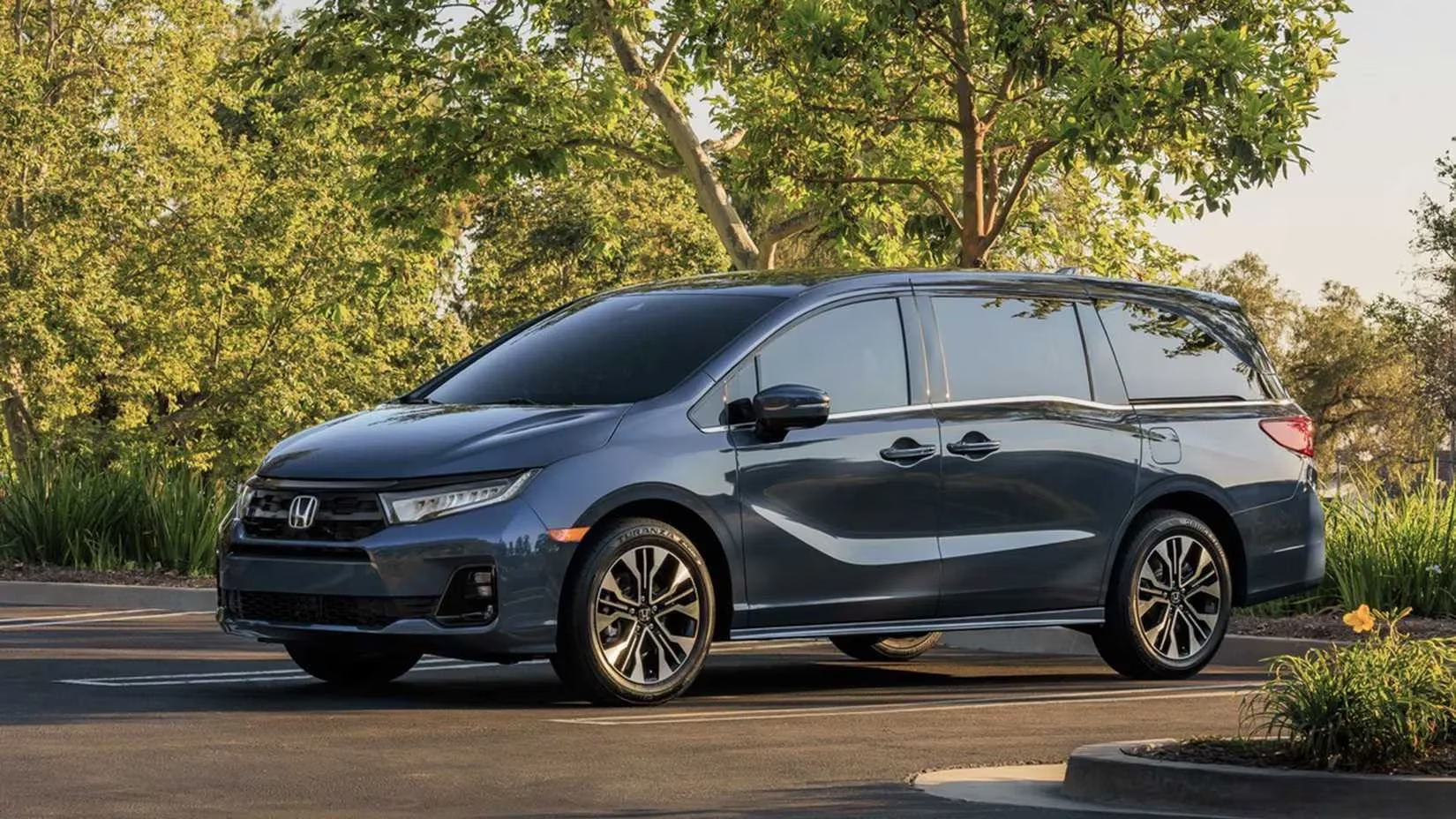
In North America, the Honda Odyssey continues to demonstrate that a minivan can be both sensible and spirited. Under its family-friendly skin resides a 280-hp V6 that, according to independent testing, dispatches the 0-60 mph benchmark in 6.4 seconds. This places the Odyssey firmly in warm-hatch territory while retaining its cavernous interior.
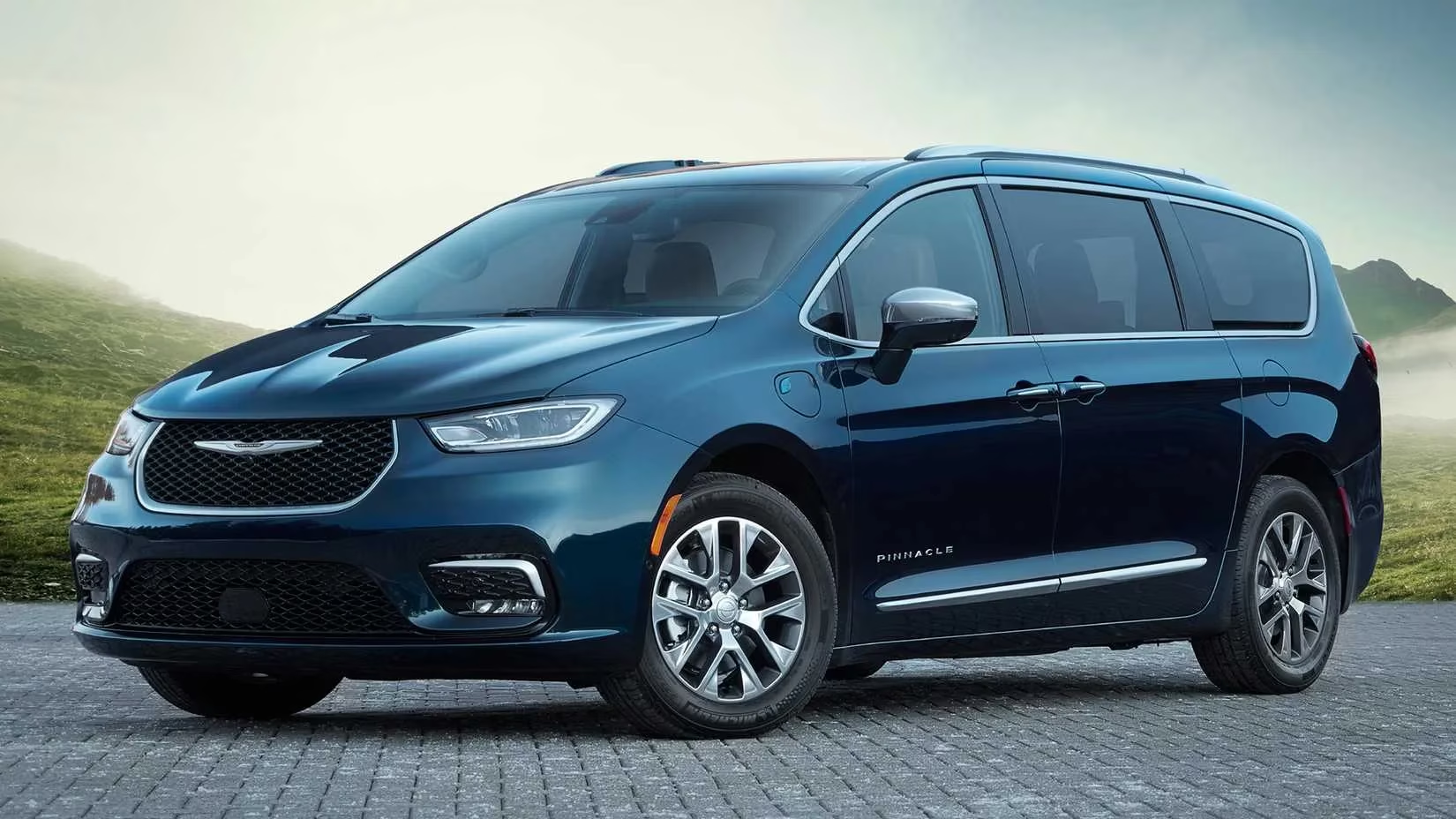
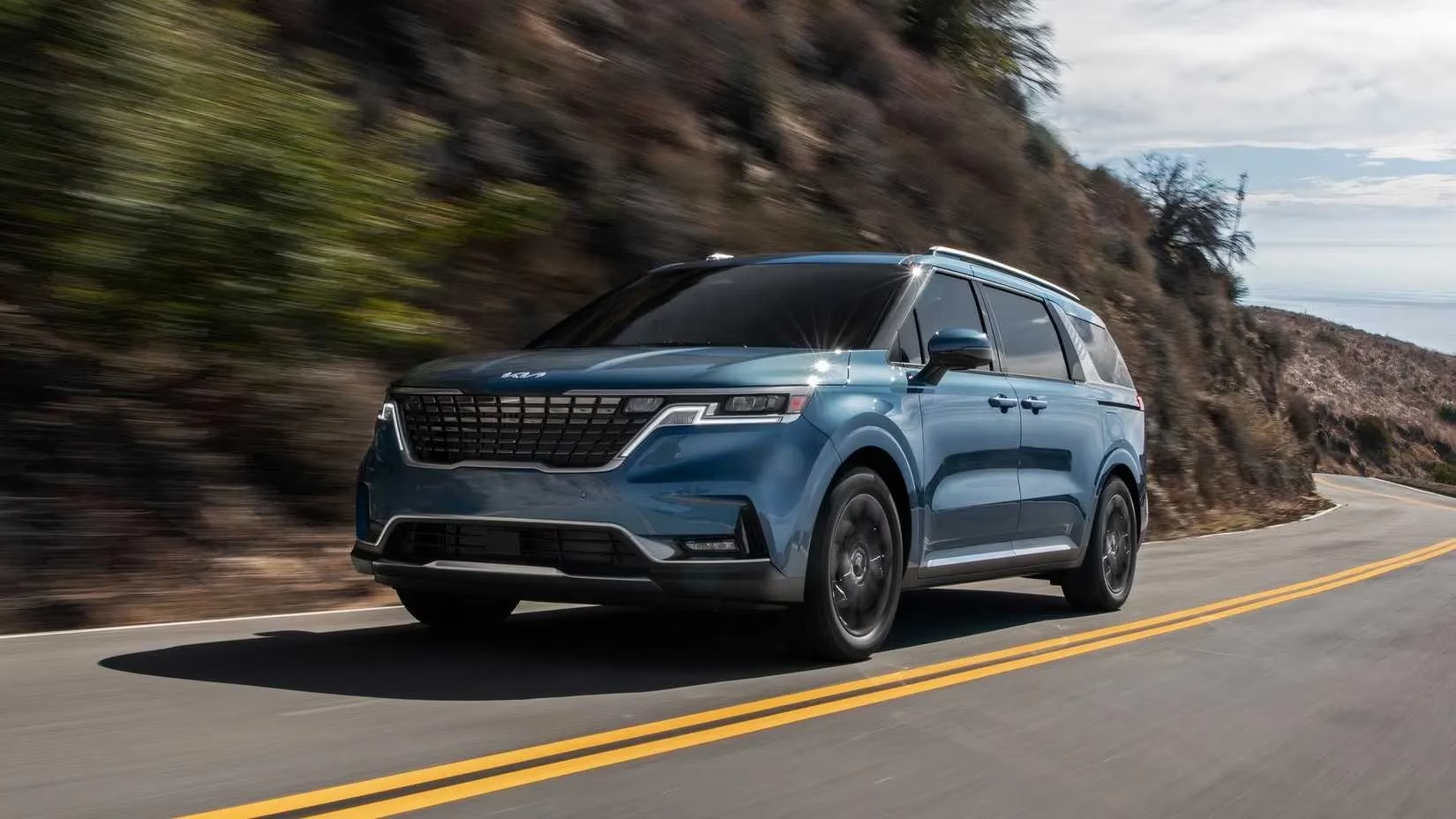
The Chrysler Pacifica and Kia Carnival round out the category with respectable figures. The front-wheel-drive Pacifica, in testing, completes the sprint in 7.3 seconds, aided by a smooth and responsive powertrain. The newest Carnival, in V6 form, lands in the 7-7.8 second range depending on configuration, proving that even volume-focused people movers now deliver performance once reserved for dedicated sports machines.
Beyond Production: Crazy Custom Minivans
For builders unwilling to wait for a manufacturer to produce the ultimate minivan, the aftermarket has cooked up some legendary creations.
Perhaps the most insane factory-sanctioned experiment was the Renault Espace F1. Constructed in 1994 to commemorate the Espace\u2019s 10th anniversary and Renault\u2019s Formula 1 involvement, this mid-engined monster borrowed the 3.5-liter V10 from the championship-winning Williams FW15C. With nearly 800 hp and a sub-three-second 0-60 mph time, it remains the stuff of minivan myth, though it was never street-legal.
On American soil, drag racer and engineer Bisi Ezerioha raised the bar with the Bismoto Honda Odyssey, a turbocharged beast producing 1,029 hp. Remarkably, Ezerioha retained all factory electronics, including stability and traction aids, resulting in what is widely considered the most powerful minivan ever constructed.
More recently, social-media personality Tavarish embarked on a Hellcat-swapped Chrysler Pacifica project aiming for 800 hp and a thoroughly aggressive makeover. While progress updates have been scarce heading into 2026, the automotive world eagerly awaits a machine that promises to blur the line between family hauler and tire-shredding icon. In a parallel build, Rich Rebuilds beat Tavarish to the punch by fitting a Hellcat motor into a Chrysler Town & Country \u2014 with predictably glorious results.
From the singular production insanity of the R63 AMG to the wildest garage experiments, the minivan segment continues to harbor some of the most unexpected performance stories on four wheels.
Comments