
Man, looking back at the 2000s super sedan wars still gets me hyped! 🚀 It was a wild era where practical four-door family cars transformed into absolute monsters that could humble exotic supercars. Engineers were just shoving insane powertrains into sedans without a second thought for gas mileage or emissions. The result? Some of the most unhinged, glorious four-door machines ever to hit the asphalt. While the Germans were duking it out with their high-revving V10s and twin-turbo V12s, American automakers were watching closely from Detroit, itching to join the fray. And then, Cadillac dropped a bombshell that shook the entire industry.
The Birth of an American Icon
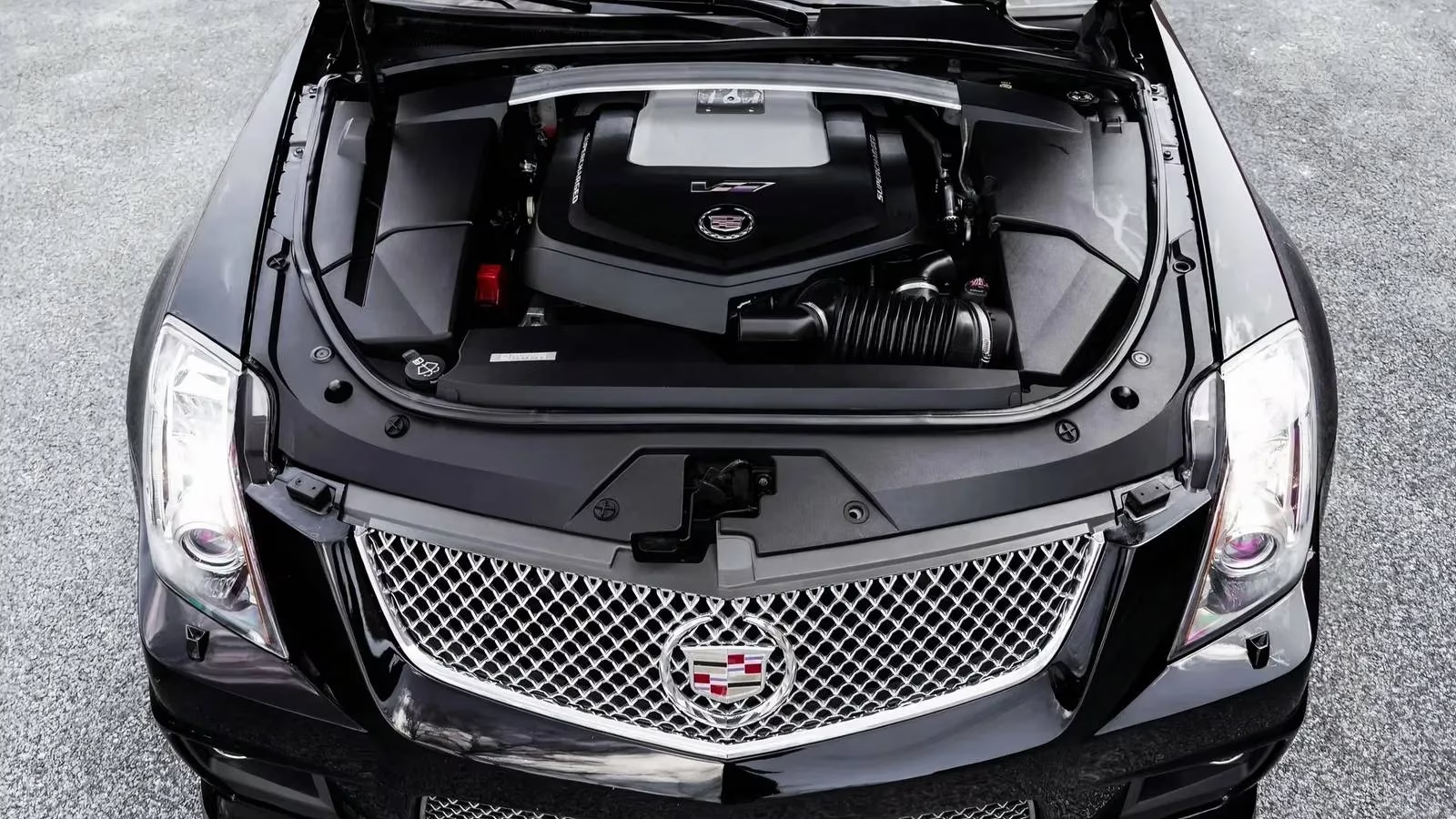
Cadillac wasn't a complete newcomer to the fight. The first-gen CTS-V in the mid-2000s proved they could build a decent sports sedan to challenge the German elite. But reviewers said it needed more polish and refinement. So, for 2009, Cadillac unleashed the second generation. The new CTS-V looked more sophisticated and premium, with a slightly wider track for better stability. There was just one, slightly concerning, detail: it had gained a hefty 385 pounds, tipping the scales at a massive 4,292 lbs! That's nearly as heavy as a full-size luxury barge. But the engineers had a secret weapon waiting in the wings.
The Heart of a Corvette
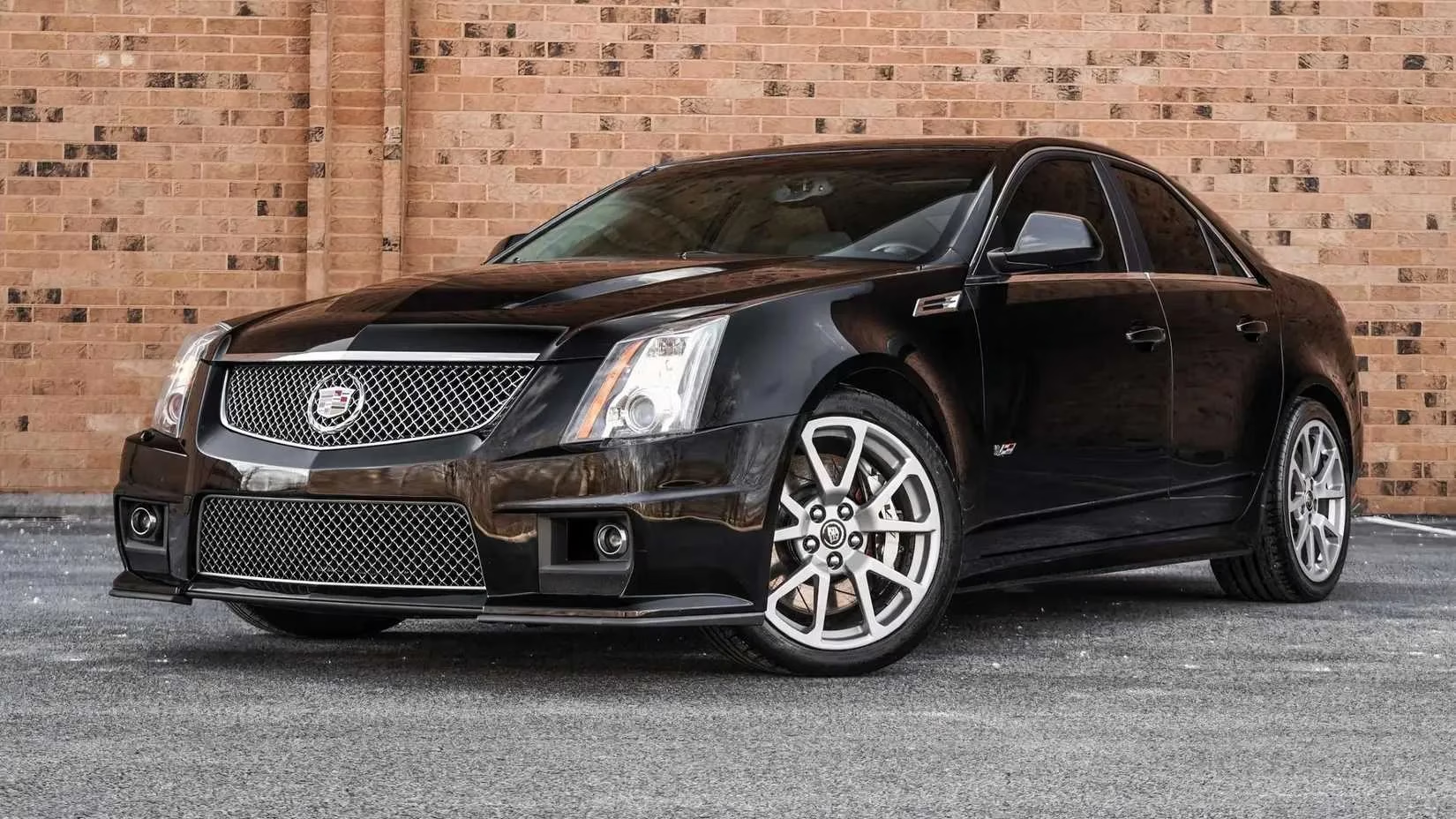
The solution to all that weight? Pure, unadulterated American muscle. Cadillac made the audacious decision to take the heart of the newly launched, track-focused Corvette ZR1 and transplant it into their luxury sedan. In the CTS-V, this powerplant was dubbed the LSA supercharged V8. While it was a slightly detuned version of the ZR1's LS9, the numbers were still absolutely bonkers for the time: 556 horsepower and 551 lb-ft of torque. That's enough grunt to make any gearhead's heart skip a beat.
So, how did this beast perform? Let's break it down:
-
0-60 mph: A blistering 3.9 seconds (manufacturer claim).
-
0-100 mph: A mere 9.7 seconds.
-
Quarter-mile: 12.6 seconds at 116 mph.
-
Top Speed: A mind-bending 191 mph.
To put that into perspective, a 2004 Lamborghini Gallardo had a top speed of just 192 mph. This Cadillac wasn't just fast for a sedan; it was supercar-fast. And for those who wanted even more, tuners like Hennessey later pushed these cars to insane levels, with the HPE1000 package achieving 0-60 mph in a neck-snapping 2.7 seconds!
LS9 vs. LSA: What's the Difference?
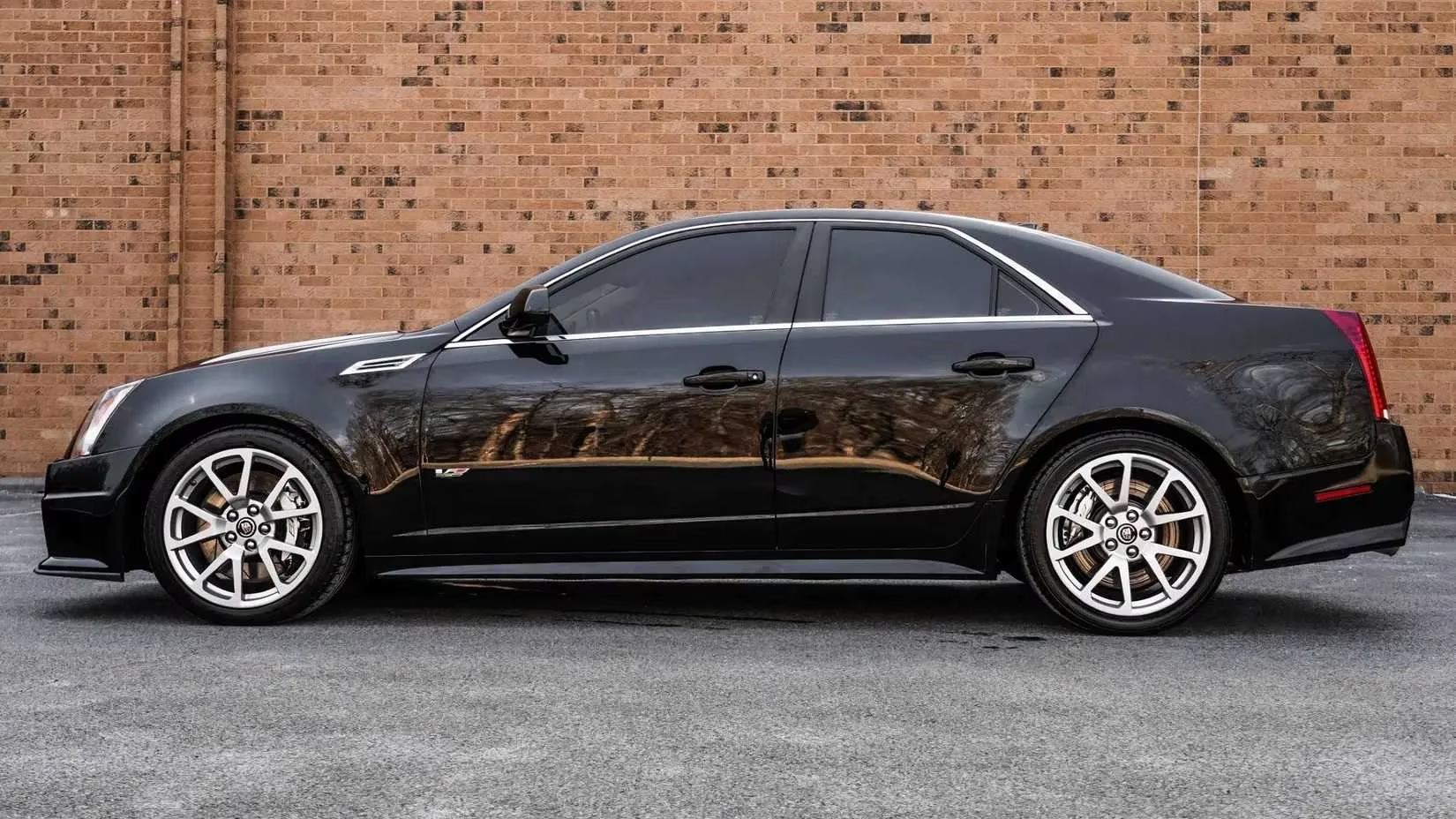
While often called a detuned ZR1 engine, the LSA had its own character. Here's a quick comparison of the key differences:
| Feature | Corvette ZR1 LS9 | Cadillac CTS-V LSA |
|---|---|---|
| Power Output | 638 hp | 556 hp |
| Supercharger | 2.3-liter | 1.9-liter |
| Oiling System | Dry Sump | Wet Sump |
| Pistons | Forged | Cast |
| Intercoolers | Dual Heat Exchangers | Single Heat Exchanger |
So, you could see it as a slightly tamer LS9, or perhaps more accurately, as a standard Corvette 6.2-liter V8 with a supercharger bolted on for epic force-fed fun. Either way, it gave the Caddy the sheer muscle to go toe-to-toe with the finest European performance saloons. Compared to the 2006 BMW M5's 4.5-second 0-60 time, the CTS-V was in another league.
More Than Just a Sedan
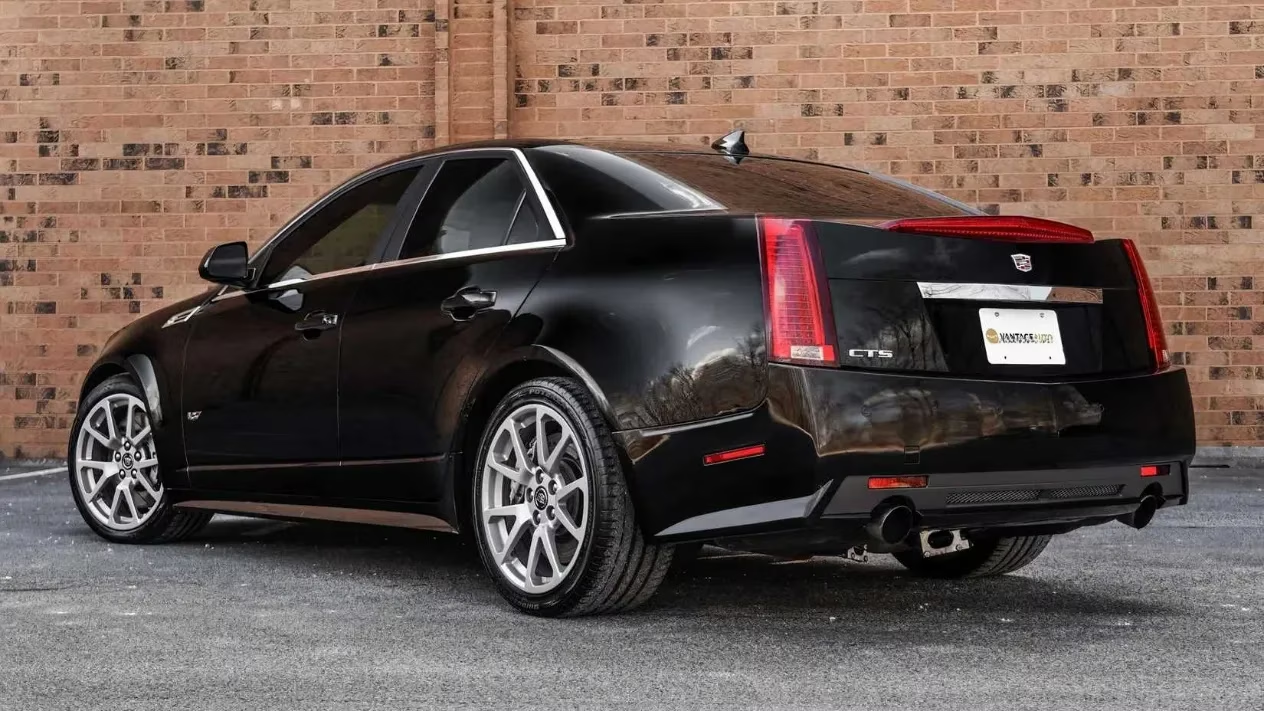
The brilliance of the CTS-V lineup was its variety. Cadillac offered something for everyone:
-
The Sedan: The core model, blending luxury and devastating performance.
-
The Coupe: For those who wanted sleek, two-door styling over practicality.
-
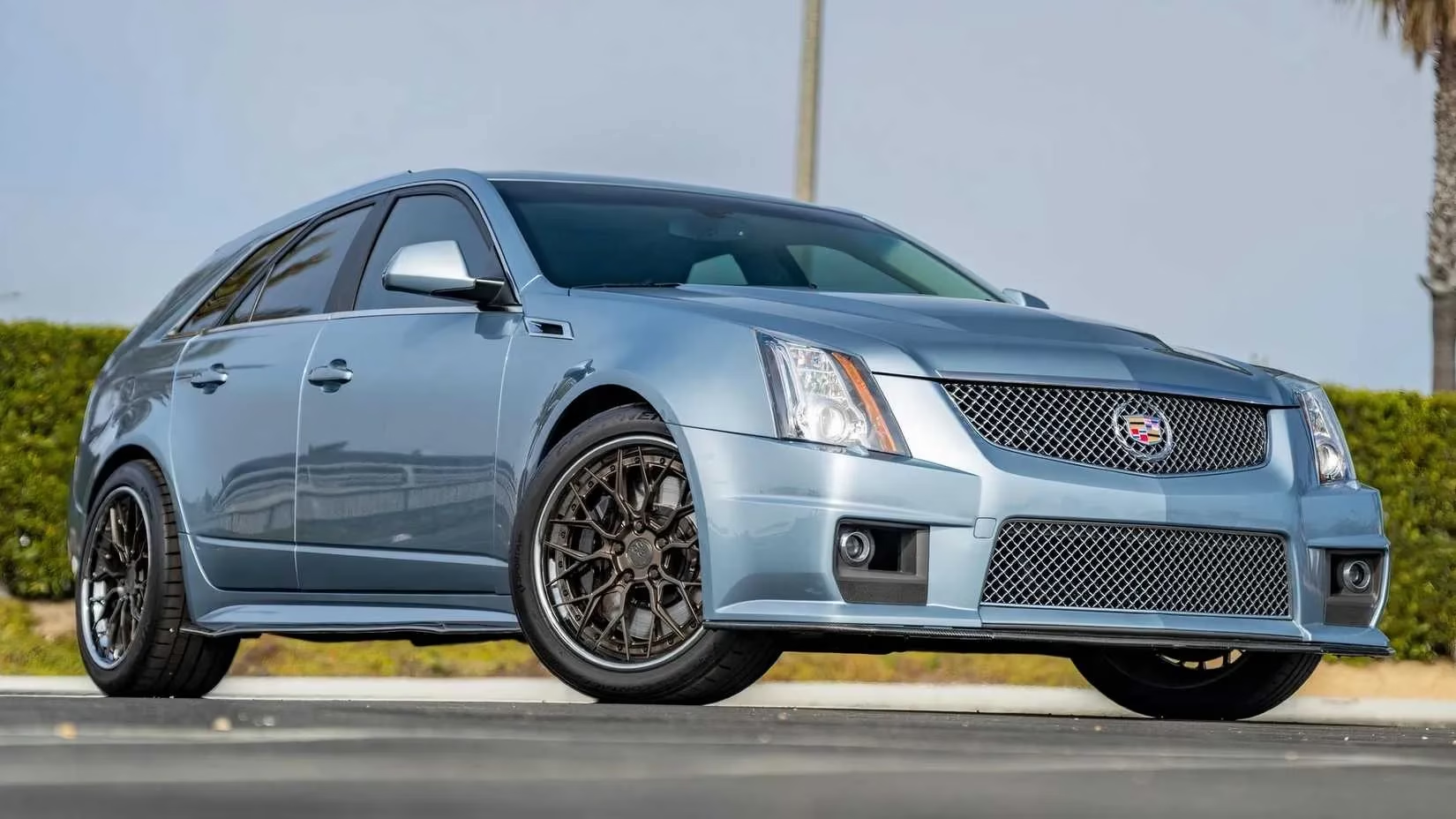
The Wagon (Sport Wagon): 🤯 The ultimate sleeper! A high-performance, supercharged wagon with undeniable cool factor and massive utility. It's the perfect understated alternative to an AMG wagon.
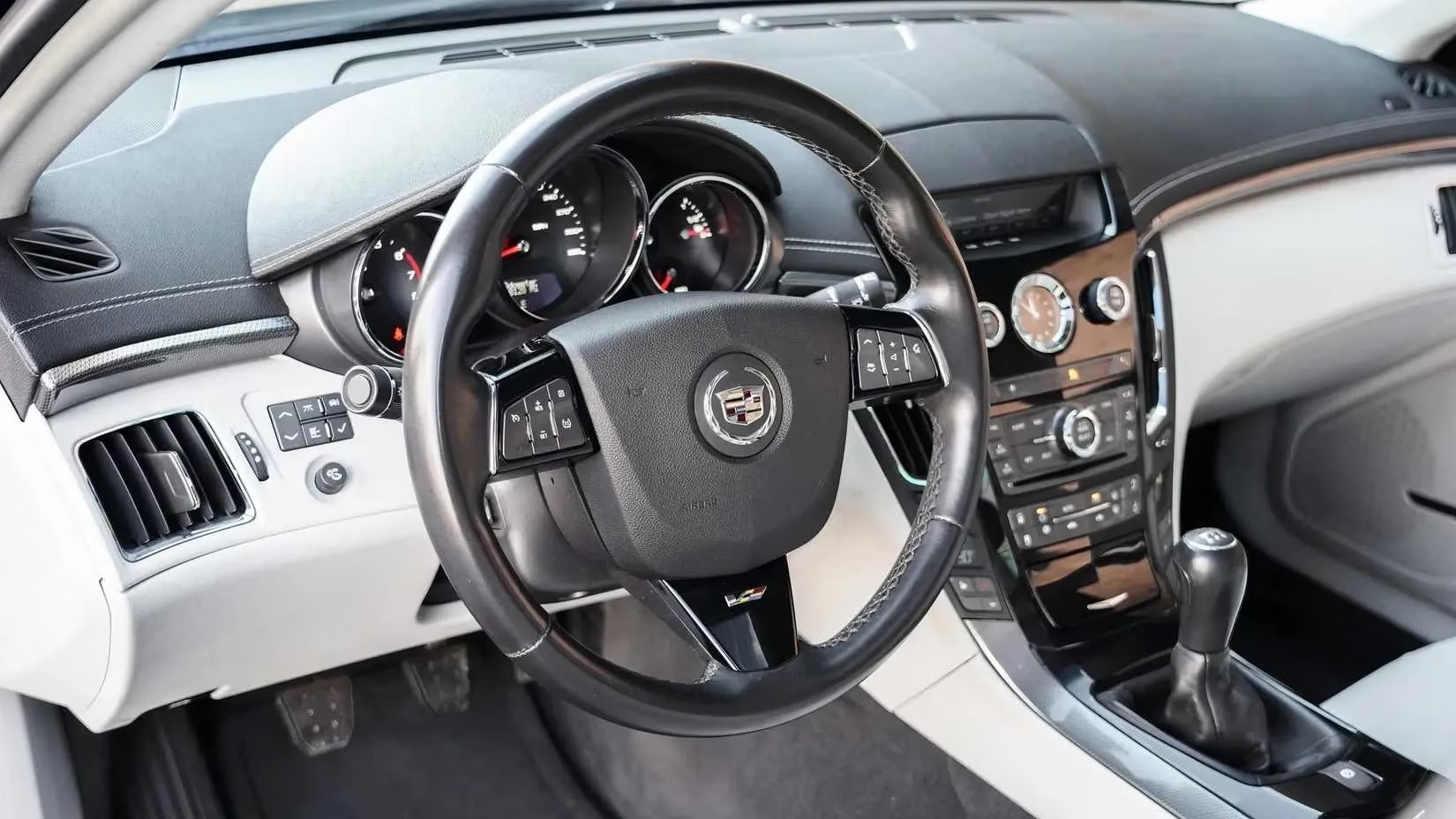
And for the driving purists, Cadillac had the good sense to offer a proper six-speed manual transmission (the Tremec TR6060), alongside an optional six-speed automatic with paddle shifters.
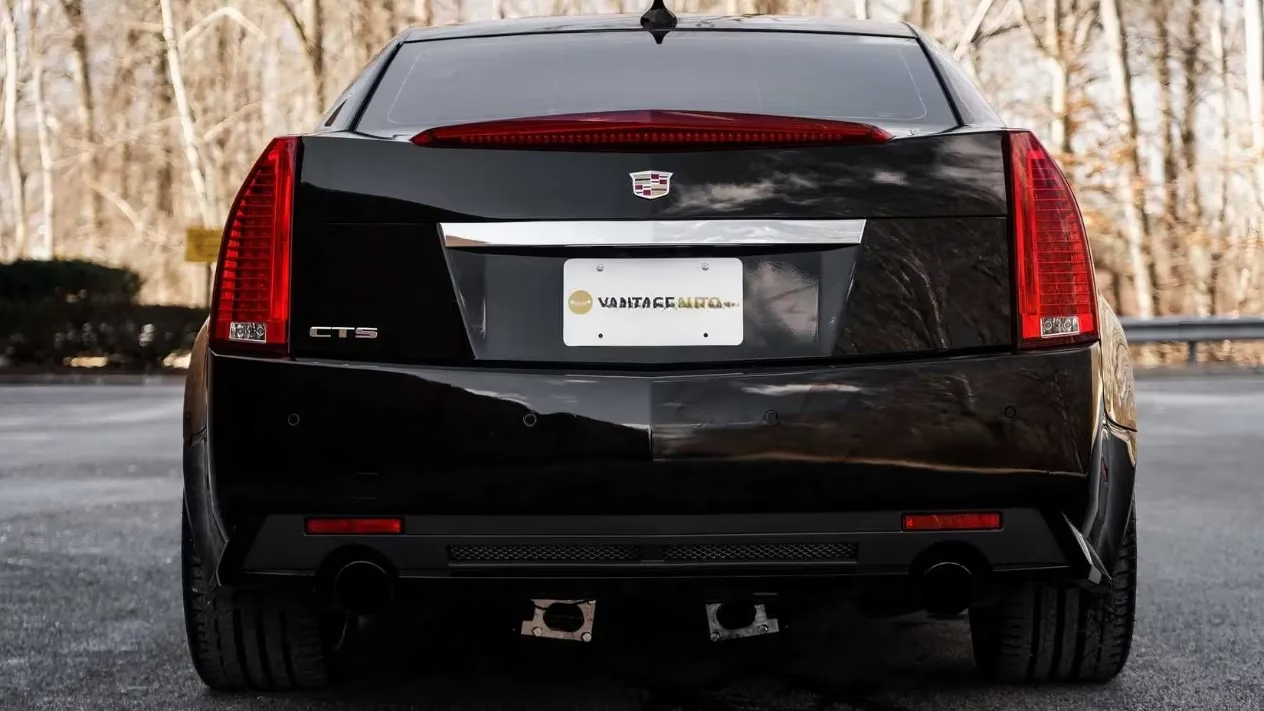
The 2026 Perspective: An Unbeatable Value King
Here's where it gets really interesting for us enthusiasts in 2026. When new, the CTS-V was a bargain compared to its rivals. At around $59,000, it undercut the $90,000 BMW M5 by a massive $31,000 while delivering similar (or better) performance.
Today, on the used market, the CTS-V represents arguably the best speed-per-dollar deal you can find. Let's look at the average used values (based on historical data, appreciating for 2026 market trends):
| Model Year | Approximate Value (2026) |
|---|---|
| 2009 CTS-V | ~ $22,000 |
| 2010 CTS-V | ~ $22,500 |
| 2011 CTS-V | ~ $23,700 |
| 2012 CTS-V | ~ $24,800 |
| 2013 CTS-V | ~ $26,200 |
| 2014 CTS-V | ~ $28,000 |
For roughly $22,000, you can get into a 2009 model that's capable of nearly 200 mph! The real kicker? That $90,000 2009 BMW M5 is worth significantly less today, often below $20,000. The Cadillac has held its value far better than the German titan it was chasing. It's a true modern classic.
Living with a Legend
Is it a practical daily driver? Surprisingly, yes! Reliability ratings for the CTS are average for the luxury segment, with annual repair costs around the $700 mark. But owner satisfaction for the CTS-V is through the roof. On review sites, it consistently scores near-perfect ratings. Owners rave about the combination of luxury, features, cavernous interior space, and, of course, earth-shattering performance. Many note its reliability for daily use, with one owner stating, "I am a REALTOR, so I have to know my vehicle is reliable. This is my fifth Cadillac since 1985."
Final Thoughts
So, there you have it. The second-generation Cadillac CTS-V wasn't just a car; it was a statement. It was America's bold, brash, and brilliantly effective entry into the super sedan wars. It took the best part of a legendary Corvette, wrapped it in a sharp, luxurious suit (and a wagon body!), and offered it at a price that embarrassed the establishment. In 2026, it stands as a testament to a glorious, less-restricted era of automotive engineering. For the price of a boring new compact crossover, you can own a piece of history that will blow the doors off most modern performance cars. Now that's what I call a deal! 🔥
Comments