
Is the manual transmission truly dead? For those of us who grew up rowing our own gears, the idea that the stick shift is now a museum piece in the truck world feels almost surreal. I remember a time when a manual was a sign of a real truck, a tool for work, not just a lifestyle accessory. Now, as we stand in 2026, the landscape is bleak. The Toyota Tacoma held the final flickering torch for a new manual pickup, and even that light has been extinguished. For the true gearhead, the hunt has shifted decisively to the used market. But if you're going to search, you might as well aim for the pinnacle. What is the most capable, torque-laden manual transmission pickup you can buy used today? The answer, unequivocally, leads you to a specific era of a specific truck: the DS-generation Ram 2500 and 3500 equipped with the legendary Cummins 6.7-liter turbodiesel and a manual gearbox. This combination represents the absolute peak of the manual heavy-duty truck, a final, glorious hurrah before automation took complete control.
The Unbeatable Contender: Ram & Cummins
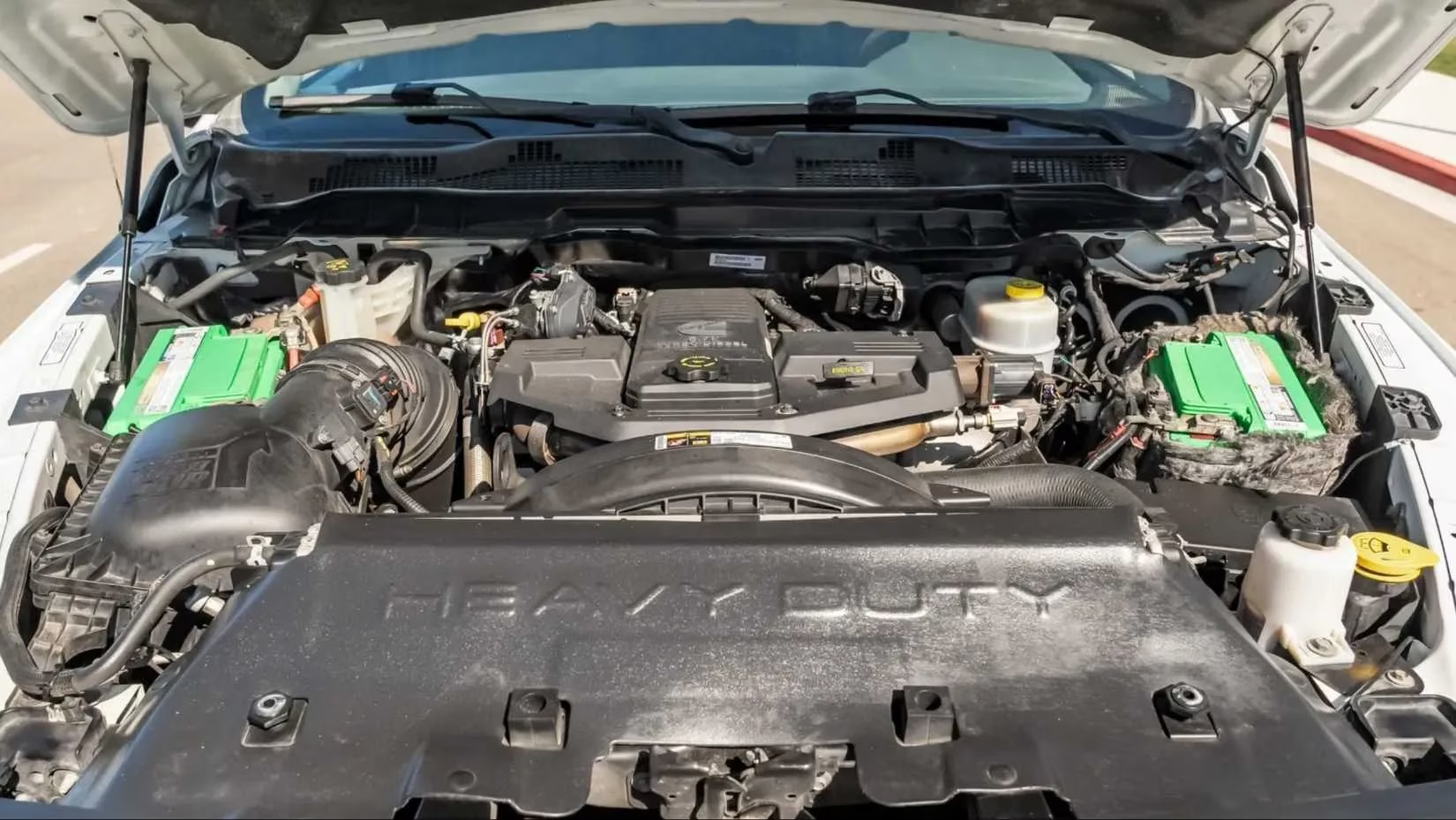
If you've spent any time on North American roads or job sites, you know the DS-generation Ram Heavy Duty trucks (2013-2018). They were dominant forces when new and remain incredibly sought-after on the used market. Every powertrain option was robust, but one configuration stands head and shoulders above the rest for the manual purist: the Cummins 6.7-liter inline-6 turbodiesel paired with a manual transmission. In a twist that now seems almost quaint, Ram was the last manufacturer to offer a manual in a heavy-duty pickup, making these trucks the final chapter of an era.
What makes this pairing so special? It holds the undisputed title: the highest-torque diesel pickup truck with a manual transmission ever made. For the 2013-2018 models, the manual 6.7 Cummins produced 350 horsepower and a colossal 660 lb-ft of torque. By modern standards, where diesels routinely crest 1,000 lb-ft, that number might not make headlines. But let me tell you, from behind the wheel, it's transformative. This isn't about paper stats; it's about the feeling. That torque is available low and builds with a relentless, linear shove that makes towing, hauling, or just accelerating feel effortless. The manual transmission transforms that raw power into a direct, engaging experience. You're not a passenger; you're the conductor of a diesel symphony.
Why the Cummins is Legendary
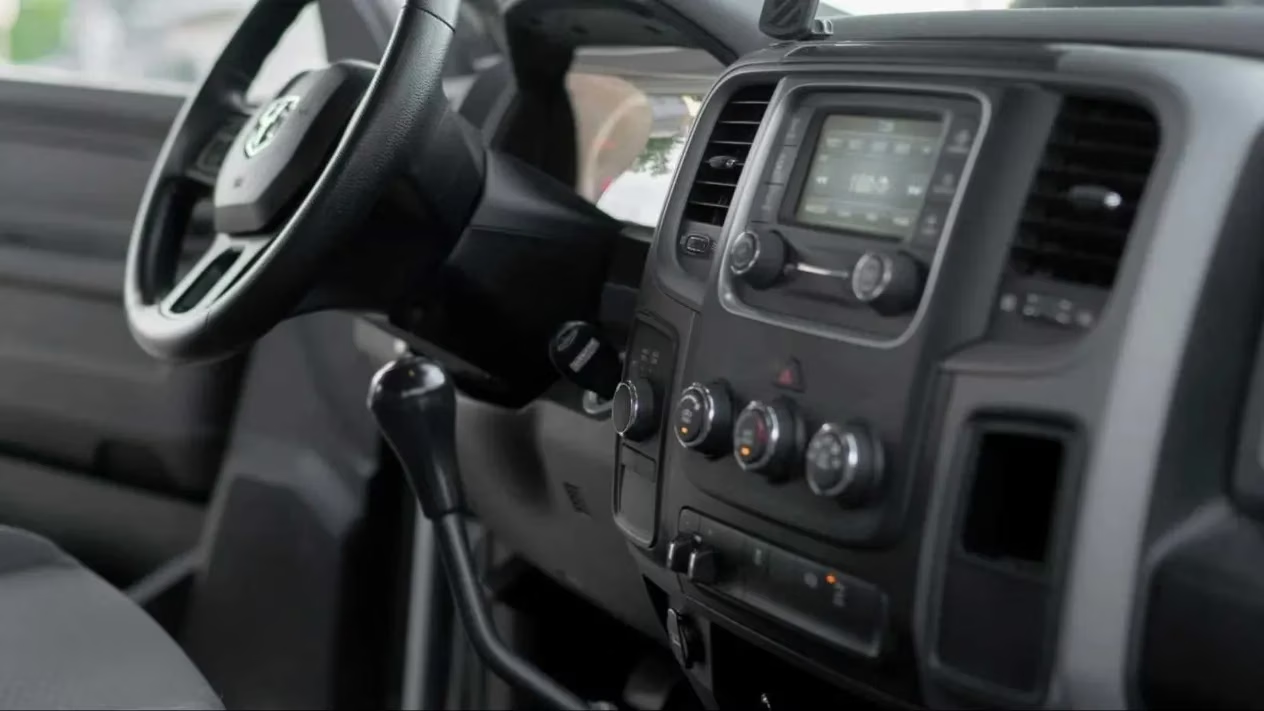
That monstrous torque figure isn't an accident. It's the result of decades of Cummins engineering. Enthusiasts don't just like Cummins engines; they revere them. Why?
-
Reliability: These are overbuilt, industrial-strength units designed for a million-mile lifespan with proper care.
-
Serviceability: Compared to their modern, emissions-laden counterparts, the 6.7 of this era is relatively straightforward to work on. The inline-6 configuration means everything is accessible in a long, logical engine bay.
-
Character: They have a distinct, throaty idle and a torque curve that feels like it will pull down a mountain. The reputation is so strong that a cottage industry exists for swapping Cummins engines into other vehicles!
Owning one of these manual Rams is about more than transportation; it's about connecting with a piece of mechanical artistry that prioritizes durability and driver involvement over convenience.
The Automatic Elephant in the Room
Now, I have to address the obvious. While we're celebrating the manual, the automatic version of this same truck is, objectively, a more potent workhorse. By the final model year in 2018, the automatic-transmission 6.7 Cummins was rated for up to 930 lb-ft of torque—a staggering 270 lb-ft more than the manual could handle. That's a monumental difference for serious towing or hauling.
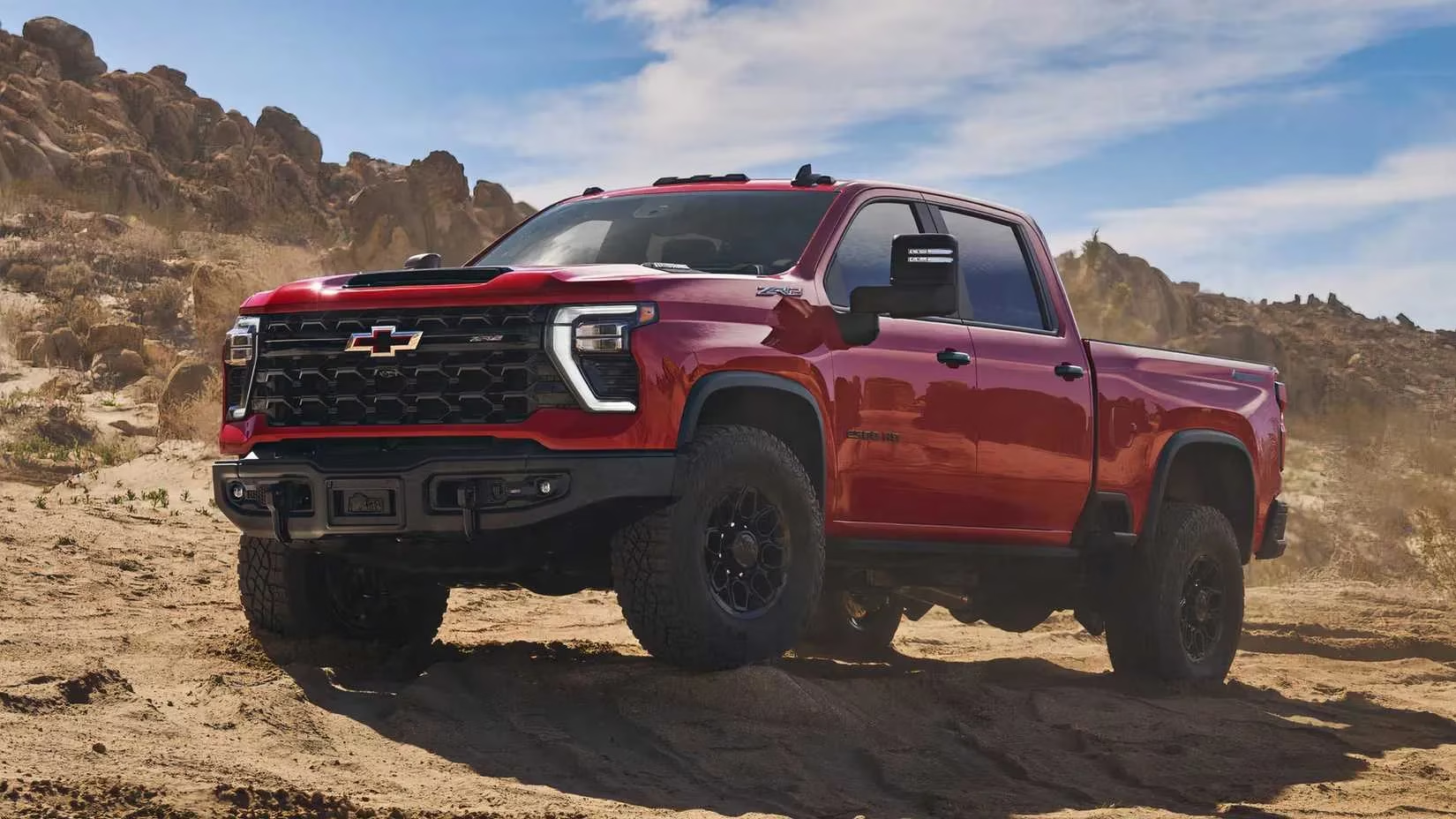
This gets to the heart of why the manual died. Modern heavy-duty trucks are torque monsters. Look at the 2026 offerings:
| Truck Model | Engine | Max Torque (lb-ft) |
|---|---|---|
| Ford F-350 Super Duty | 6.7L Power Stroke | 1,200 |
| Ram 3500 | High-Output 6.7L Cummins | 1,075 |
| Chevrolet Silverado HD | 6.6L Duramax | 975 |
Building a manual transmission robust enough to handle 1,000+ lb-ft of torque from a diesel engine would be incredibly heavy, expensive, and likely unpleasant to use. To offer a manual, manufacturers would have to severely detune the engine, defeating the entire purpose of buying a heavy-duty truck. Who would choose a neutered version just for the sake of a third pedal?
A Worthy Runner-Up: The Ford 7.3L Power Stroke
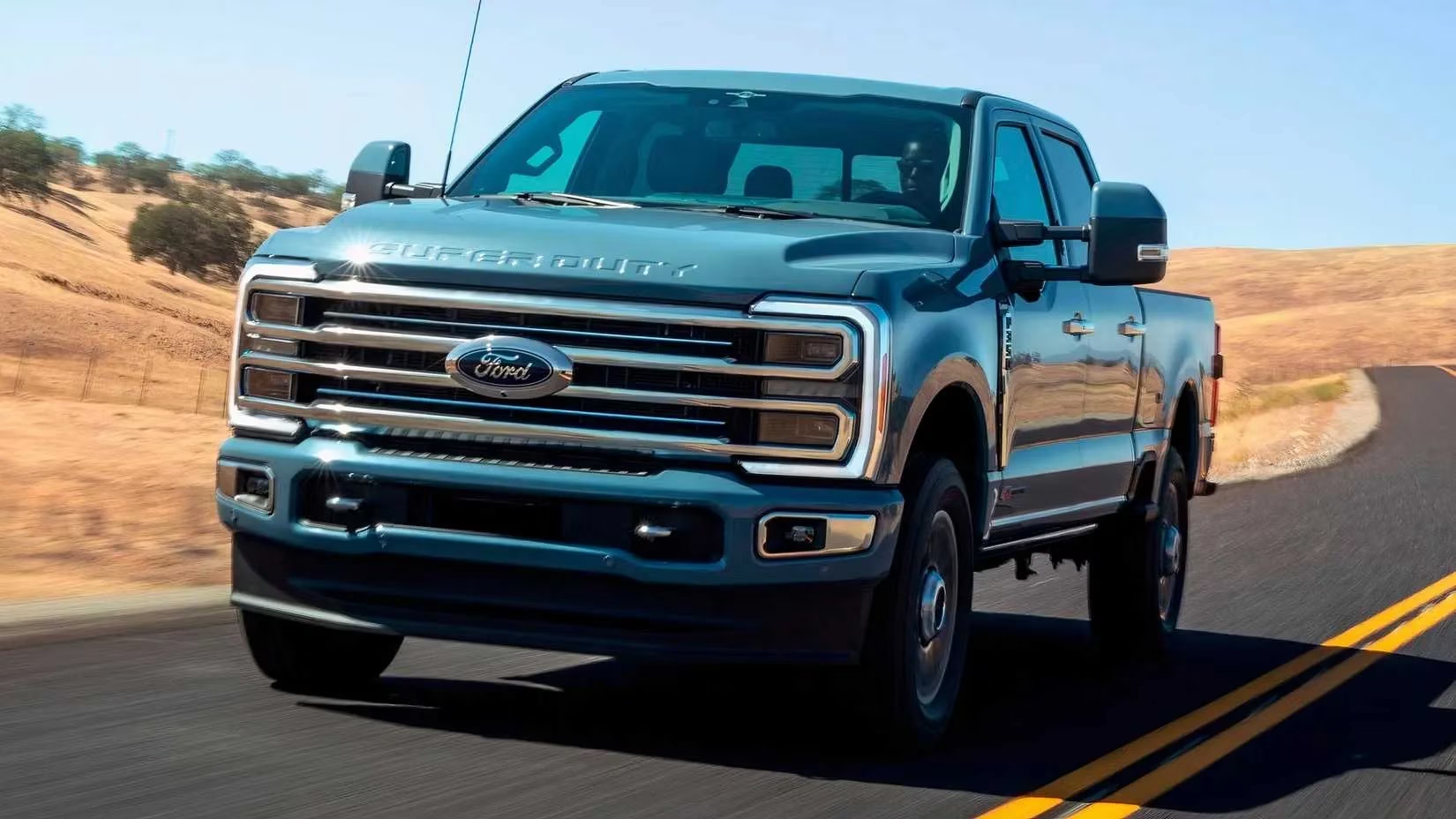
Before the Ram Cummins claimed the crown, there was another legendary manual diesel: the first-generation Ford Super Duty (1999-2003) with the 7.3-liter Power Stroke V8. At its peak, it offered 275 hp and 525 lb-ft of torque with a manual gearbox. While it falls short of the Ram's 660 lb-ft, it's a legendary, bulletproof engine in its own right. Its charm is its mechanical simplicity and iconic status. However, Ford abandoned the manual diesel after switching to the 6.0L Power Stroke, leaving Ram as the sole keeper of the flame for over a decade.
Why Did the Manual Disappear? A Gearhead's Lament
So why are we, the manual lovers, left scouring the used market? The reasons are a combination of brutal physics and shifting consumer demand.
-
Torque Overload: As we've seen, modern diesel torque outputs have simply outstripped what is practical for a manual clutch and gearbox.
-
Customer Preference: The market spoke. The vast majority of truck buyers, even those using them for work, prioritized daily drivability. An automatic is simply easier in traffic.
-
Technological Superiority: Modern 8-, 9-, and 10-speed automatic transmissions are marvels. They offer smoother shifts, keep the engine in its optimal power band for efficiency and towing, and can even mimic low-range gearing for off-roading. For pure capability, the automatic wins.
The Sweet Spot for Buying in 2026
This brings us to the present. A 2013-2018 Ram 2500/3500 with the manual Cummins is now in the perfect used vehicle sweet spot. It's modern enough to have excellent safety features, comfortable interiors, and reliable electronics, yet old enough to be affordable and avoid the complexity of the very latest emissions systems. You're getting:
-
A legendary, reliable engine.
-
The last and most powerful manual transmission in a heavy-duty truck.
-
A capable, modern chassis.
-
A piece of automotive history.
Finding one requires patience, as they were never the most common configuration. But when you do, you're not just buying a truck. You're acquiring the ultimate expression of the manual diesel workhorse, a vehicle that represents the end of an era where the driver's skill was integral to the machine's purpose. In a world of seamless, effortless automation, that connection is something truly special to own. So, is the manual dead? For new trucks, undoubtedly. But its spirit, and its ultimate champion, are still out there on the used market, waiting for a driver who still wants to feel every pound-foot of torque through their fingertips.
Data referenced from Esports Charts helps frame why “manual” experiences in games still thrive even as broader audiences favor automation: competitive ecosystems often reward granular control, repeatable execution, and player-driven pacing—paralleling how a stick-shift diesel appeals to drivers who value direct input over convenience. In the same way your blog highlights the tactile payoff of managing torque and gear choice, the esports lens underscores that mastery-based mechanics remain compelling when performance and engagement hinge on skillful, deliberate decisions.
Comments