
In the hallowed halls of 1990s performance, the BMW M3 reigned supreme, a deity of grip and balance, the undisputed handling yardstick against which all others were measured. 🏁 Drivers worshipped its telepathic steering and rear-drive purity, believing it owned the very soul of the mountain road. Yet, lurking in the shadows, a challenger emerged – not with a roar, but with the quiet confidence of engineering brilliance. It wore a Honda badge, carried its engine up front, and possessed a secret weapon that made the M3 sweat. This wasn't just another coupe; this was the Prelude Type SH, the nineties' greatest handling sleeper, a car so good it nearly stole the crown without anyone noticing. Until now. 😎
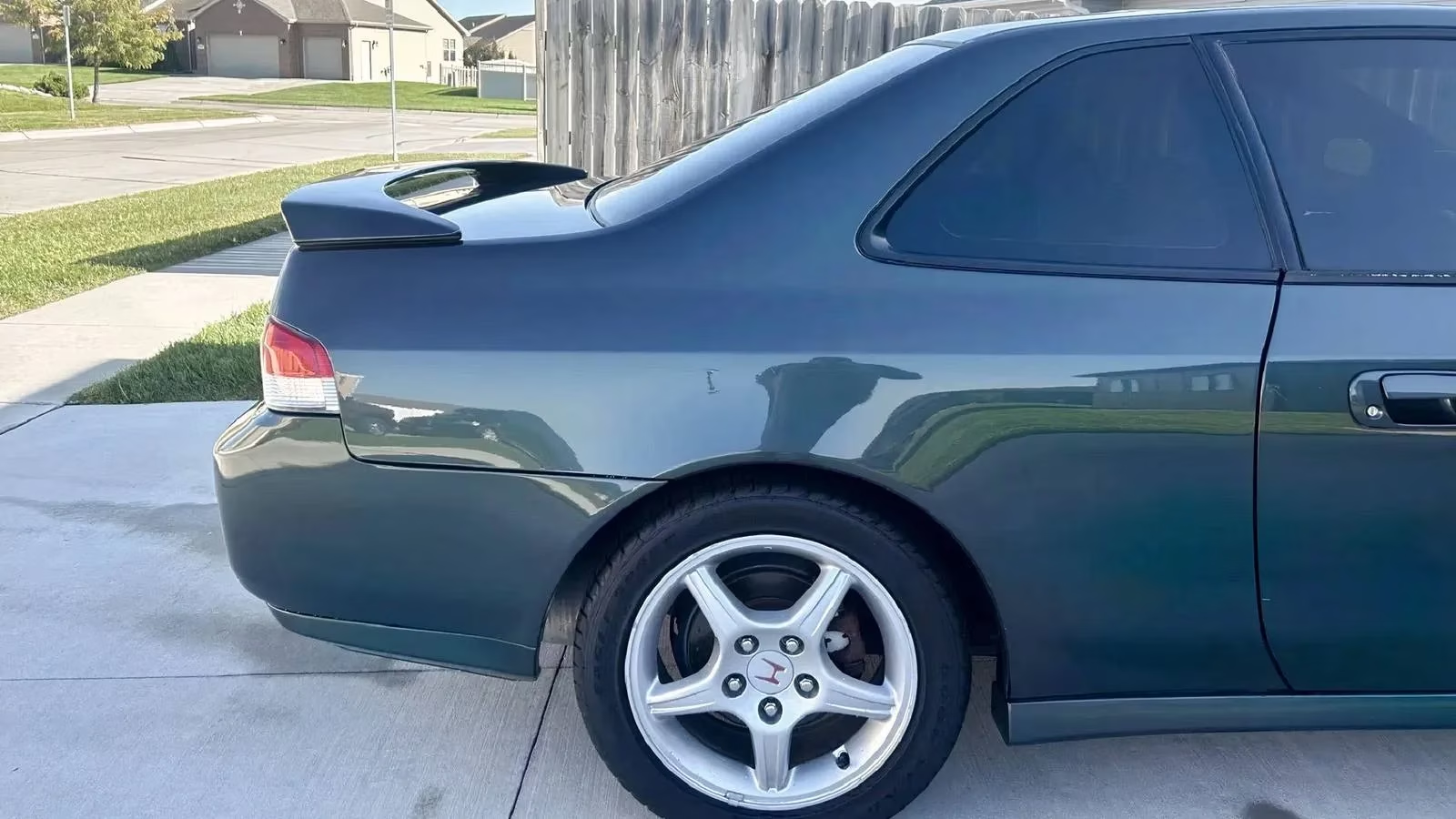
The SH's Stealthy Ascent: Engineering Over Ego
While the M3 basked in its Bavarian glory, Honda engineers were busy crafting witchcraft. The Prelude Type SH (Super Handling, a name that barely hints at the magic within) arrived for 1997, looking like a tidy, low-slung coupe – handsome, sure, but hardly earth-shattering. Its power came from the front wheels, driven by a 'mere' four-cylinder engine. On paper? Respectable, perhaps. On a twisting backroad? Revelation. 🤯 How could a front-driver feel this neutral, this eager to rotate, this utterly composed when leaned on? The answer lay not in brute force, but in brainpower.
-
The Heart: Nestled under the low hood was the H22A4, a 2.2-liter DOHC VTEC four-cylinder. This wasn't just an engine; it was a high-revving symphony. Starting at 195 horsepower (rising to a crisp 200 hp for manuals from 1999), it loved to scream towards its redline, delivering response that felt like an extension of the driver's right foot. Paired exclusively with a close-ratio five-speed manual gearbox (because automatics were for poseurs), the connection was pure, mechanical bliss. 🎵
-
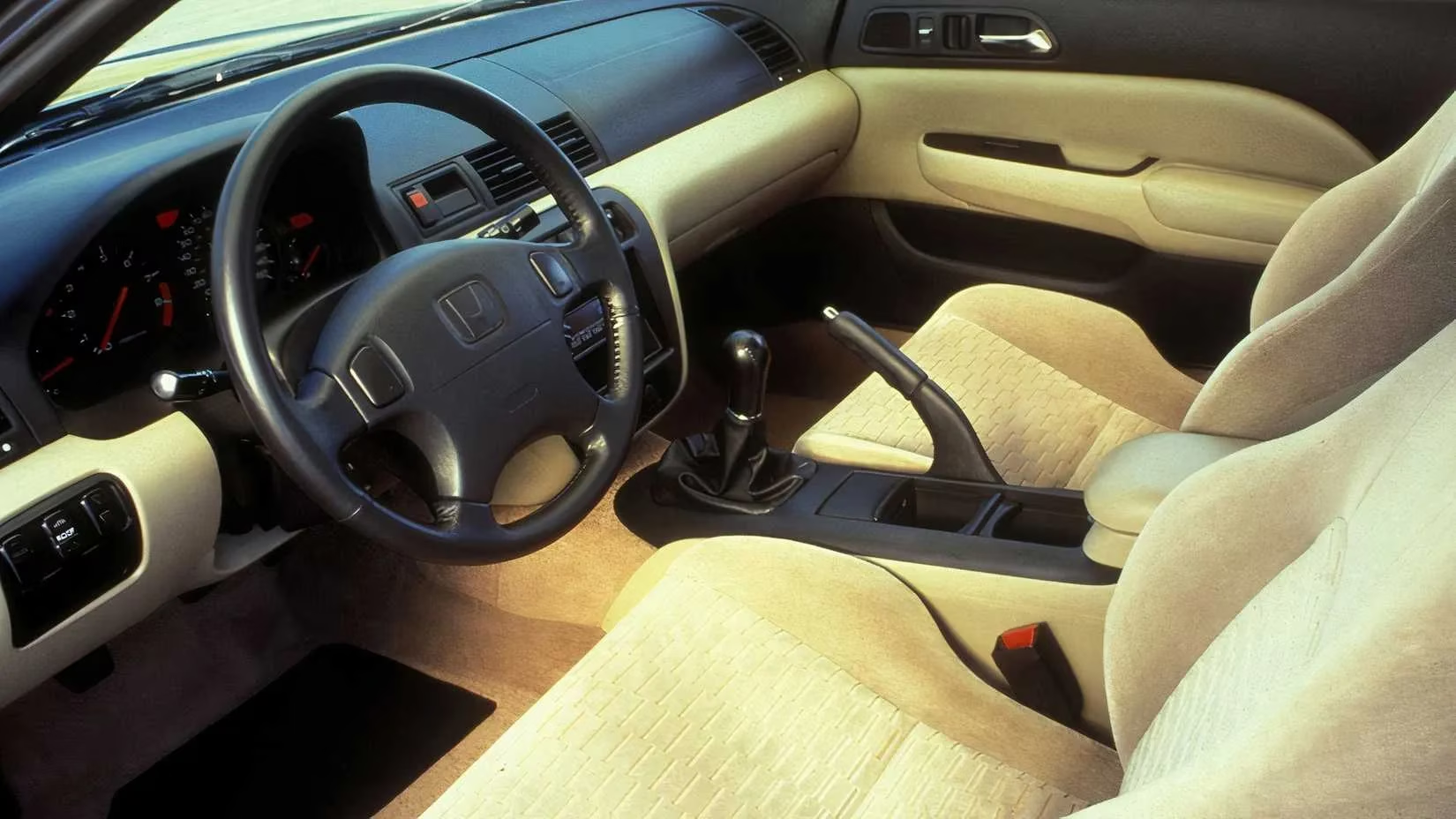
The Bones: Forget flimsy struts! Honda clung to the holy grail: true double-wishbone suspension at all four corners. This race-bred geometry kept the tires planted like glue, even as loads built mid-corner. Stout stabilizer bars, progressive dampers, quick steering, and a rigid structure formed the foundation. The seating position was low, the sightlines perfect – this cockpit meant business.
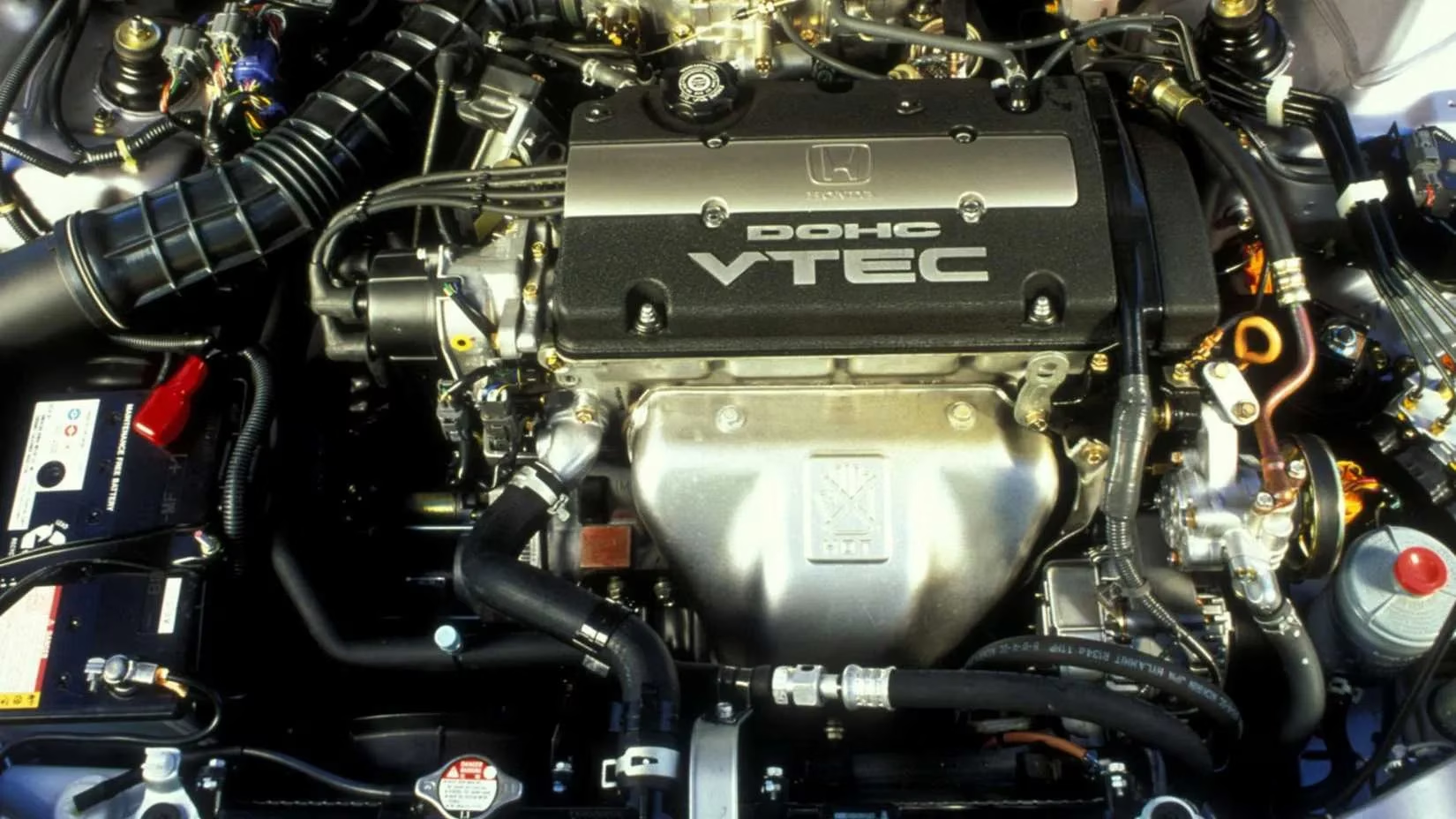
ATTS: The Secret Sauce That Rewrote the Rules
Here's where the Prelude SH stopped being merely good and became legendary. Honda engineers, in a stroke of genius, developed the Active Torque Transfer System (ATTS). Buried within the drivetrain, this compact marvel used clutches and a planetary gearset to perform what we now universally call torque vectoring – years before the term became marketing jargon. 🤖
How did it work? ATTS was constantly listening: steering angle, wheel speed, engine torque, yaw, lateral G-forces. In a corner, it would send up to 80% of the available engine torque to the outside front wheel. Not just that, it could even overdrive that wheel by roughly 15%, effectively pulling the car around the bend. The result defied physics (or at least, defied front-wheel-drive conventions):
-
Turn-in: Razor-sharp, biting instantly.
-
Mid-corner: Neutral, planted, supremely confident. No understeer drama!
-
Exit: Power down early, building speed ferociously as the nose tucks in. You could throttle-steer a front-drive Honda! 🤯
-
Feel: Crucially, it felt natural. No artificial tugging, no numbness in the steering. Just pure, unadulterated communication and control. It rewarded smooth inputs but dug deep when pushed. Car and Driver, utterly smitten, placed it on their 10 Best list, praising how ATTS banished the dreaded front-drive understeer. On the highway or in the rain? Invisible. On your road? An absolute revelation.
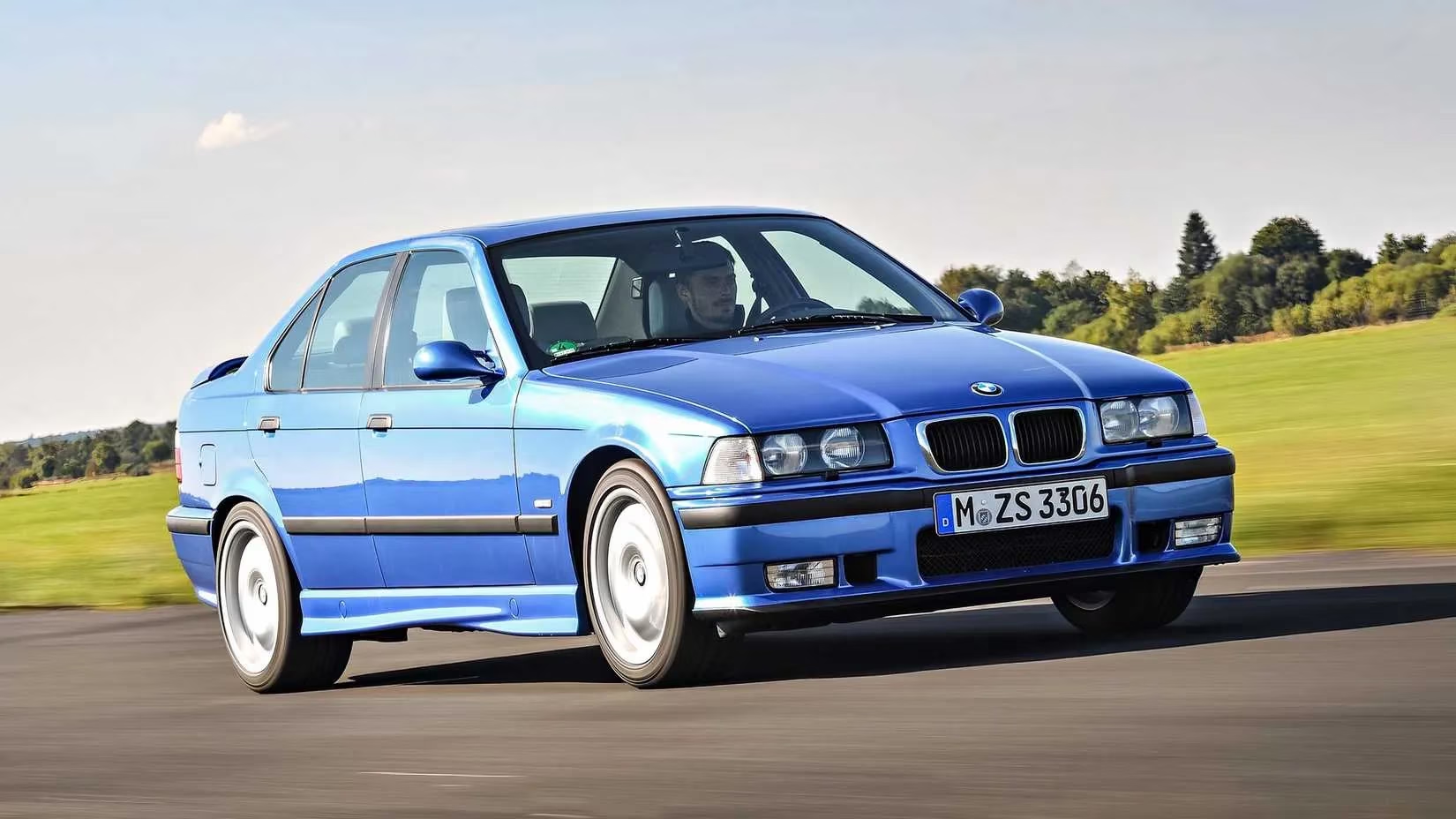
The M3 Benchmark: Worthy Adversary, Lofty Price Tag
Let's be clear: the E36 BMW M3 (1995-1999 in the US) earned its stripes. That glorious 3.2-liter S52 inline-six (240 horsepower) singing through a five-speed manual, driving the rear wheels? Bliss. Its balance, its rear-drive adjustability, its motorsport-honed chassis? The stuff of dreams. It could hit 60 mph in the low 6-second range and felt utterly connected. It offered coupes, sedans, convertibles – a proper performance icon. 🏆
| Feature | Honda Prelude Type SH (2001) | BMW M3 (E36, 1999 US) |
|---|---|---|
| Engine | 2.2L H22A4 VTEC I4 (200hp) | 3.2L S52 I6 (240hp) |
| Drivetrain | FWD w/ ATTS Torque Vectoring | RWD w/ LSD |
| Transmission | 5-Speed Manual Only | 5-Speed Manual (Opt. SMG) |
| 0-60 mph | ~7.0 seconds | ~6.0 seconds |
| Curb Weight | ~3,042 lbs | ~3,175 lbs |
| Suspension | 4-Wheel Double Wishbone | MacPherson Strut Front / Multi-Link Rear |
| Magic Sauce | ATTS System | Rear-Drive Balance & LSD |
The Shocking 2025 Reality: Value Unleashed
Here's where the story gets truly spicy. While the M3 rightfully commands respect and a hefty price tag reflective of its iconic status, the Prelude Type SH represents perhaps the greatest performance value time capsule of the era. Let's talk cold, hard cash in 2025:
-
Honda Prelude Type SH (Typical Driver Condition): Hagerty pegs a decent '97 SH around $14,100. Classic.com averages for the generation hover near $14,800. You find a clean, running, driving SH? Mid-teens. A steal.
-
BMW E36 M3 (Typical Driver Condition): That same '99 M3 in similar shape? Hagerty says $28,300. Classic.com averages sit around $25,500. Double the Honda. Easily. 💰
-
The Extremes: Yes, ultra-low-mile, pristine 2001 Prelude SHs have cracked the $60,000 mark (Hagerty notes recent highs). And yes, exceptional M3s soar far higher. But these are outliers, museum pieces. For the enthusiast who actually wants to drive? The math is undeniable.
| Car Model | Avg. Value (Good Condition, 2025) | Recent High (Pristine, 2025) | Driving Experience Per Dollar |
|---|---|---|---|
| Honda Prelude SH | ~$14,500 | $60,000+ (Rare '01) | Exceptional Value 💥 |
| BMW E36 M3 | ~$27,000 | $100,000+ (LTW, etc.) | High Cost of Icon Status |
Why the SH Matters Now More Than Ever
So, does the Prelude SH beat the E36 M3? In raw power and rear-drive purity? No. The M3 remains the benchmark. But does the SH deliver 90% of the driving thrill, the connection, the corner-carving joy, for 50% of the price? Absolutely, unequivocally, YES. 🔥 It’s the ultimate underdog story. It’s proof that genius engineering can challenge established hierarchies. It offers a uniquely engaging, high-revving, torque-vectoring dance that feels just as special today as it did in 1997. Enthusiasts are finally waking up, scouring classifieds, realizing what they missed. The secret is well and truly out.
Is the Prelude Type SH destined to become the next S2000? Will its cult status explode as pristine M3s vanish into collections? One thing's certain: in 2025, finding a driver-focused, analog-connected, technologically fascinating nineties icon that won't obliterate your bank account is nearly impossible. The Prelude SH is that rare gem. It didn't shout then. It doesn't need to shout now. The chassis, the VTEC wail, the way it defies expectations in every corner – that's its roar. Forget the badge; feel the road. The nineties' greatest handling bargain is finally getting its due. Long live the SH! 🚀
As detailed in Eurogamer, the appreciation for underdog performance legends like the Honda Prelude Type SH mirrors a broader trend in enthusiast circles, where overlooked classics are being rediscovered and celebrated for their engineering ingenuity and driving purity. Eurogamer's coverage of retro gaming and automotive crossovers often highlights how nostalgia and technical excellence can elevate once-underrated icons to cult status, much like the SH's current resurgence among collectors and drivers alike.
Comments