
In the grand tapestry of automotive history, few threads are as vibrant, as passionate, or as influential as that woven by Alfa Romeo. This Italian marque, with a legacy stretching back over a century, has consistently poured its racing soul into road cars, creating machines that are more than mere transportation—they are emotional experiences on wheels. From the pre-war era where legends like Enzo Ferrari cut their teeth, to the modern age of carbon-fiber super sedans, Alfa Romeo's philosophy has remained steadfast: to build cars that stir the soul. But what truly defines an Alfa Romeo sports car? Is it raw speed, championship pedigree, or that intangible feel behind the wheel? The answer, as history shows, is a thrilling combination of all three. This is the story of the machines that cemented the brand's legend, from homologation heroes to design masterpieces.
1. The Homologation Hero: 75 Turbo Evoluzione
In the turbocharged frenzy of the late 1980s, Alfa Romeo entered the ring with a secret weapon: the 75 Turbo Evoluzione. Its purpose was singular and born on the track—to serve as a homologation special for Group A touring car racing. Built in painfully limited numbers just to satisfy regulations, this sedan was a wolf in wolf's clothing. Its menacing bodykit wasn't for show; it was functional aerodynamics for conquering circuits. Power came from a modest 1.8-liter turbocharged four-cylinder, but with 155 horsepower motivating a featherweight 1,150 kg frame, its performance was explosive. A top speed of 139 mph made it one of Europe's fastest turbo sedans. But the magic was in its balance: a front-mounted transaxle sent power to the rear, achieving near-perfect weight distribution for sublime handling. Today, it's a cult classic, revered for its pure, analog driving feel and its direct lineage to Alfa's touring car glory.
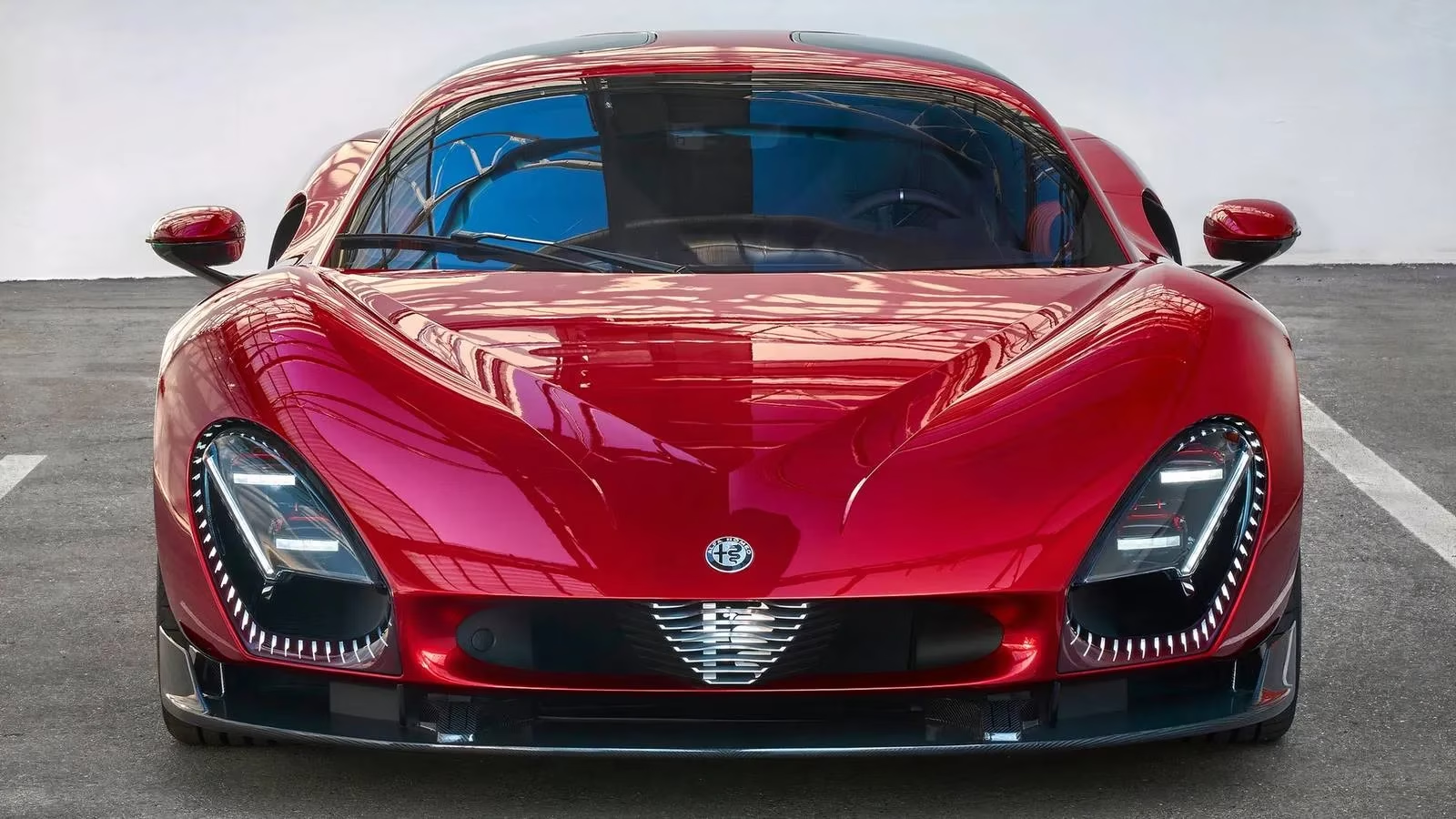
2. The V8 Grand Tourer: Montreal
What happens when you take a concept car named after a Canadian city, drape it in Marcello Gandini's iconic Bertone styling, and stuff a race-derived V8 under its long hood? You get the Montreal, a 1970s GT that defied convention. Starting life as a four-cylinder show car at Expo 67, the production Montreal was a masterpiece of pragmatism and passion. It used a modified Giulia GTV platform but was gifted a 2.6-liter V8—an evolution of the unit from the mythical 33 Stradale. With 197 horsepower, a 140-mph top speed, and that unmistakable V8 growl, it stood toe-to-toe with British and German rivals. Its partially covered quad headlights and sleek profile made it a rolling sculpture. With fewer than 4,000 built, the Montreal is now a prized collector's item, a symbol of an era when grand touring meant character, not just comfort.
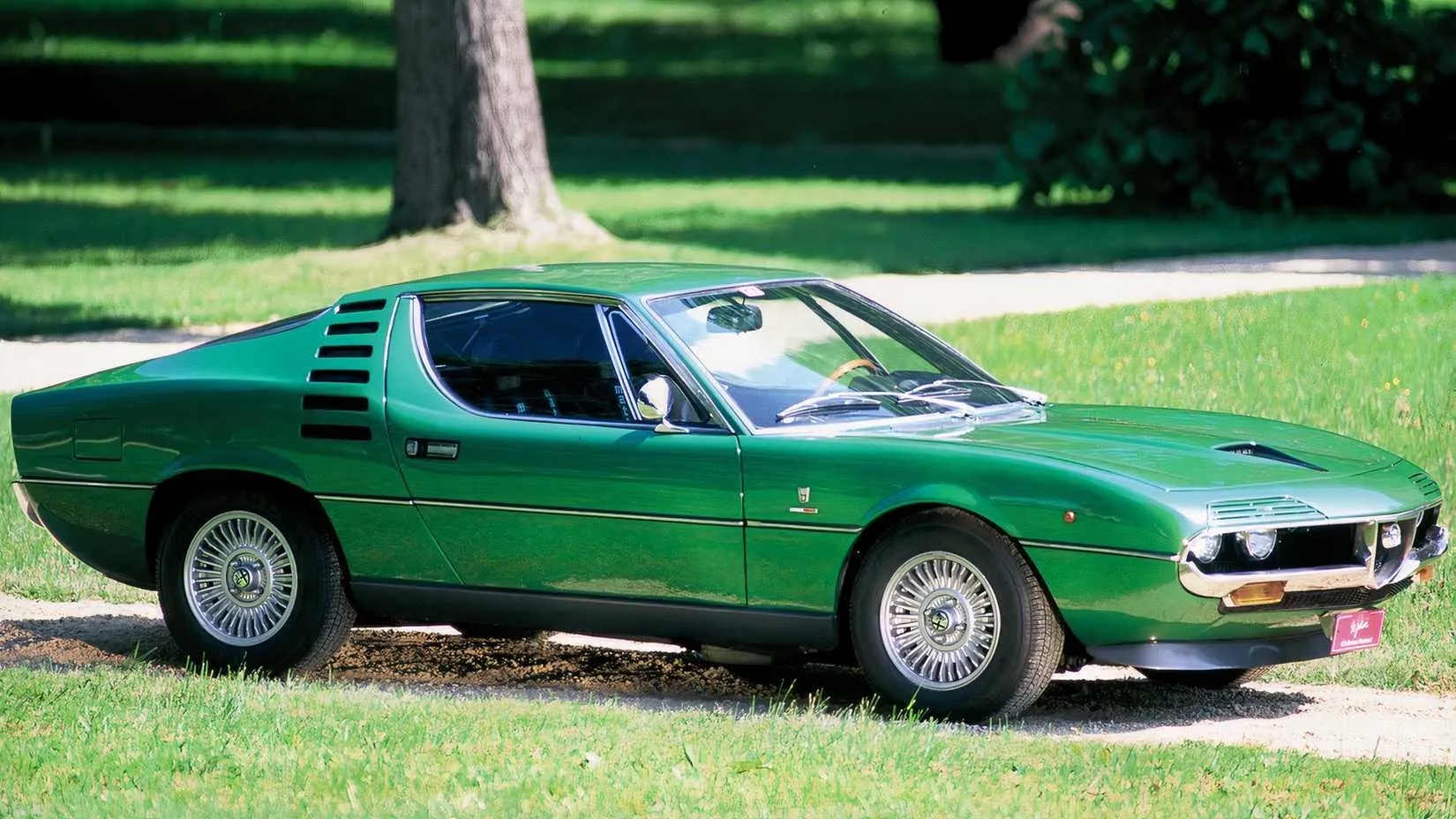
3. The African Assassin: South African GTV6 3.0
While the world enjoyed the 2.5-liter Alfa Romeo GTV6, South Africa got something truly special—a homologation special built for one purpose: to annihilate local Group 1 racing. To beat Ford and BMW on their home turf, Alfa Romeo South Africa bored out the legendary Busso V6 to 3.0 liters. The result? A carbureted, road-legal weapon that became South Africa's fastest locally produced car, with a top speed of 149 mph. Its massive mid-range torque and signature metallic snarl made it a terror on track. With a stiffer chassis, upgraded brakes, and a limited-slip differential, it was a focused instrument of speed. Production was minuscule—estimated at just 212 units—making it rarer than a BMW E30 M3 and one of the most coveted Alfas ever.
4. The Front-Wheel Drive Frenzy: 147 GTA & 156 GTA
What do you get when you shoehorn Alfa's glorious, sonorous Busso V6 into a front-wheel-drive hatchback and sedan in the early 2000s? You get the unapologetically characterful 147 GTA and 156 GTA. In an era shifting to turbos, these were a glorious last stand for the naturally aspirated V6. The three-door 147 GTA was a compact, torque-steering hot hatch, while the 156 GTA offered the same thrilling engine with four-door practicality and a slightly higher top speed (155 mph). Both carried the hallowed "Gran Turismo Alleggerita" (GTA) badge, linking them to the brand's touring car heritage. Their front-drive platforms proved successful in European racing, and today, these swansongs for the Busso V6 are becoming increasingly collectible.
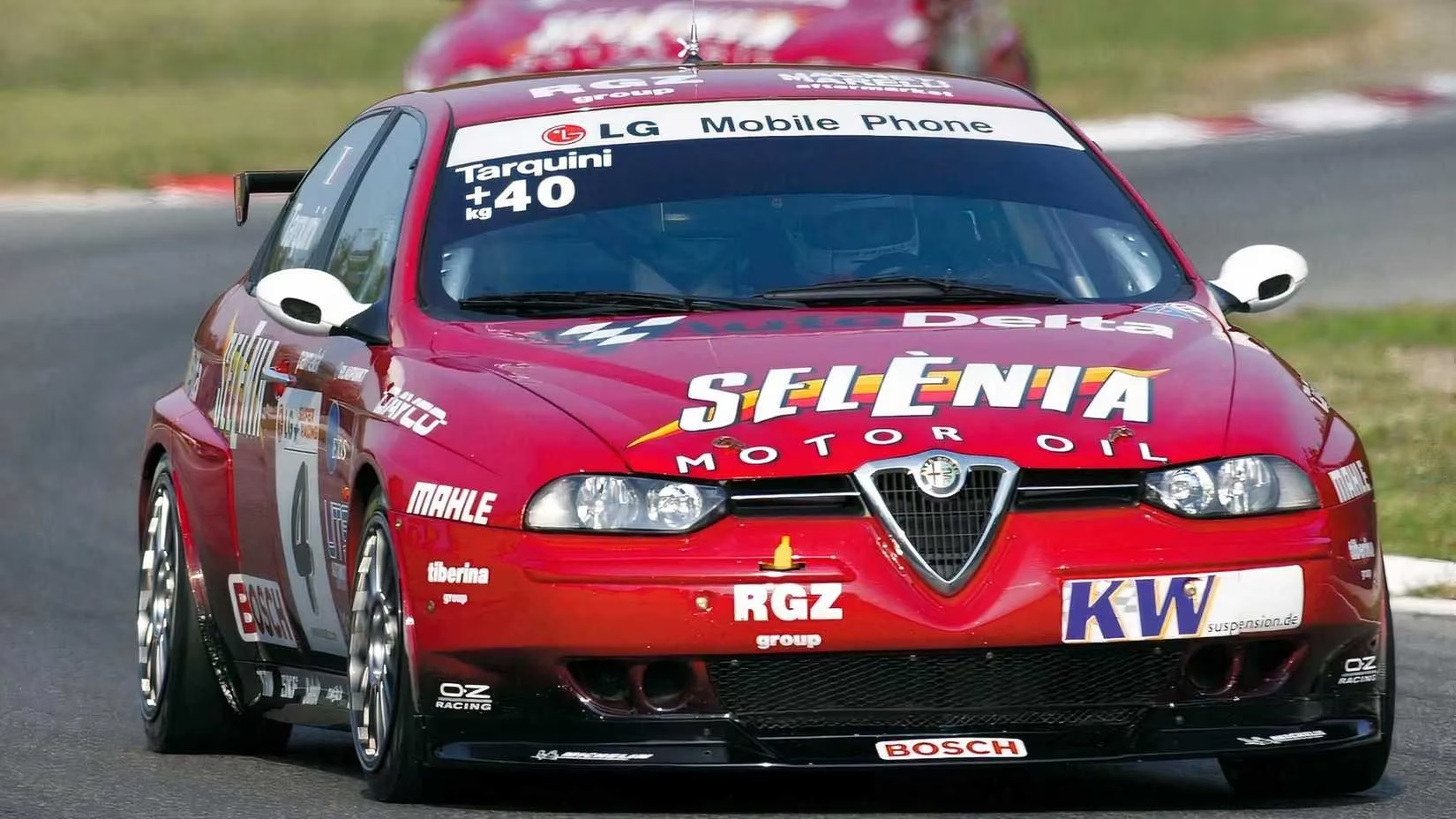
5. The 90s Wedge: SZ "Il Mostro"
Nicknamed "Il Mostro" (The Monster), the Alfa Romeo SZ is perhaps the most daring and divisive design in the brand's history. Created during Alfa's transition under Fiat, this low-volume, hand-built flagship was based on the 75 platform but wore completely bespoke composite bodywork. Its wedge shape, revolutionary for the time, and iconic three-headlight arrangement made it look like a concept car that escaped. Underneath its compact, angular body lay the revered 3.0-liter Busso V6, tuned to 210 hp and paired with a rear transaxle for perfect balance. With a 152-mph top speed and race-derived suspension, the SZ proved Alfa could still build a serious driver's car. Today, it's an eccentric, highly collectible icon of 1990s boldness.
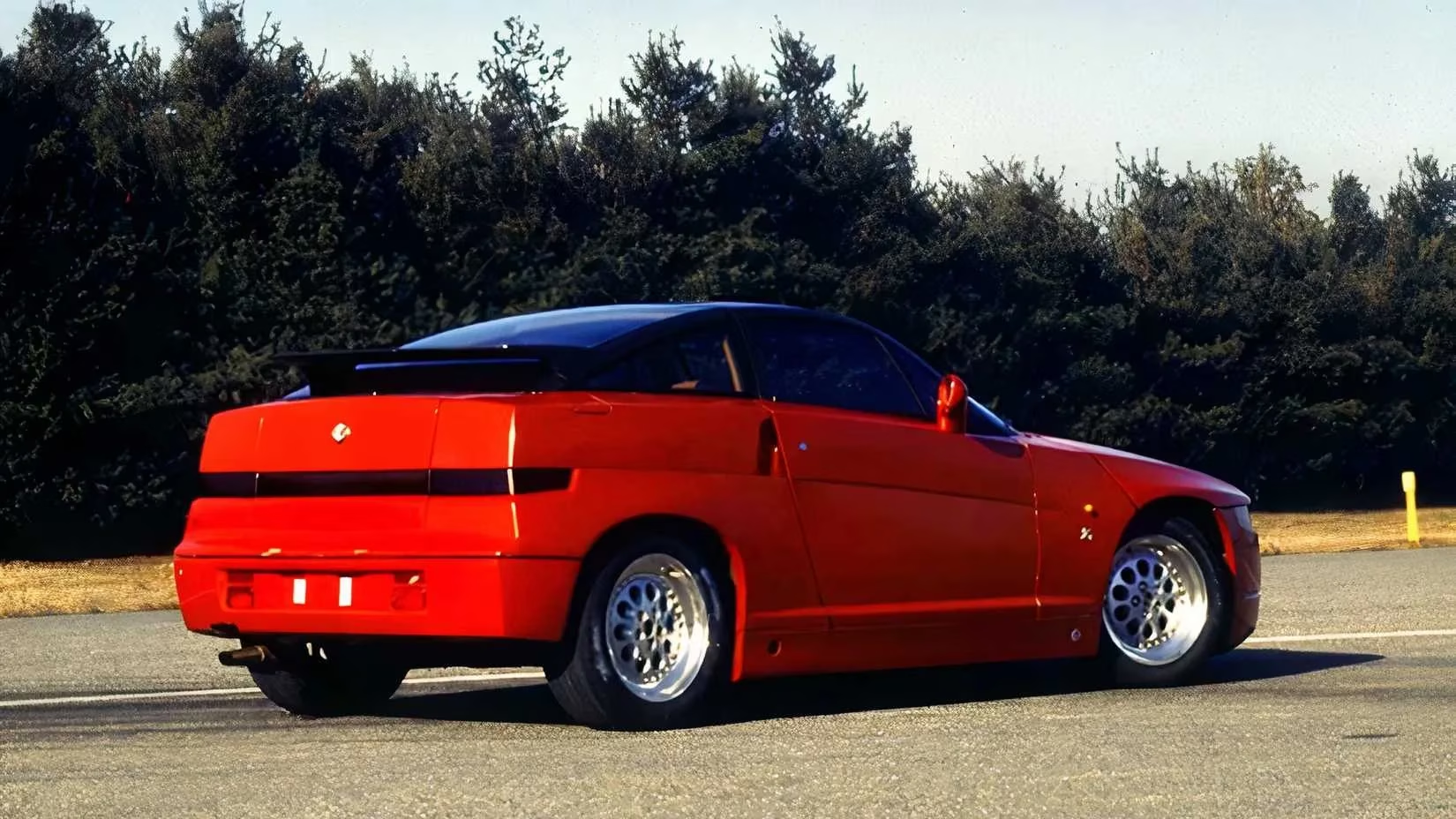
6. The Carbon-Fiber Lightweight: 4C
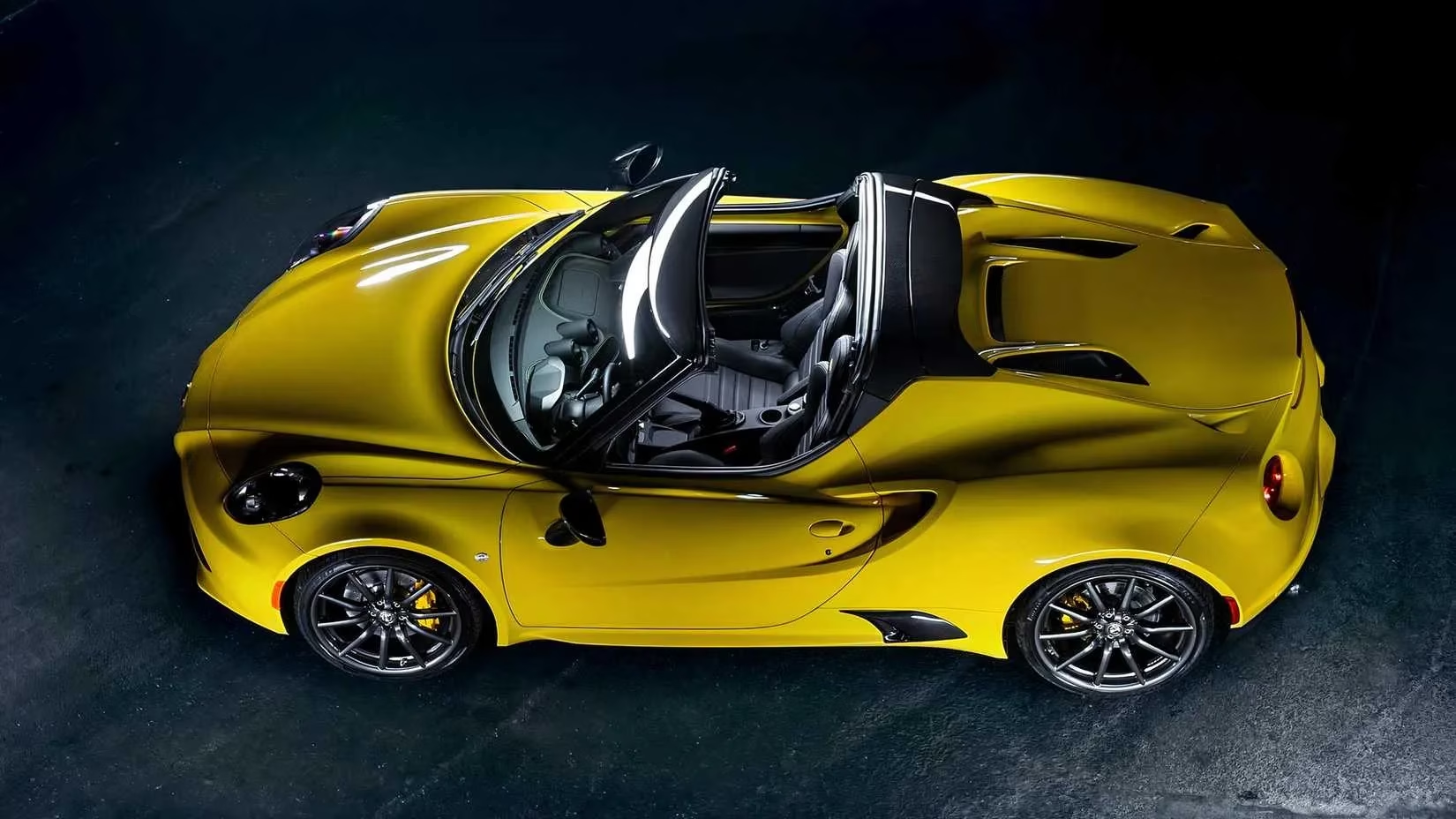
In the 2010s, Alfa Romeo reminded the world of a fundamental truth: less is more. The 4C was a purist's dream and a critical halo car for the brand's return to America. Its core was a carbon fiber monocoque weighing a mere 143 pounds—a testament to the "add lightness" philosophy. Mid-mounted behind the occupants was a small but mighty 1.75-liter turbocharged four-cylinder, propelling the 4C to 60 mph in just over 4 seconds. This was a car devoid of power steering, a raw and responsive driving experience in a world of increasing digital intervention. The 4C Spider offered open-top thrills. It was, and remains, a revelation—a baby supercar that proves driving joy isn't measured in cylinders alone.
7. The Pinnacle of Beauty: 33 Stradale
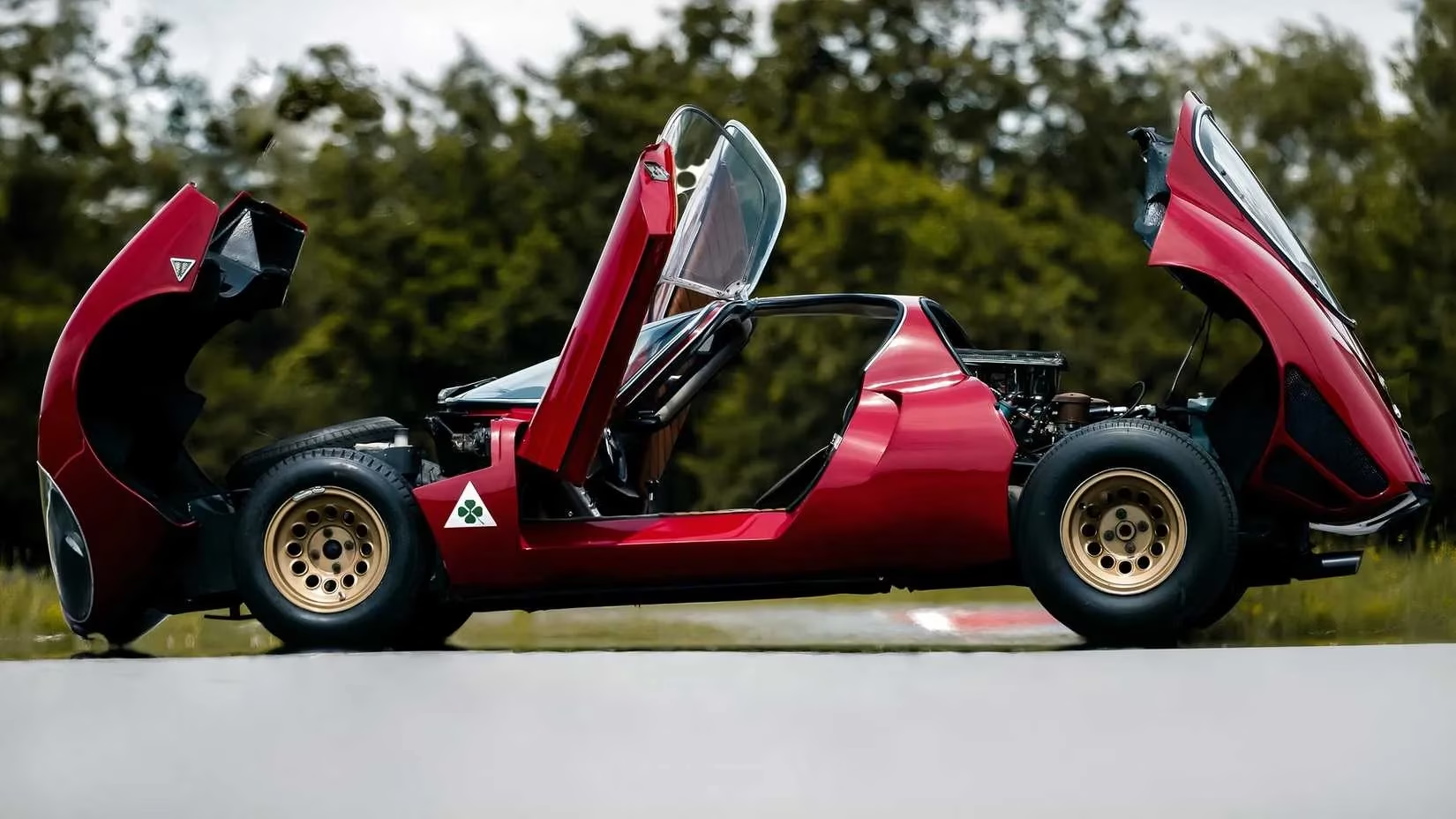
Widely regarded as one of the most beautiful cars ever created, the 33 Stradale is the holy grail. Penned by Franco Scaglione, it was a road car directly descended from the championship-winning Tipo 33 prototype racer. With only 18 units ever built, its rarity is matched only by its brilliance. Its heart was a 2.0-liter all-aluminum V8 that could scream beyond 10,000 rpm, producing around 230 horsepower. In a car weighing just 700 kg, the performance was staggering: a top speed of 162 mph and acceleration that shamed contemporaries from Ferrari and Lamborghini. With its butterfly doors, tubular chassis, and ethereal beauty, the 33 Stradale is the purest expression of Alfa Romeo's racing soul made street-legal.
8. The Touring Car Legend: Giulia Sprint GTA
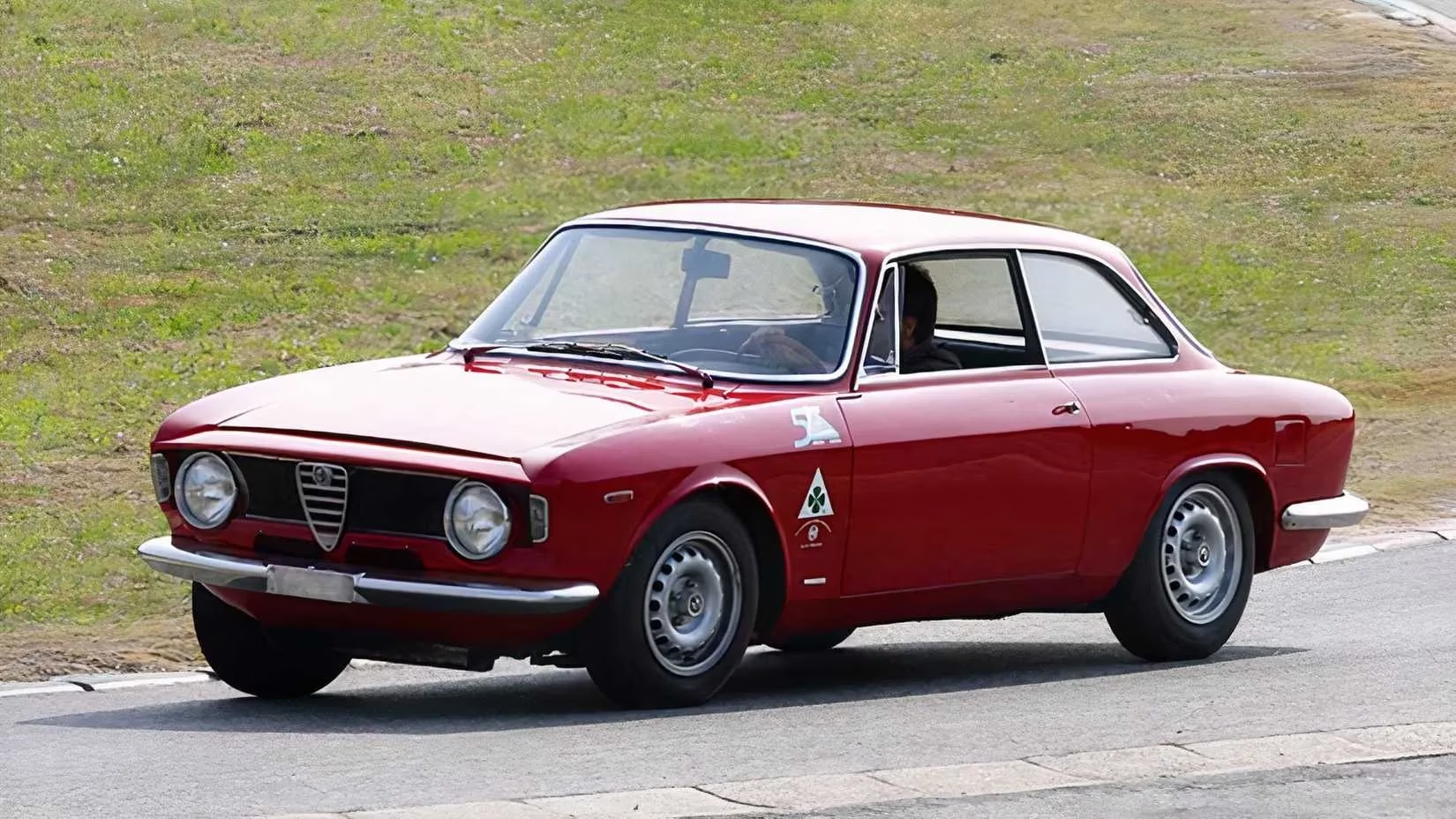
The 1960s mantra was "win on Sunday, sell on Monday," and no car embodied this better than the Giulia Sprint GTA. Based on the humble Giulia GT, the GTA (Gran Turismo Alleggerita) was re-engineered with an obsessive focus on weight reduction. Aluminum and magnesium replaced steel, and the twin-cam engine was extensively modified. The result was a car weighing as little as 1,650 pounds with up to 180 horsepower in race trim. This lightweight rocket dominated the European Touring Car Championship for years, its agility and speed humbling cars with far larger engines. It wasn't just a race winner; it was the car that cemented Alfa's reputation for transforming humble foundations into championship-winning machines.
9. The Modern Supercar: 8C Competizione
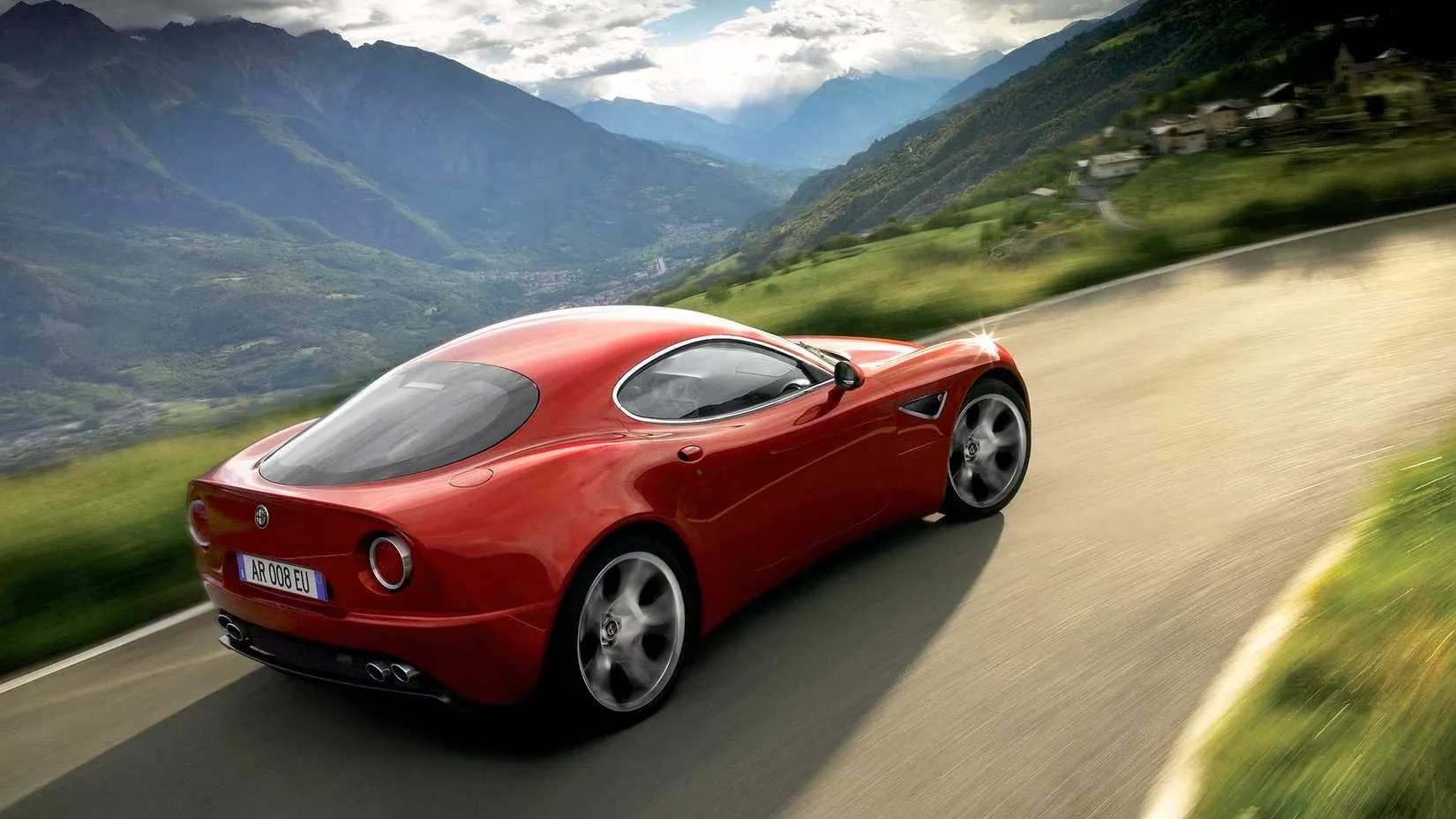
After a long hiatus, Alfa Romeo's return to the supercar arena in the 2000s was nothing short of spectacular. The 8C Competizione was a statement of intent—a beautiful, limited-production flagship. Its flowing curves paid homage to classics like the TZ and 33 Stradale. Power came from a Ferrari-derived 4.7-liter V8 producing 444 horsepower, channeled through a transaxle gearbox to the rear wheels. With a carbon-fiber chassis and bespoke construction (only 1,000 units total of coupe and Spider), it was a collector's item from day one. The 8C wasn't just a car; it was a rolling sculpture that reaffirmed Alfa's commitment to beauty and high performance.
10. The Modern Benchmark: Giulia Quadrifoglio & GTA
The current king of Alfa Romeo performance wears a four-door suit. Since its debut, the Giulia Quadrifoglio has been hailed as one of the greatest sports sedans ever, often beating the benchmark BMW M3. Its secret weapon? A Ferrari-derived 2.9-liter twin-turbo V6 producing 505 horsepower, rocketing it to a 191-mph top speed. But Alfa didn't stop there. In 2021, they unleashed the ultra-limited GTA and even more extreme GTAm versions. With up to 533 horsepower, extensive carbon fiber use, aerodynamics honed by Alfa's Formula 1 partnership with Sauber, and a track-focused chassis, these models pushed the super sedan envelope into hypercar territory. The Giulia Quadrifoglio lineage proves that the heart of a true sports car can beat powerfully within the practical body of a sedan.
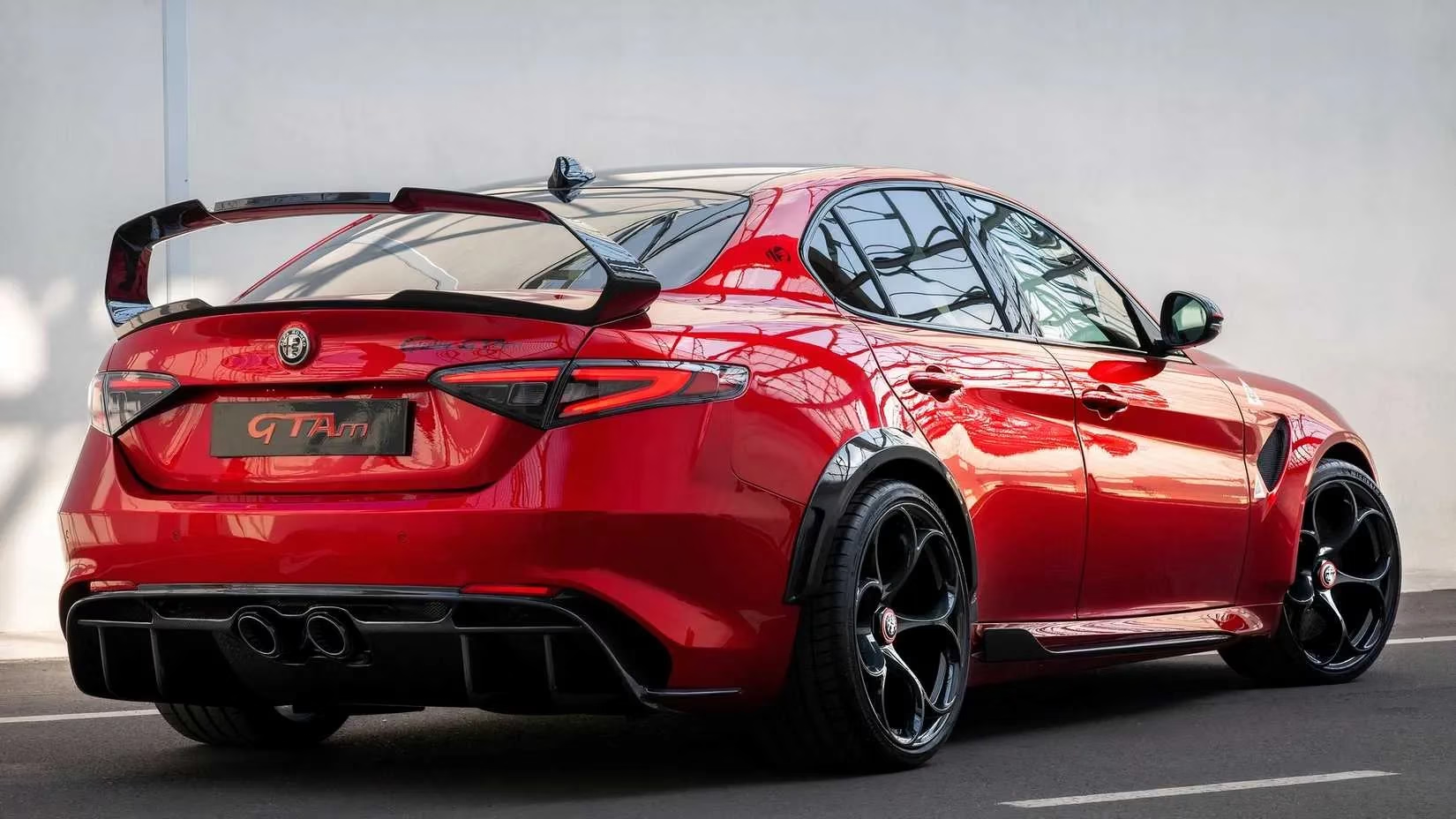
From the homologation specials built for racing glory to the design masterpieces that stopped the world, Alfa Romeo's sports cars are united by a common thread: passion over pragmatics, emotion over efficiency. They are machines that prioritize the driver's connection, the symphony of the engine, and the thrill of the drive. In an age of increasing automation and homogenization, the legacy of these Alfas serves as a powerful reminder of what makes driving an art form. The question isn't just which of these cars is the greatest, but rather, which one speaks most directly to the soul of the enthusiast behind the wheel? That, ultimately, is the true Alfa Romeo experience.
Comments