
In the summer of 2026, Jake found himself scrolling through classified ads with a familiar sense of frustration. The Chevrolet C8 Corvette had captivated him since its debut, but dealer markups and stubborn resale values kept it firmly out of reach. Every promising listing seemed to evaporate or demand a sum that could buy a small house. He longed for the same mid-engined magic—the balance, the immediacy, the sense of occasion—but his budget pointed relentlessly toward something else. That was when a friend mentioned a car Jake had all but forgotten: the Lotus Evora.
Like many enthusiasts, Jake had dismissed the Evora years ago. He recalled the lukewarm reviews, the quips about fit and finish, and the old joke that Lotus stood for 'Lots Of Trouble, Usually Serious.' But in 2026, the Evora had quietly transformed into a cult hero. With the entire industry marching toward electrification and driving modes, the analogue, unassisted feel of an Evora had become a rare treasure. As he dug deeper, Jake discovered a world of surprising reliability and jaw-dropping value—a genuine mid-engine sports car bargain.
The key sat under the engine cover. Every Evora, from the earliest naturally aspirated cars to the ferocious supercharged GT, was powered by a 3.5-liter Toyota V6. This was the same indestructible engine that lived in countless Camrys and Avalons, engines that routinely racked up hundreds of thousands of miles with nothing more than basic maintenance. The transmission, too, came from Aisin, a Toyota Group company. For a traditional Lotus buyer, this was revolutionary. No fragile bespoke powerplants that might leave you stranded. Instead, anvil-like dependability wrapped in a lightweight British suit.
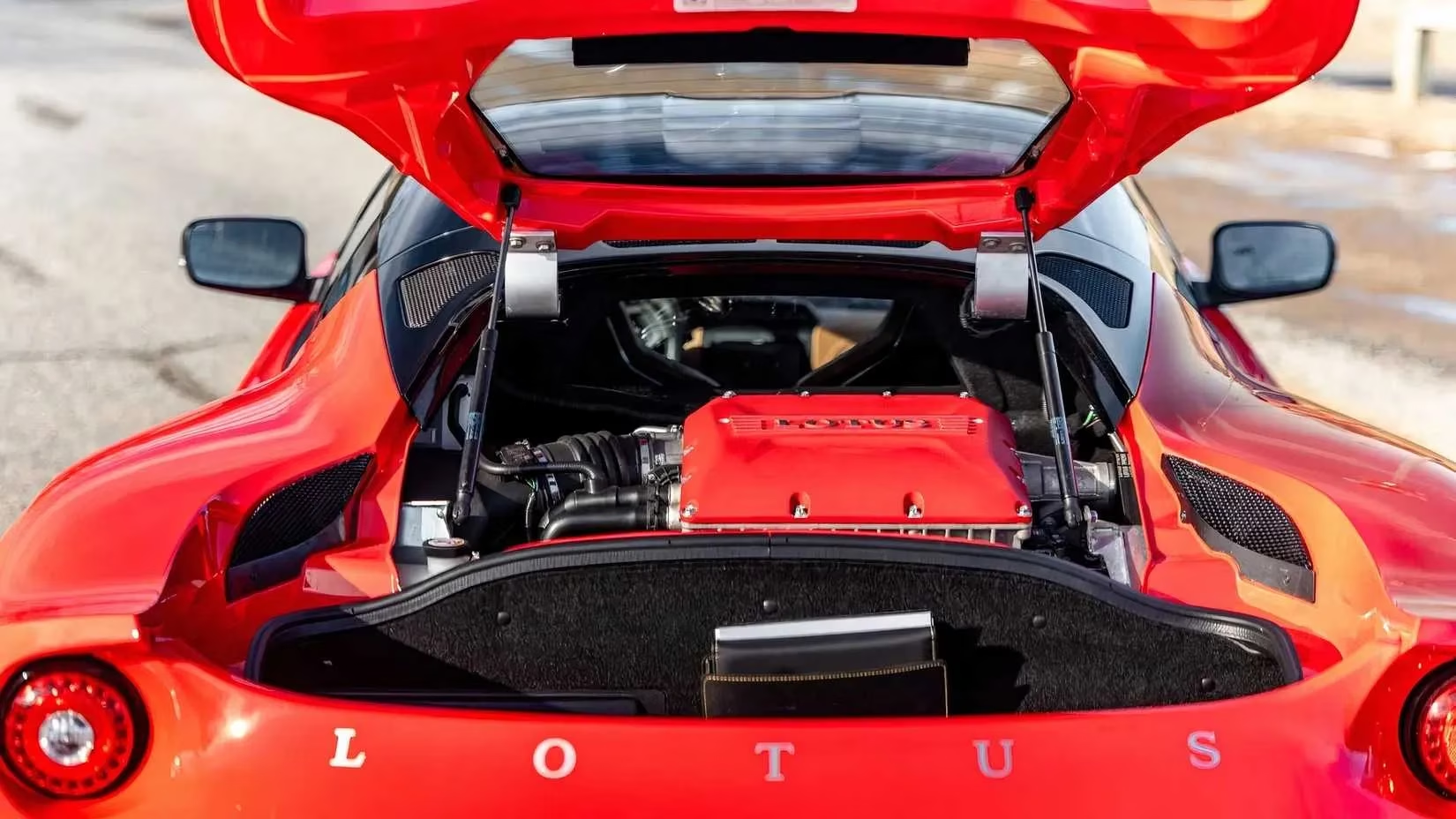
Jake joined a few online owner groups and was greeted by a chorus of praise. Yes, minor electrical gremlins occasionally flickered on the dashboard, and a sensor might need a reset. But the drivetrain? Flawless. One owner had crossed 120,000 miles on a supercharged Evora S without a single engine hiccup. The reputation of unreliability was a ghost of the past, and the Evora was now recognized as the sensible choice for those who wanted exotic looks and mid-engine dynamics without the exotic repair bills.
The biggest shock came when Jake looked at used prices. According to market data compiled through 2025 and early 2026, an early naturally aspirated Evora could be found for around $43,000. A supercharged Evora S hovered just above $50,000, while the sharper Evora 400 averaged under $64,000. For the performance on offer—telepathic steering, a chassis developed at the Hethel test track, and a 0-60 mph sprint in the low four-second range—these numbers felt like a pricing error. The Evora had become one of the most underrated performance bargains of the decade.
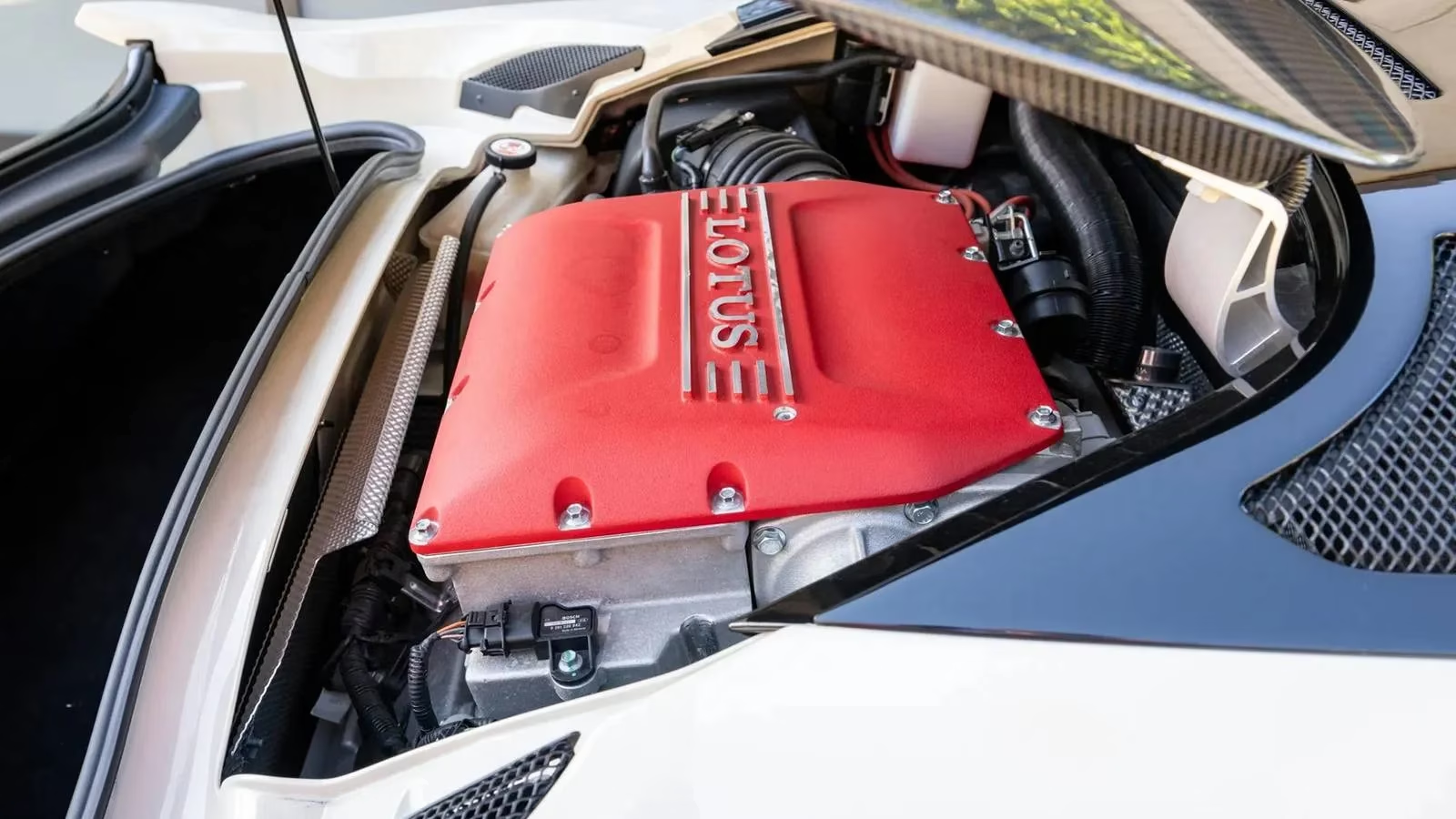
His test drive sealed the deal. Sinking into the low-slung cockpit, Jake immediately felt the difference from the increasingly digital interiors of modern rivals. The Evora offered hydraulic steering that buzzed with information, a perfectly positioned manual gear lever, and a ride that blended compliance with incredible body control. It wasn’t just a cheaper Corvette alternative; it was a more involving one. The mid-mounted V6 howled behind his head, and by the time he returned to the seller’s driveway, he knew he’d found his car.
Of course, the Evora wasn’t the only path to mid-engine joy without a six-figure price tag. The Porsche 718 Cayman remained the benchmark, with base models available for under $50,000 and an interior quality that still embarrassed many exotics. It lacked the Evora’s sense of theatre but delivered precision in spades. For those willing to sacrifice the mid-engine layout, options exploded. A used Jaguar F-Type SVR delivered supercharged V8 thunder for around $65,000, while the Chevrolet Camaro SS—discontinued in 2025—could be snapped up for less than $50,000, often dipping below $30,000. Even the brand-new Ford Mustang Dark Horse, armed with a 500-hp Coyote V8 and an available six-speed manual, was priced from just over $59,000, undercutting a new Corvette significantly. Each of these cars had its own loyal following, but none combined the exotic mid-engine footprint with the mechanical integrity and sheer affordability of the Evora.
Jake bought a 2018 Evora 400 in motorsport green. He spent weekends carving canyon roads and arriving at meets where onlookers mistook the car for something far more expensive. The same old-school character that once made the Evora an outlier now made it irresistible. As 2026 unfolded and ever more capable EVs took over the daily grind, the analogue Evora felt like a time capsule of driving purity. The low values couldn’t last forever, either. Enthusiast circles were starting to realize what Jake had learned firsthand: a Lotus with a Toyota heart was the secret backdoor into supercar-adjacent thrills for half the price.
If you’re watching C8 Corvettes slide further out of reach, the Evora is waiting. Its blend of everyday usability, exotic architecture, and bulletproof running costs makes it a smarter buy today than it ever was when new. Don’t let old jokes or forgotten reputations blind you. The Lotus Evora is the mid-engined hero that time finally came to appreciate—and your garage is all the richer for it.
Comments