
As a pro gamer who spends hours mastering virtual race tracks, I stumbled upon a real-world gem that's more thrilling than any in-game Easter egg—the Citroen Xantia Activa. Picture this: a car that looks about as exciting as a soggy baguette left out in the rain, yet corners like it's glued to the road by wizardry. Back in the '90s, while everyone was drooling over Ferraris and McLarens, this unassuming French sedan was secretly packing F1-banned tech that could out-handle a prancing horse. Fast forward to 2025, and I'm here to unravel why this underdog deserves a victory lap in automotive history. It's like discovering a legendary boss character hidden in a tutorial level—utterly unexpected but game-changing.
The Taxi That Outran Supercars
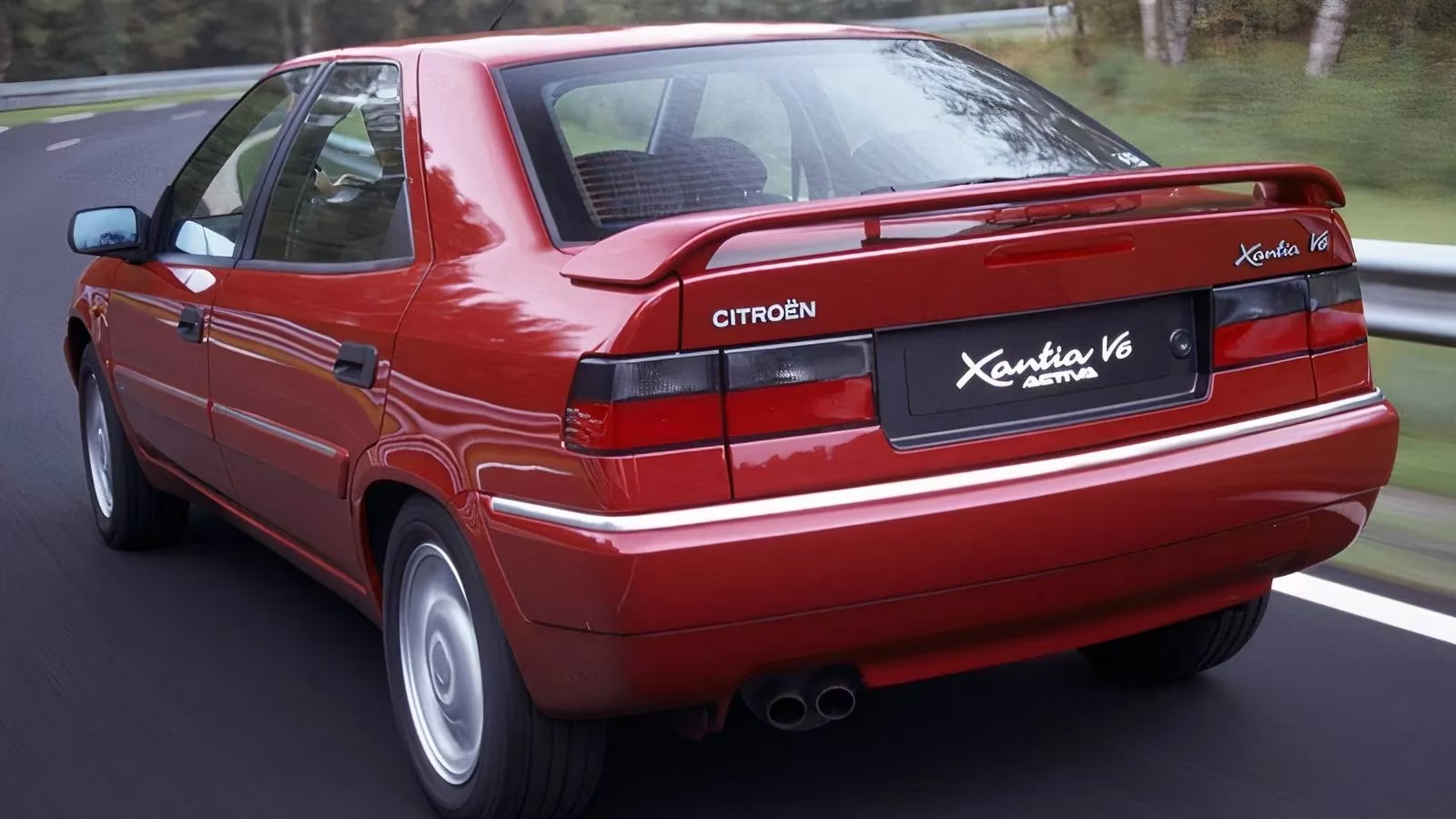
Let's be real, folks—I've seen my fair share of flashy rides in simulators, but the Xantia Activa is the ultimate sleeper. Launched in 1994 as a replacement for the quirkier BX, this Bertone-designed hatchback was about as sporty to gaze at as a pile of laundry. 😂 Citroën aimed for mainstream appeal, ditching the sci-fi vibes for a '90s beach-pebble aesthetic that made it blend into taxi ranks across Europe. Under the hood, it wasn't much to write home about: engines ranged from a wheezy 2.0-liter turbo with 148 horsepower (in the UK) to a slightly beefier 2.9-liter V6 with 190 horses in France. Yet, this thing could dance through corners like a ninja in a library—silent, precise, and utterly deceptive. It's as if Citroën took a grocery-getter and injected it with F1 steroids, all while keeping a straight face.
F1 Magic: The Activa Suspension System
Now, here's where the magic happens. The Activa wasn't about raw power; it was all about the suspension, borrowed straight from F1's playbook before it got banned. In 1993, Williams F1 used active suspension in their FW15C, but by 1994, regulations axed it to keep drivers 'more involved' (translation: less tech, more sweat). Citroën, being the mad scientists they are, slapped it onto the Xantia. The system? A Hydractive setup with 10 computer-controlled spheres, two hydraulic rams, and three ECUs that monitored body roll. Dubbed Systeme Citroën de Contrôle Actif de Roulis, it limited roll to a mere 0.5 degrees—like balancing a teacup on a roller coaster. With settings for Normal and Sport, it detected bends and pumped fluid to keep the car flat. The result? A 20% grip boost that made tires stick like Velcro on a woolly sweater. 🚗💨
Performance That Defied Logic
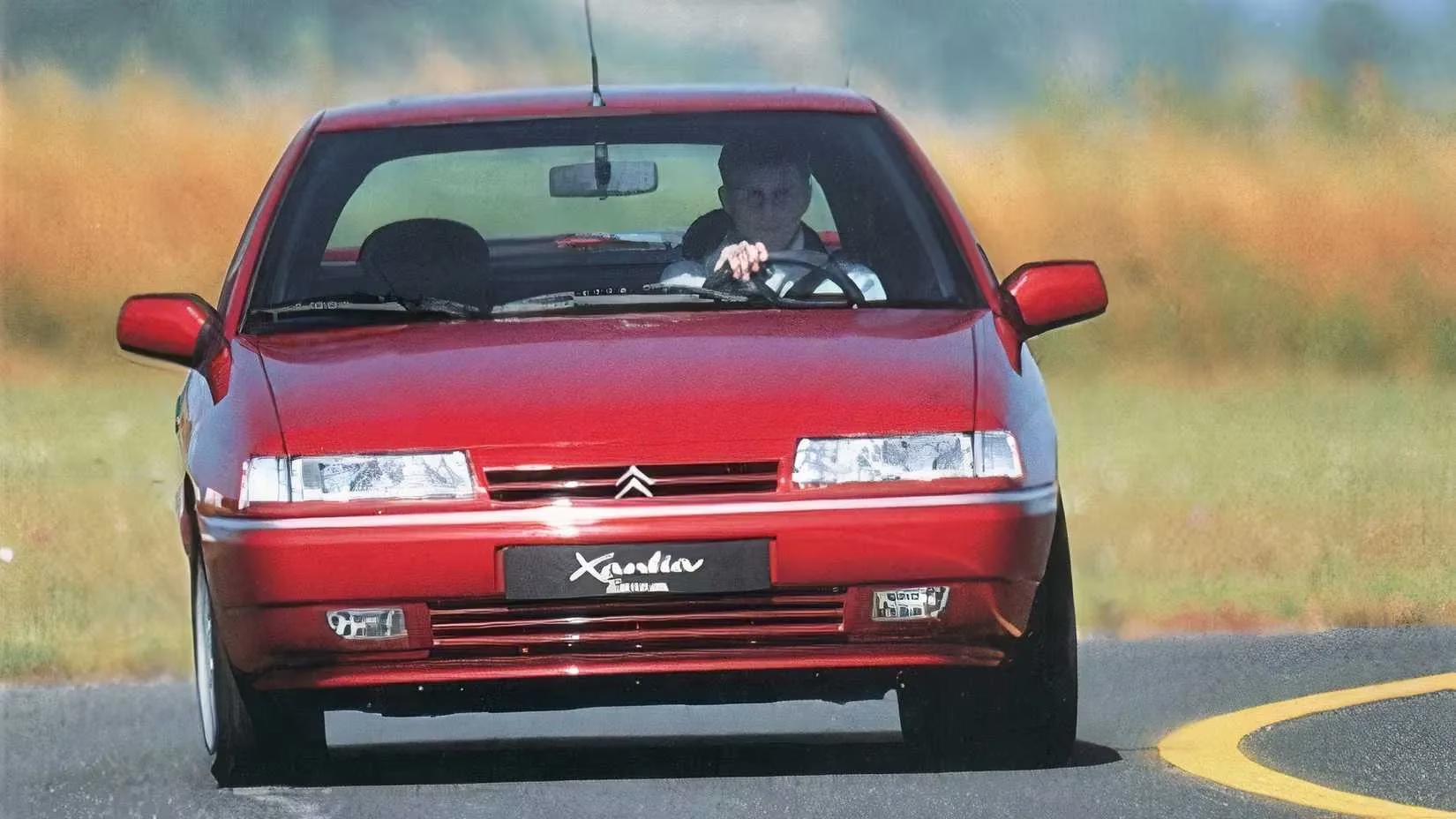
So, how fast was it? Buckle up, because this is where the Xantia Activa shines brighter than a high-score screen. Despite its humble engines, it could out-corner legends. French magazine L’Automobile recorded a 0.94g skidpad lateral acceleration—beating a Ferrari 512TR's 0.92g and a Honda NSX's 0.93g. Even a Toyota Supra MK4 only managed 0.95g, barely edging it out. Plus, it still holds the record for the fastest Scandinavian moose test speed. That's right: this family hauler handled like a ballerina on roller skates, gliding through twists with poise that left supercars eating dust. It's as understated as a diamond in a coal mine—unassuming on the outside, priceless on the inside. And in 2025, with Porsche's Active Suspension Management echoing this tech, we're seeing a revival, but the Activa did it first.
Why It Flopped: The Tragic Comedy
Despite its genius, the Xantia Activa was a sales flop—only 18,236 units sold, with fewer than 2,700 V6 models, out of over 1.2 million Xantias built. Why? Well, Citroën couldn't decide if it was a sports sedan or a family car, so it ended up as neither. The badges were tiny, like secret agent insignias, and marketing posters showed it cornering at 60 mph versus standing still—both looking identical! 😆 Insurance costs in the '90s didn't help, making it a pricey sleeper. Plus, reliability issues haunted it, like hydraulic fluid leaks that could ruin brakes or steering—a real 'game over' scenario for owners. It's as if they built a masterpiece but hid it in a thrift store bin.
People Also Ask
-
What made the Citroen Xantia Activa special? It used F1-inspired active suspension to eliminate body roll, giving it supercar handling in a mundane package.
-
How does it compare to modern cars? In 2025, tech like Porsche's system mirrors it, but the Activa was pioneering—and cheaper!
-
Is it worth buying today? Absolutely, as a collector's item; prices have soared, but watch for maintenance nightmares.
The 2025 Comeback: Collectors' Gold
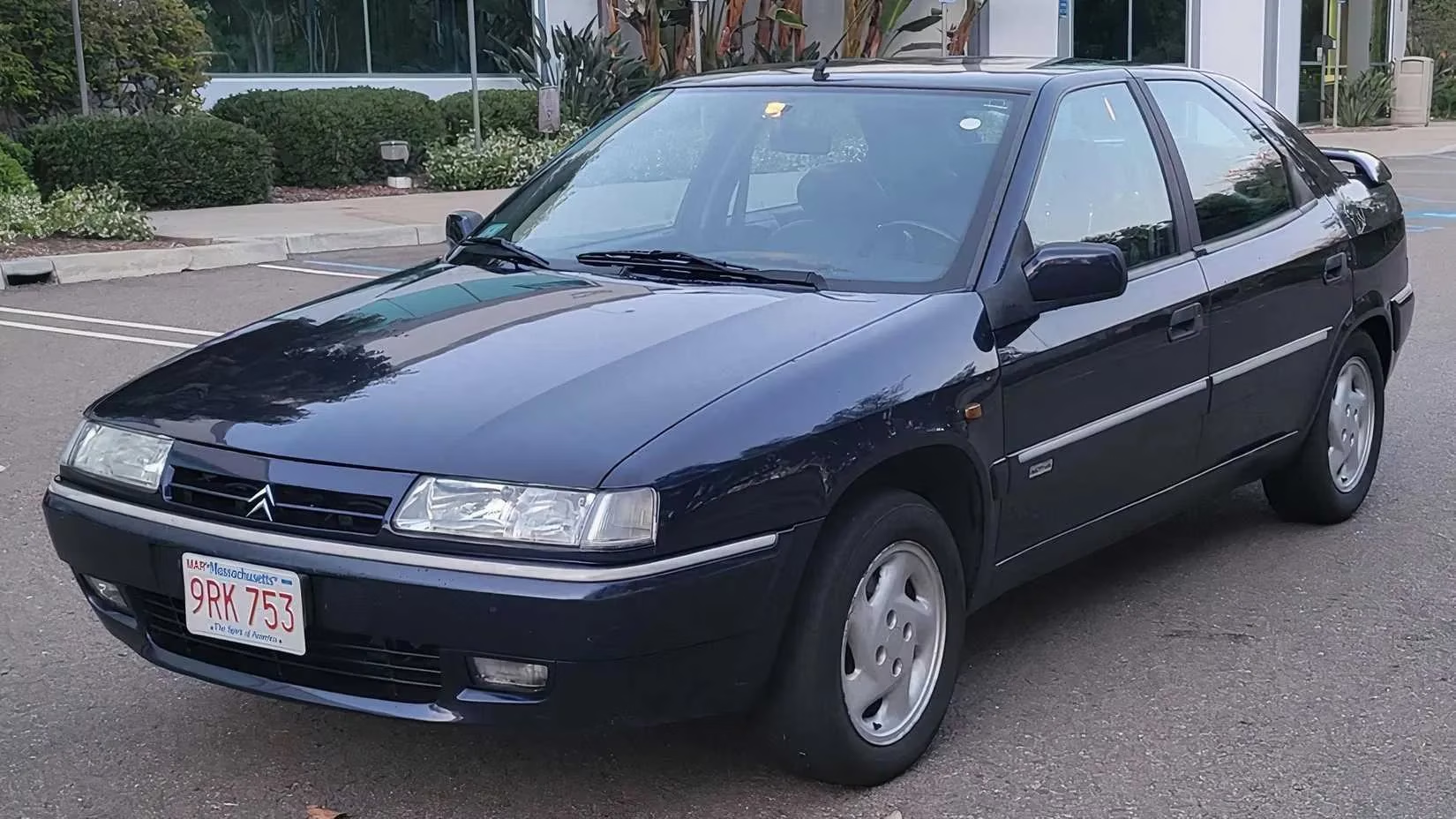
Fast forward to today, and the Xantia Activa is having a renaissance. Prices have skyrocketed from bargain-bin levels to an average of $17,431, with rare V6 models fetching over $36,000 in recent auctions. In 2024, a pristine example sold for $40,000 in Europe, proving it's hotter than ever. But beware: these cars are as complex as a raid boss, with hydraulic gremlins that can turn drives into repair marathons. If you find one, treat it like a rare loot drop—cherish it, but expect challenges.
So, after all this, I'm left wondering: what other forgotten cars are out there, hiding F1-level tech under a cloak of normalcy, just waiting for their moment in the spotlight?
Comments