
In the world of high-performance automobiles, the concept of a "sleeper" holds a special allure. These are cars that possess staggering power and speed, yet cloak their capabilities under a veneer of unassuming, conservative styling. While the 1980s and 1990s were eras often defined by automotive flamboyance—think of the wedge-shaped, side-straked Ferrari Testarossa—a counter-movement was brewing in Germany. Tuners began a clandestine operation, extracting engines from stately Mercedes-Benz sedans and replacing them with powerplants worthy of supercars. This cottage industry, which saw icons like the 375-horsepower AMG Hammer emerge from a humble W124 chassis, set the stage for a company from Bottrop to create something truly transcendent. By the mid-1990s, Brabus was poised to build a four-door Mercedes that wouldn't just keep pace with Italian exotics—it would leave them in its electronically limited dust.
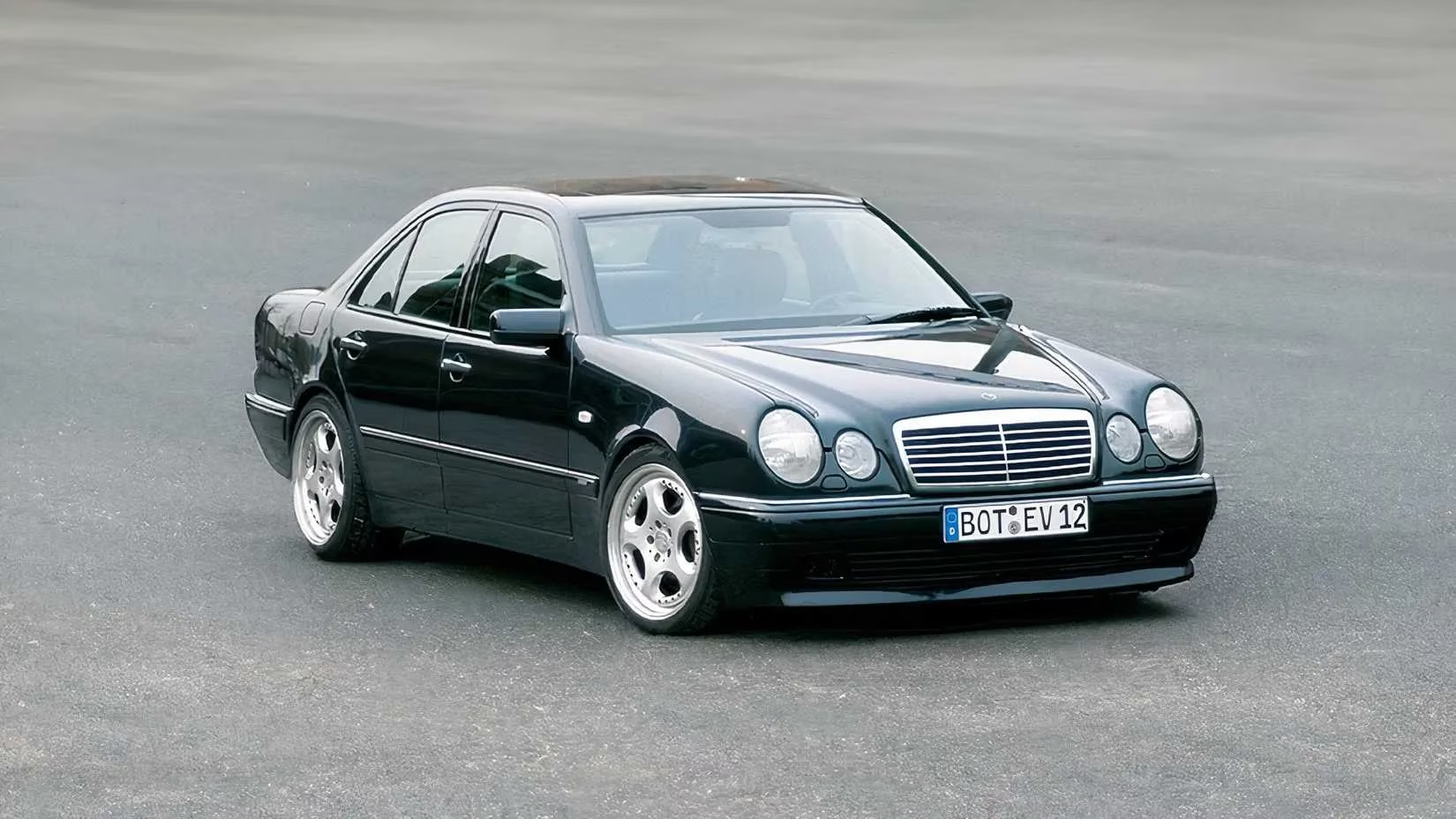
The Genesis of a Legend: The 1996 Brabus E V12
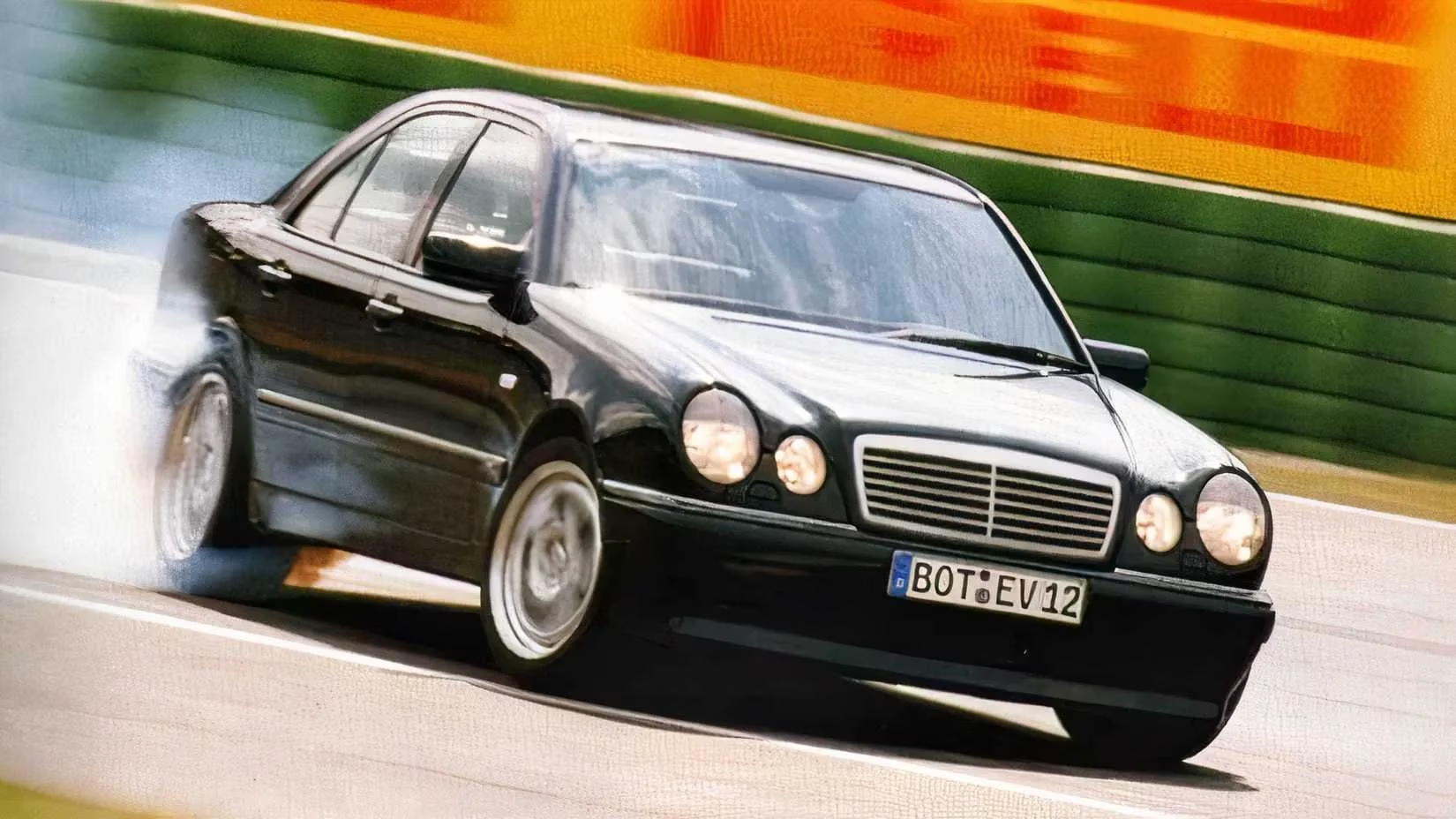
Long before its foray into tuning compact city cars, Brabus had cemented its reputation by fusing Mercedes-Benz engineering with extreme performance and bespoke luxury. By 1996, the company aimed to redefine the sleeper sedan. Their ambition was not merely to chase supercars on the autobahn, but to decisively overtake them. The canvas for this masterpiece was the then-new W210 Mercedes-Benz E-Class. Into its engine bay, Brabus technicians meticulously fitted the monstrous 7.3S V12 engine, a unit producing a staggering 582 horsepower and 569 lb-ft of torque. The result was the craziest four-door production car the world had ever witnessed.
The performance figures were nothing short of revolutionary. The E V12 could sprint from 0 to 60 mph in a mere 4.8 seconds. But what truly separated it from the realm of the ordinary was its top speed. The sedan was electronically limited to 205 mph—a figure that begged the question: just how fast could it have gone? The limitation, ironically, wasn't the engine's capability but the technology of the time; no tire manufacturer could produce a rubber compound that could safely handle the stresses of such a heavy vehicle at even higher velocities. This feat earned the car the Guinness World Record for the fastest street-legal sedan. To put its dominance into perspective, it was quicker than the contemporary Ferrari F50, which topped out at 202 mph. The conversion was so extensive that Brabus had to completely rework the E-Class's engine bay and mechanicals. With a rumored price tag of approximately 457,700 Deutsche Marks (around $275,000), and an estimated production run of only 10 to 15 units, the 1996 E V12 was an instant legend.
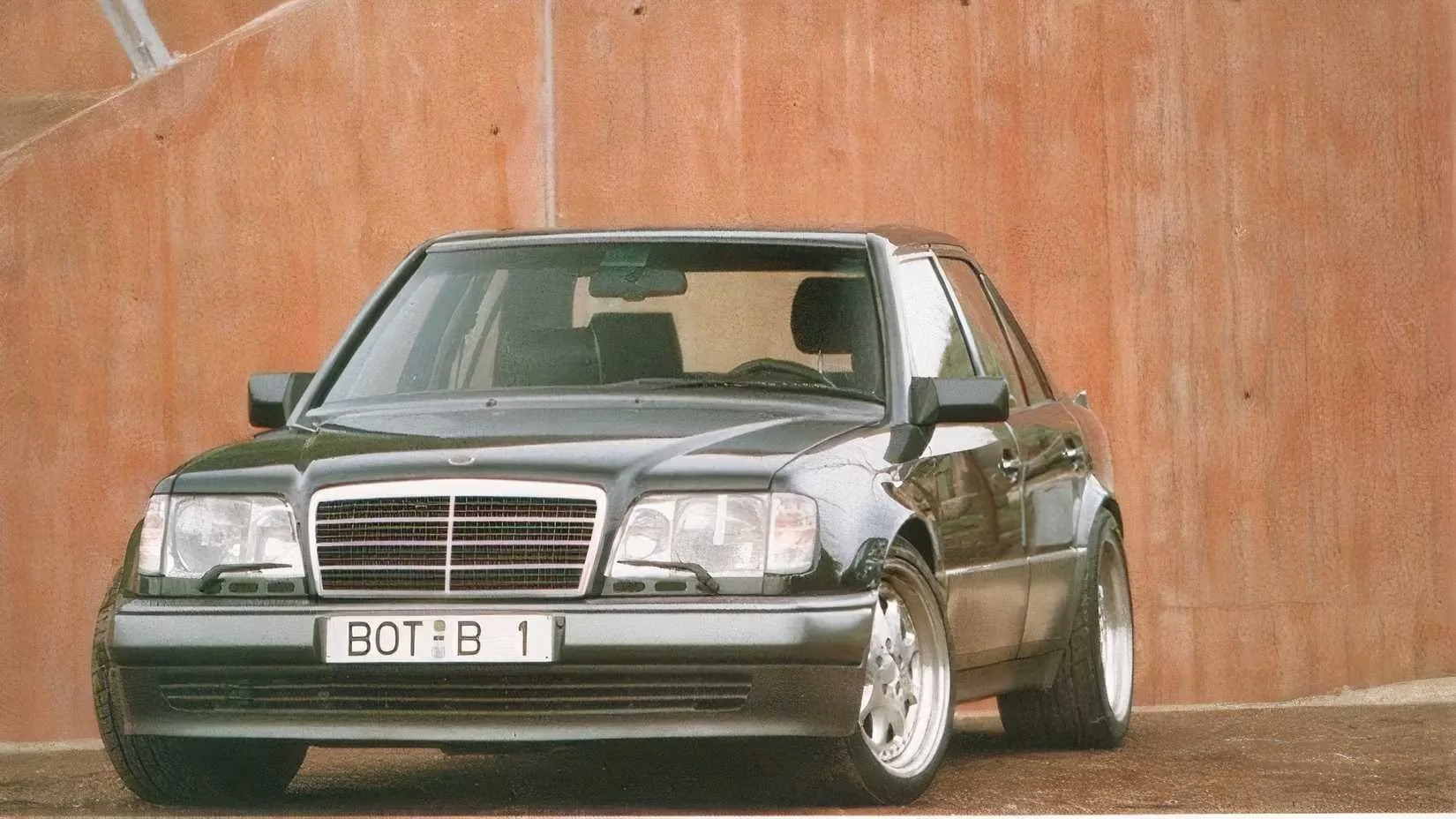
Building on a Legacy: The W124 Foundation and the T V12 Wagon
Brabus's V12 obsession did not begin with the W210. The company's lineage of insane sedans can be traced back to the venerable W124 chassis, specifically the E500—a model famously co-developed and hand-built by Porsche. Brabus saw potential beyond its native 5.0-liter V8. The company launched the Brabus 6.9, which, as the name implies, swapped the V8 for a 6.9-liter Brabus V12 producing over 509 horsepower. This transformed the sedan's power output from 322 horsepower to a earth-shattering 509 hp, with 520 lb-ft of torque. The result was a four-door that could hit 60 mph in roughly 4.5 seconds and achieve a top speed of 178 mph, claiming the title of the world's fastest sedan at its time. Is it any wonder that this car could get within a second of a Ferrari F40's benchmark 0-60 time?
Not content with dominating the sedan segment, Brabus applied the same philosophy to a practical family vehicle. In 1997, the company unveiled the Brabus T V12, a station wagon based on the S210 E-Class. It was fitted with the same 582-horsepower 7.3S V12. This "load-lugger" could reach 60 mph in under 4.9 seconds and had a top speed of 199 mph, making it the world's fastest street-legal station wagon. Who said grocery runs couldn't be done at near-supersonic speeds?
The New Millennium and Relentless Innovation
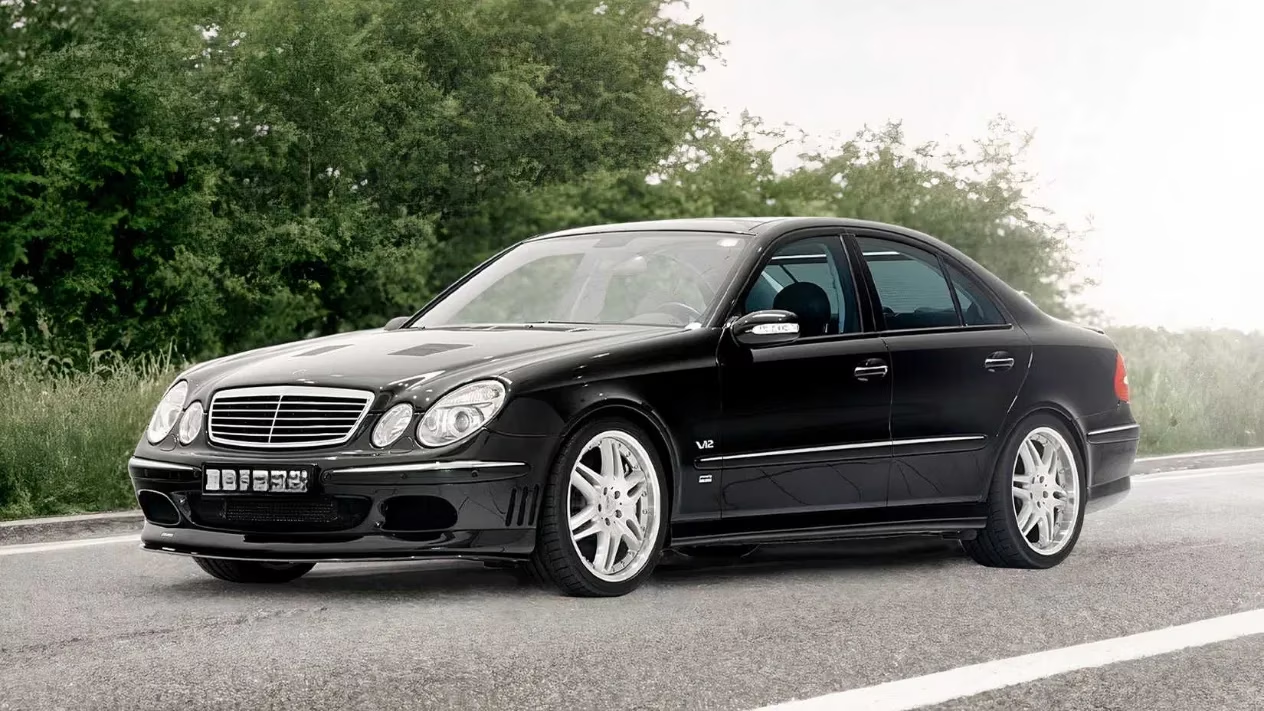
As Mercedes-Benz evolved its E-Class into the W211 generation, Brabus was ready with a new interpretation of the ultimate sleeper. The 2003 Brabus E V12 marked a significant technological leap. Gone was the naturally aspirated engine; in its place sat a twin-turbocharged 6.3-liter Brabus V12. Power soared to 640 horsepower, with a colossal 757 lb-ft of torque on tap. While its 0-60 mph time of around 4.4 seconds was impressive, the car's true purpose was high-speed autobahn dominance. In 2005, this unassuming sedan solidified its place in history by hitting over 217 mph at the Nardo high-speed track in Italy, reclaiming the Guinness World Record for the world's fastest sedan.
The Ultimate Expression: The 2009 Brabus E V12 "One of Ten"
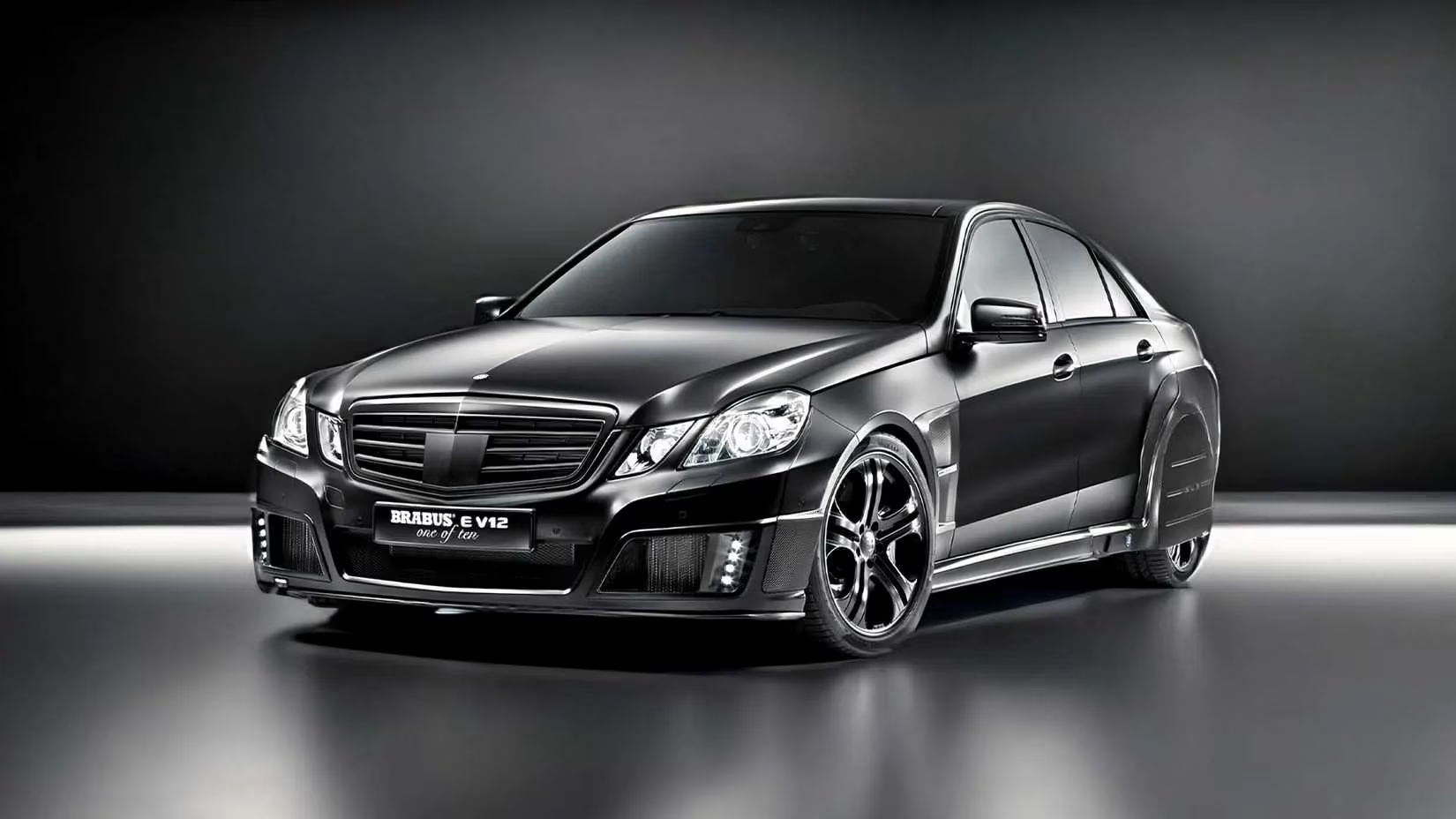
By 2009, the concept of a "sleeper" had been pushed to its absolute limit. The fourth-generation Brabus E V12, dubbed "One of Ten," shed much of its subtlety in pursuit of ultimate performance. It looked less like a discreet sedan and more like a vehicle from a superhero's garage, complete with aerodynamic aids and rear wheel covers that contributed to a drag coefficient of just 0.27. Under the hood resided the company's most fearsome creation yet: the 6.3 R V12 engine, generating an almost unbelievable 800 horsepower and 811 lb-ft of torque.
The performance was otherworldly:
-
0-60 mph: 3.6 seconds
-
0-125 mph: 9.9 seconds
-
0-186 mph (300 km/h): 23.9 seconds
-
Calculated Top Speed: 230 mph
This car wasn't just fast; it was a physics-defying statement. Its calculated top speed of 230 mph was enough for it to hold the title of the world's fastest sedan for an incredible 15 years. As of 2026, that record astonishingly still stands, a testament to the engineering madness Brabus poured into this limited series of ten vehicles.
The Lasting Legacy of the V12 Sleeper
From the understated menace of the 1996 W210 to the aerodynamic fury of the 2009 "One of Ten," the Brabus E V12 lineage represents a unique chapter in automotive history. These cars answered a simple yet profound question: What if a comfortable, luxurious sedan possessed the heart and soul of a hypercar? They proved that ultimate performance did not require dramatic styling or a mid-engine layout. Instead, it could be delivered in a package that offered space for four, a luxurious interior, and the ability to shatter speed records. In an era increasingly focused on electrification and efficiency, the thunderous, twelve-cylinder symphony and brute-force engineering of the Brabus E V12s stand as a powerful reminder of a time when German tuners redefined the very limits of the possible, all from within the shell of a humble executive sedan.
Comments