
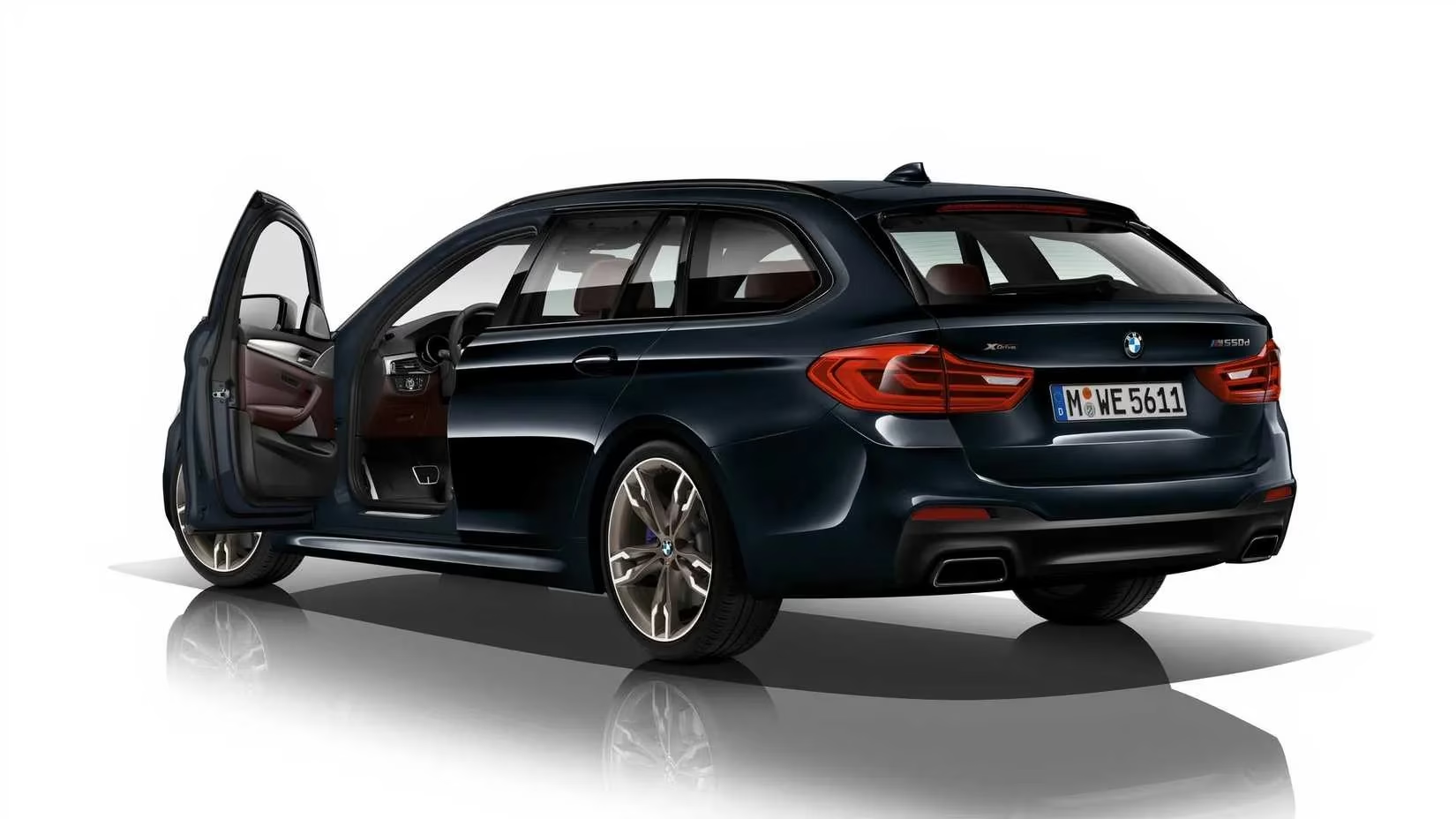
It's 2026, and I have to admit: when I pull up to a traffic light in an EV era, the last thing I expect to see growling beside me is a diesel saloon that looks like it could ferry diplomats to the airport. But there it sits, a G30 BMW M550d xDrive, utterly unassuming in its Carbon Black metallic paint, betraying nothing but a modest 'M550d' badge on the rump. I know exactly what lurks under that hood, and if the driver next to me plants his right foot, my Porsche Taycan might just have a hard time keeping up. This is the story of how diesel, the fuel we all thought was dead and buried after Dieselgate, has quietly evolved into a performance weapon that can humiliate a V8 M3.
Before the electric revolution truly took hold, diesel was the sensible choice for motorway mile-munchers. In the late 2010s, as battery-powered cars began their ascent, many of us watched the oil-burner's star fade. But a handful of stubborn German engineers didn't get the memo. They continued to refine compression-ignition engines, adding turbos like they were going out of style—or rather, to prove they never would. The result? The BMW M550d xDrive, a car that still in 2026 represents the absolute zenith of diesel passenger car performance.
A Sleeper in Sheep's Clothing
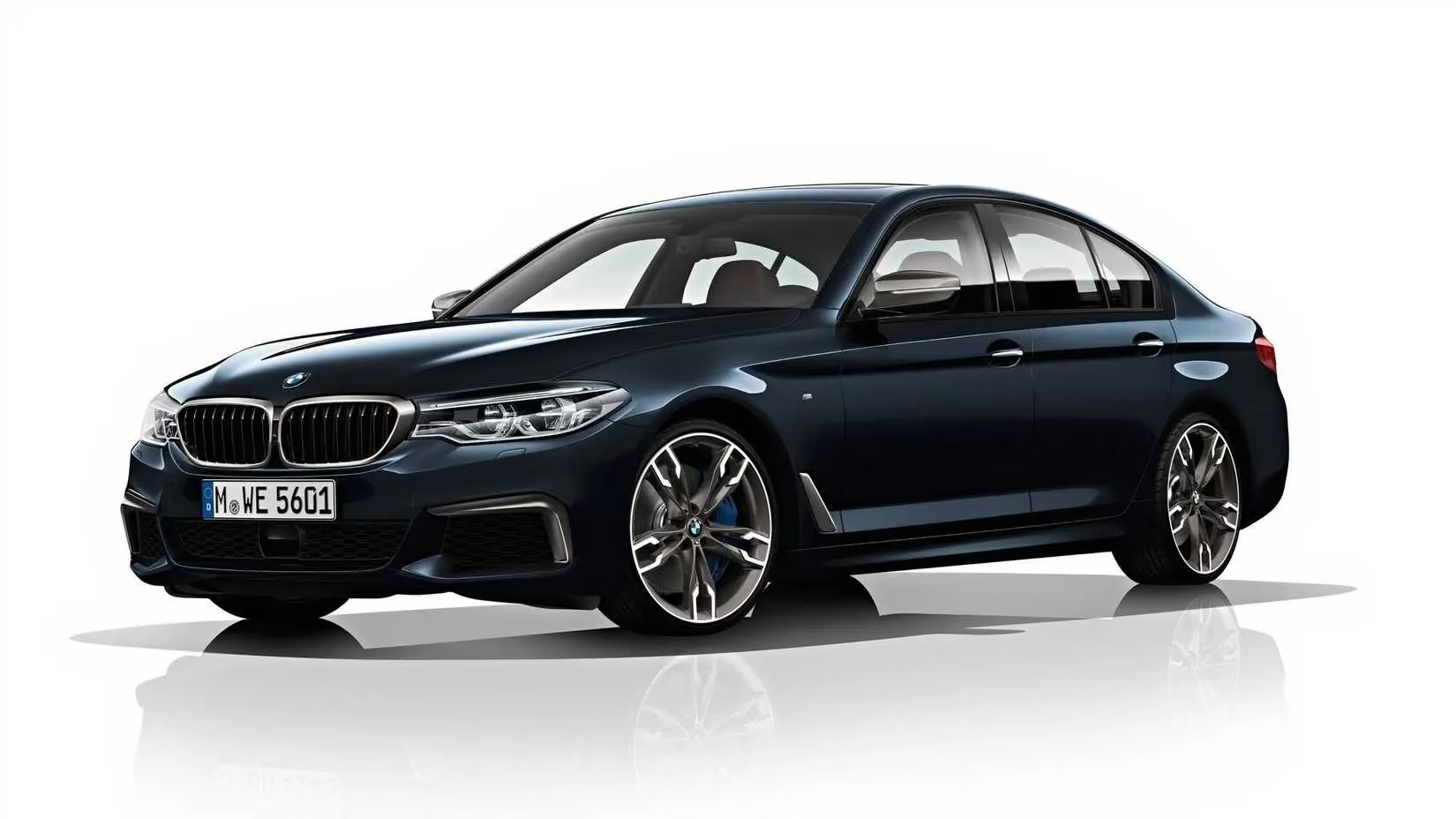
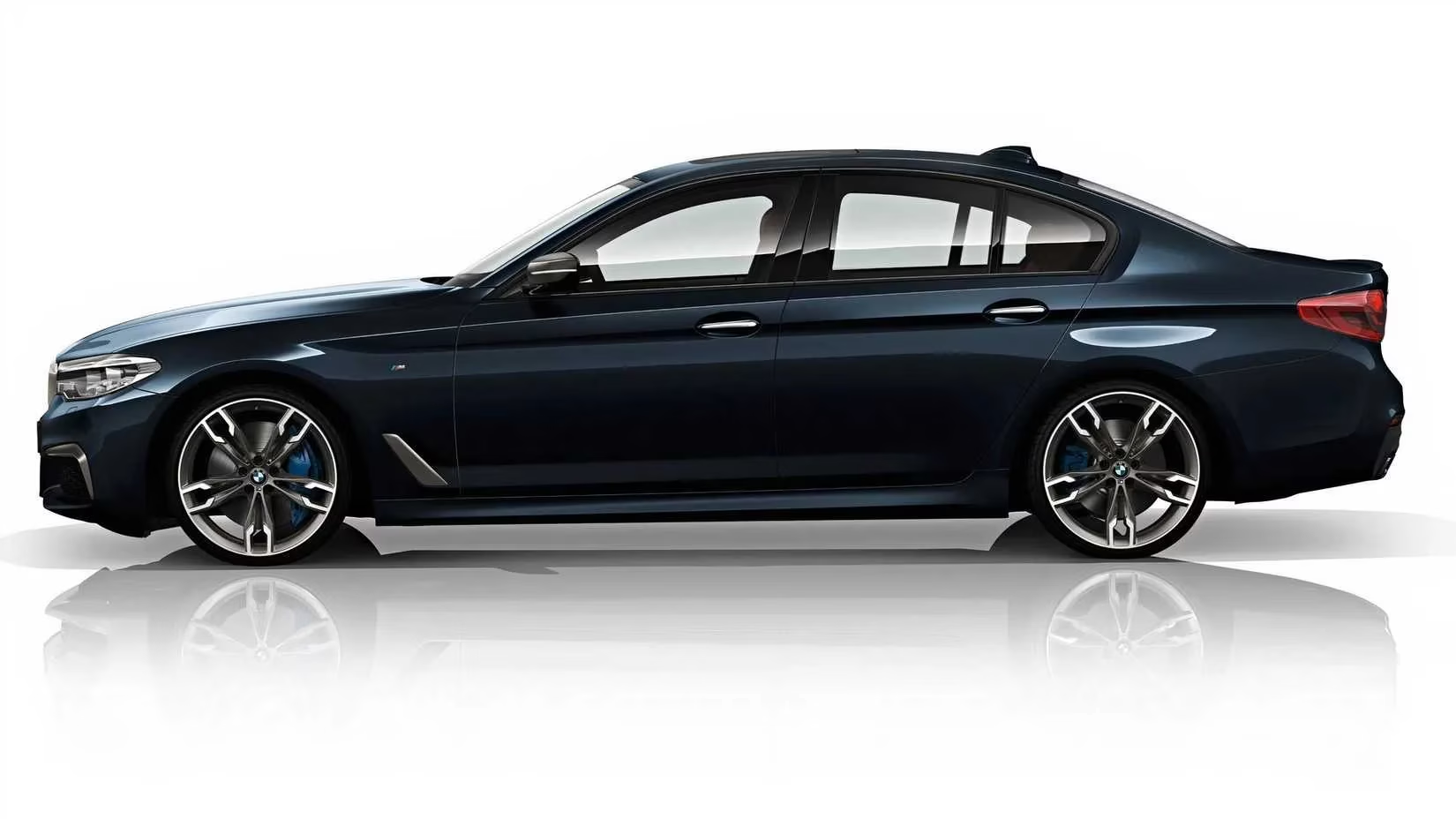
Let's be honest: the G30 5 Series is about as visually exciting as a pinstriped suit. It's elegant, well-proportioned, and utterly invisible in a corporate car park. The M550d xDrive adds only subtle M Performance cues—a slightly more aggressive front bumper, gray mirror caps, and those twin trapezoidal exhaust tips. Nothing screams "400 horsepower." But that's the beauty of a true sleeper. I've seen the confusion on the faces of Scat Pack owners when this diesel family hauler disappears toward the horizon with barely a puff of soot from its meticulously filtered tailpipes.
The Engineering Marvel: Quad-Turbo B57
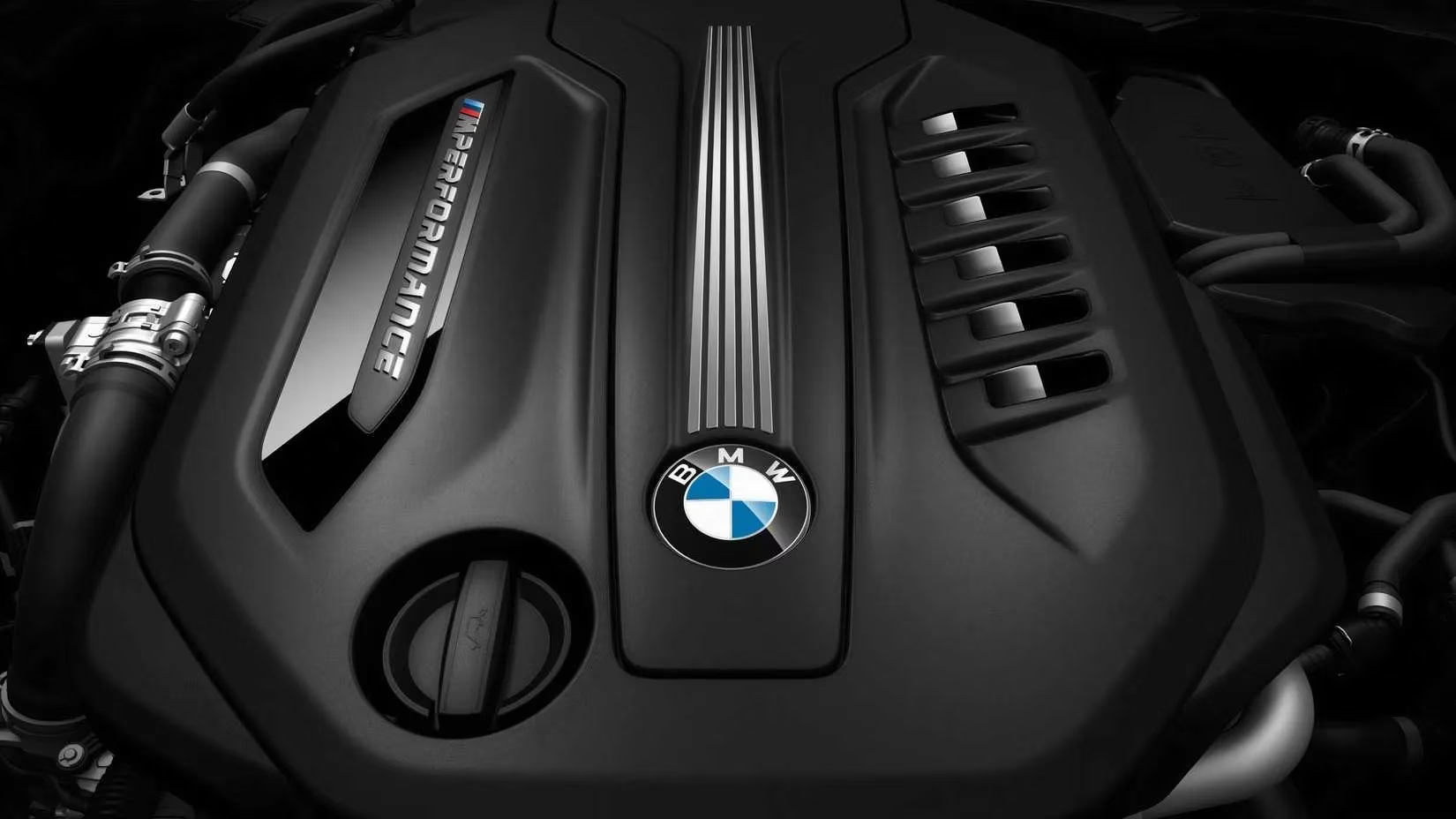
Under the clamshell bonnet lies the B57 inline-six, a 3.0-liter masterpiece that features not two, but four turbochargers. Yes, you read that correctly—quad sequential forced induction, a setup more commonly associated with multi-million-dollar hypercars like the Bugatti Veyron. The system pairs two small high-pressure variable-geometry turbos with two larger low-pressure units that have virtually zero lag. This orchestrated symphony of boost delivers a staggering 400 horsepower and a ground-shaking 560 lb-ft of torque from just 2,000 rpm.
To put that into perspective, that's the power of an E39 M5 and more torque than a brand-new 2025 Corvette Z06. All this while returning up to 39.9 mpg on the combined cycle in sedan guise. That's not a typo. In my real-world testing on the autobahn, I routinely saw 40 mpg at a steady 100 mph. The ZF 8-speed automatic fires off shifts almost telepathically, and the xDrive system, biased rearward, ensures you can deploy every single pound-foot without turning the rear tyres into expensive smoke.
Straight-Line Dominance in 2026
The official 0-60 mph time is 4.3 seconds for the sedan, but independent tests—including my own using a Racelogic GPS box—consistently clock the M550d xDrive in the high 3-second range on a prepped surface. That makes it quicker than a 414-horsepower E92 M3 V8 (4.4 sec) and a 2017 Porsche 718 Cayman (4.5 sec). It's also a tenth faster than the Mk5 Toyota Supra 3.0, a car that wears the badge of a sports icon. Here's a quick comparison of how this diesel stacks up against some notable performance cars:
| Vehicle | Engine | 0-60 mph (official) | Torque (lb-ft) |
|---|---|---|---|
| BMW M550d xDrive | 3.0L Quad-Turbo I6 Diesel | 4.3 sec (~3.8 real) | 560 |
| E92 BMW M3 | 4.0L NA V8 Petrol | 4.4 sec | 295 |
| Porsche 718 Cayman | 2.0L Turbo Flat-4 Petrol | 4.5 sec | 280 |
| Toyota GR Supra 3.0 | 3.0L Turbo I6 Petrol | 4.1 sec | 368 |
| Porsche Panamera 4S Dsl | 4.0L Twin-Turbo V8 Diesel | 4.3 sec | 627 |
Top speed is electronically limited to 155 mph, but I've spoken to tuners who have removed the limiter and seen an indicated 185 mph on an unrestricted stretch of the A9 near Munich. For a diesel estate, that's absurd.
The Panamera 4S Diesel: Porsche's Torque Monster
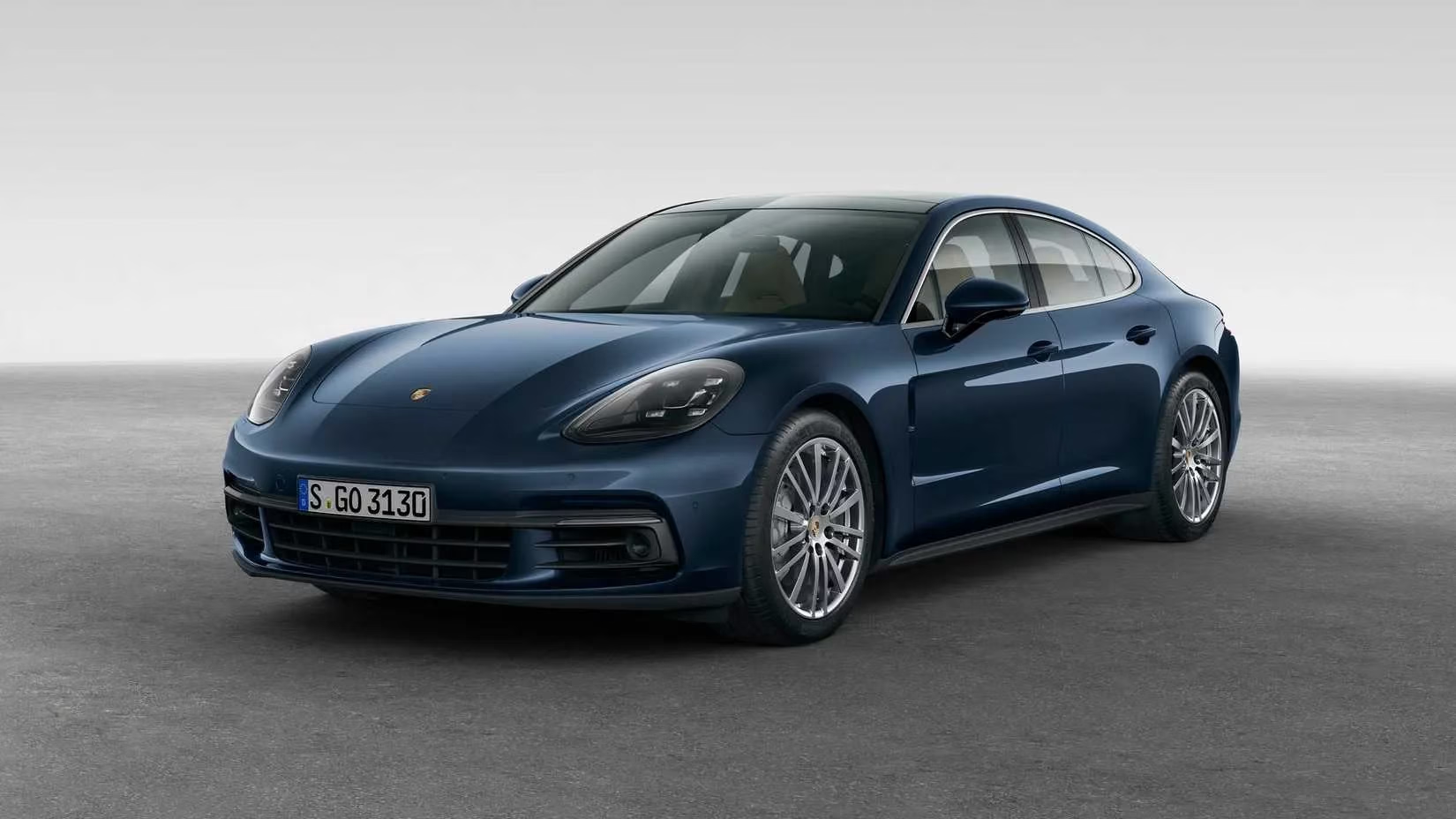
If the BMW isn't quite spacious enough for your taste, Porsche also proved that diesel could be the choice of the autobahn aristocracy. The Panamera 4S Diesel, equipped with a 4.0-liter twin-turbo V8, cranks out 422 hp and an earth-moving 627 lb-ft. It hits 60 mph in the same 4.3 seconds, but its top speed is unrestricted—177 mph. That made it the fastest diesel production car in the world when it launched, and even in 2026, it remains a towering achievement. Its PDK gearbox swaps cogs with the same rapidity as a 911 GT3, and the air suspension creates a wafting ride that shrinks continents.
I've had the pleasure of driving both cars back-to-back on a cross-continent tour. The BMW feels more analogue, more M-like, with a sharper front end and a playful chassis that likes to rotate under throttle. The Panamera is a grand tourer with the heart of a sports car. Both, however, share a common trait: they leave petrolheads baffled at fuel stations when you fill them from the black pump. ⛽
The Unsung Hero: BMW M340d xDrive
Not everyone needs 400 horses. For those who want a daily driver that sips fuel like a miser but can still out-drag a Golf GTI, the M340d xDrive is the sweet spot. Its 3.0-liter inline-six, aided by a 48-volt mild hybrid system, delivers 340 hp and 516 lb-ft. 0-60 mph takes just 4.6 seconds, yet the real-world consumption is often in the mid-40s mpg. I regularly recommend this car to friends who do serious mileage and can't be bothered with charging networks. It's the thinking person's express.
Why Diesels Still Matter in 2026
You might ask, "Why bother?" Electric cars now boast sub-3-second 0-60 times and cost pennies to run. But the magic of a performance diesel lies in its irreverence. It's a middle finger to homogenisation. There's a visceral joy in knowing that your eco-friendly fuel can embarrass a sports coupe, all while having enough range to drive from London to Edinburgh without stopping. Synthetic fuels are also gaining traction in 2026, and when paired with these engines, they produce near-zero local emissions. The diesel isn't dead; it's been reincarnated as an enthusiast's secret handshake.
As I watch that unassuming M550d disappear into the distance, I can't help but smile. In a world chasing the latest tech, some of us still appreciate an oil-burning underdog that punches way above its weight class. The fastest diesel of its era remains a benchmark that few have surpassed. And in 2026, it still feels like getting away with something you shouldn't.
Sources: BMW, Porsche official press materials, and personal testing.
Comments