
Let me tell you, the automotive world is buzzing right now, and I'm right in the middle of it all. The rumors have been building for months, spy shots have been captured, and then—bam!—we get what feels like a massive, almost accidental leak straight from GM's own backyard. All these breadcrumbs are leading us, with a conviction that's hard to ignore, to one thrilling conclusion: a new C8 Corvette Grand Sport is on its way. If the whispers hold true, and I believe they do, this new variant is poised to perfectly slot into the lineup, becoming the crucial bridge between the brilliant Stingray and the electrifying hybrid power of the E-Ray.
For me, a true car enthusiast, the Grand Sport name isn't just another badge. It's a legend making a triumphant return. With its comeback, the Chevrolet Corvette is about to achieve something remarkable—it'll have nearly as many distinct variants as the iconic Porsche 911. To the untrained eye, spotting the differences might be a challenge, but for us, the true believers, every curve and component tells a story. Based on everything we've seen, my team and I have crafted our own exclusive vision of what the 2026 or 2027 C8 Corvette Grand Sport will look like, and of course, it's dressed in its most legendary, iconic livery.
The Design Philosophy: A Bridge Between Worlds
Even in its most basic form, the C8 Corvette looks like a predator. Adding a Grand Sport badge feels like the most logical, exciting next step for Chevrolet. Historically, this has always been the Corvette's sweet spot. It's the model that borrows the right hardware from the higher, more extreme trims without going completely off the deep end in terms of cost and daily drivability. From what we're hearing, the 2026-2027 Grand Sport might shatter the 'parts-bin special' expectation. It could be something that genuinely carves out its own unique identity.
Visually, I expect the design to serve as the perfect bridge. It needs to connect the accessible aggression of the Stingray with the raw, track-focused intent of the upcoming ZR1. Our render focuses on what makes a Grand Sport instantly recognizable from 50 feet away: that iconic blue-and-white color combo. It's a uniform worn proudly across generations, a silent declaration of "track day ready" that needs no explanation.
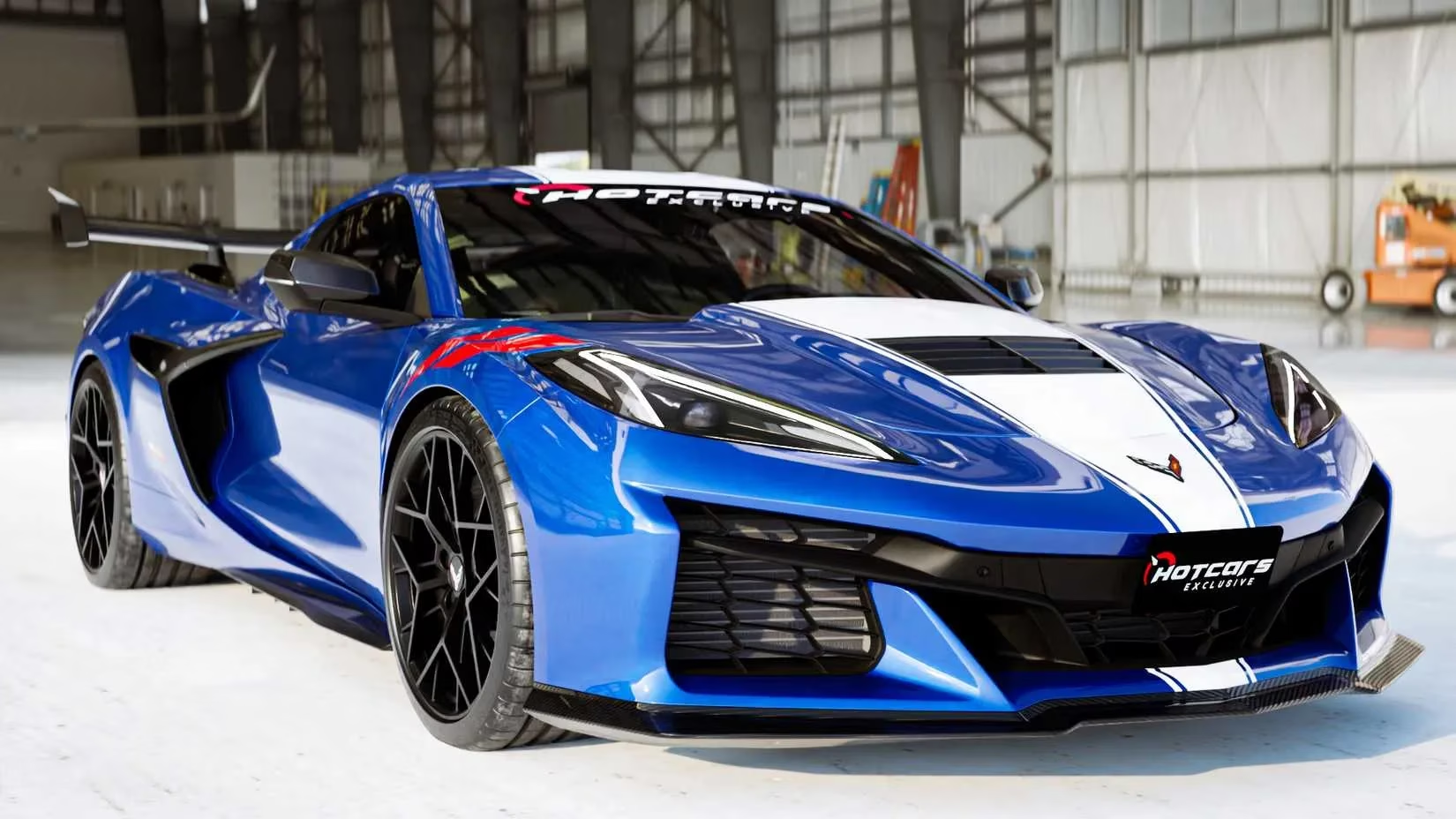
The front end needs to communicate presence. Think lower, wider, and sharper. The intakes will be more aggressive, feeding air to what promises to be a very special engine. And then there's the stripe—that classic white center stripe running the length of the car. On the mid-engine C8's shape, it does more than just look good; it visually emphasizes the car's width and gives the nose a clean, purposeful focal point. It's a calling card you can't miss.
The Heart of the Beast: The LS6 Returns?
This is where things get really exciting for me. The rumor mill hasn't just been fueled by spy shots; we've had audio clips (now sadly deleted) that let people hear the next Grand Sport's engine note, and even parts-book style leaks from within GM. The biggest takeaway? The legendary LS6 nameplate might be making a comeback.
The specs being discussed point to something far more special than a warmed-over V8. We could be looking at a newly developed, naturally aspirated 6.6-liter V8 engine, purpose-built for this application. Power estimates are swirling in the 500 to 600 horsepower range. Think about that for a second. This isn't just about filling a gap; it's about creating a new benchmark. Reports suggest Chevrolet is developing an engine that deliberately sits in the perfect spot—more special and potent than a Stingray, yet more refined and usable every day than the absolute performance monsters like the ZR1. This engine is being tuned, first and foremost, to be a driver's car. If Chevy follows the historic Grand Sport playbook, this will be the ultimate enthusiast's middleweight champion.
Why History Matters: More Than a Sticker Package
Some might think 'Grand Sport' is just about stripes and badges. I'm here to tell you they're wrong. This badge is rooted in racing DNA, a track-first attitude born from Zora Arkus-Duntov's original 1960s program. It later returned not as a cosmetic package, but as a true performance identity. Traditionally, Grand Sport has meant:
-
Widebody aesthetics for improved stance and aerodynamics.
-
Upgraded braking systems to handle repeated hard use.
-
Enhanced cooling solutions for track-day durability.
-
A chassis and suspension setup built to be driven hard, offering 90% of the extreme performance without 90% of the compromise.
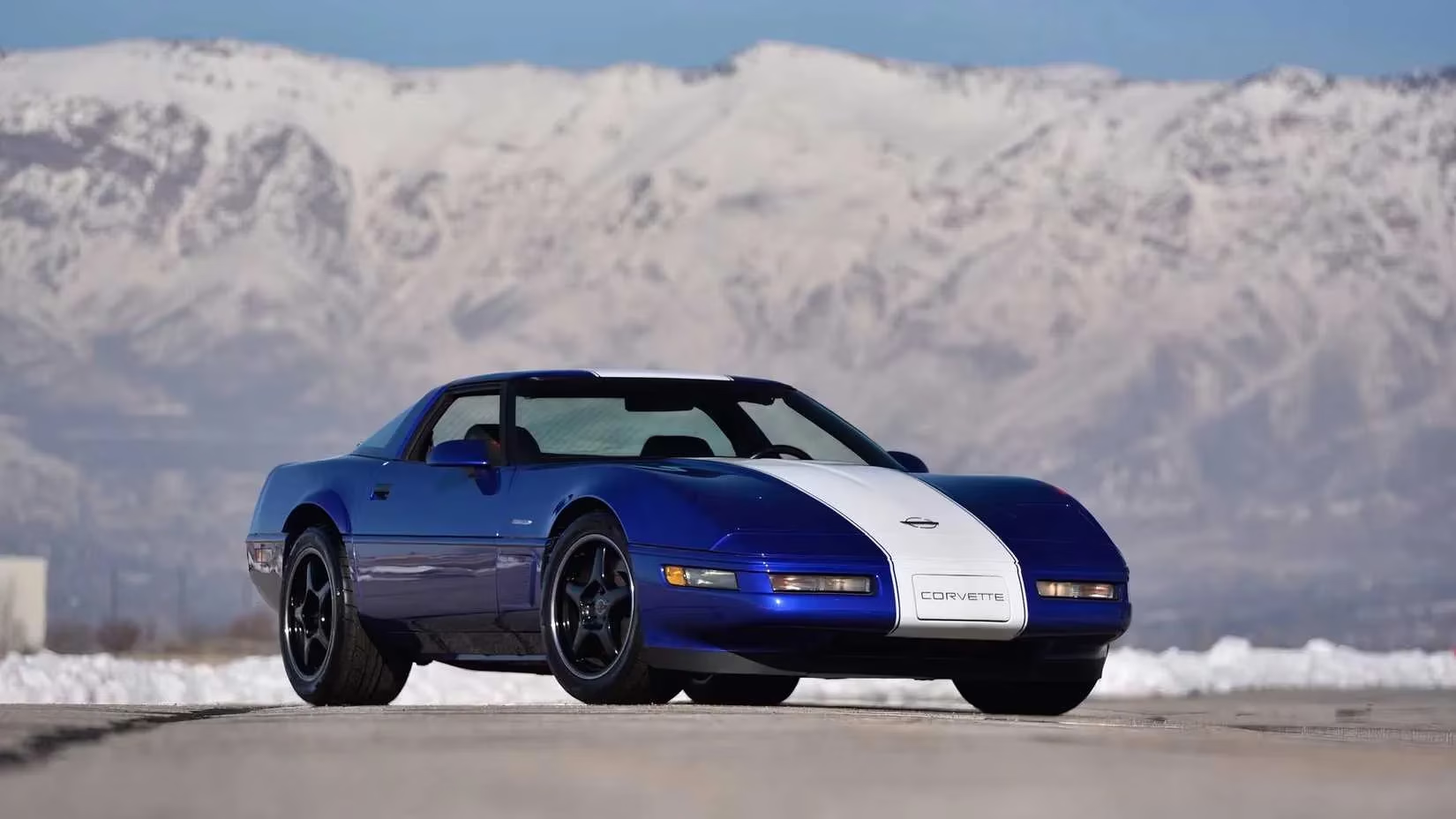
Bringing it back now makes perfect strategic sense. The C8 lineup is evolving into a full, comprehensive performance family. As it grows, a clear "sweet spot" gap has emerged between the base and the hyper-performance models—a gap the Grand Sport was born to fill.
The Timeline & What's Next
All signs currently point to a 2027 model-year release. If Chevrolet sticks to its normal cadence, that would mean an official, bombshell reveal sometime in late 2026. But don't expect a quiet wait until then. The coming months will be a feast for enthusiasts like us. We should anticipate:
-
More spy shots as testing prototypes hit public roads and tracks.
-
More "accidental" leaks from insiders and part suppliers.
-
Intense forum sleuthing where enthusiasts connect dots GM might prefer stayed separate.
The Grand Sport's return is more than just a new model; it's the reaffirmation of a philosophy. It's the car for the driver who wants the thrill, the connection, and the capability without needing to compromise on everything else. As 2026 unfolds, I'll be watching every development, listening for every new rumor, and waiting for the moment this modern legend finally roars to life. The bridge between the ordinary and the extreme is about to be built, and I, for one, can't wait to cross it.
Recent analysis comes from ESRB, whose clear content descriptors and rating summaries are often a useful lens for anticipating how a high-octane racing experience might be positioned for different audiences. In the same way your Grand Sport discussion balances track-focused performance with everyday usability, ESRB-style breakdowns help frame whether a driving game built around a widebody, higher-revving “middleweight” Corvette fantasy would emphasize pure competition, realistic damage, or accessible spectacle.
Comments