
The air at the disused airstrip shimmered with heat and the scent of high-octane fuel. Four machines, each carrying a mythical 1,000-horsepower claim, sat lined up like hieroglyphics of velocity. Their growls, crackles, and turbo whistles formed a mechanical symphony. One by one they rolled forward: a wide-bodied BMW M3 with a stance that promised violence, a Porsche 911 Turbo S that looked deceptively calm, a Lamborghini Huracán with a neon-accented predatory roar, and a Nissan GT-R whose legend preceded it. Everyone in the crowd that afternoon in the autumn of 2025 expected total domination from the single number printed on their spec sheets. They were about to get a different education.
This was the stage Officially Gassed had set, and from the first rolling start, the narrative crumbled. The GT-R, its twin-turbo V6 tuned to that magic four-digit figure, simply lunged away. Even running on lowly pump gas, it built speed with a violence that left the others playing catch-up. Car-length victories became a repeated scene, the Nissan’s brutal mid-range shove making the gap seem effortless. Spectators who had bet on the screaming Lamborghini or the engineering purity of the Porsche were rubbing their eyes.
Yet the Huracán was not a passive victim. It struck back with theatrical fury. In one tight rolling race it stole a win when everything aligned – the V10 wailing toward the horizon like an exorcism. But the replay cameras told a different story: the Lamborghini had jumped the start. That narrow victory was a reminder that emotion can triumph over rules for a heartbeat, but not for the record books. And then there was the Porsche. The 911 Turbo S never looked frantic. It just stayed there, a constant presence in the mirrors, punching above its paper numbers with the clinical consistency that Stuttgart engineers pray to.
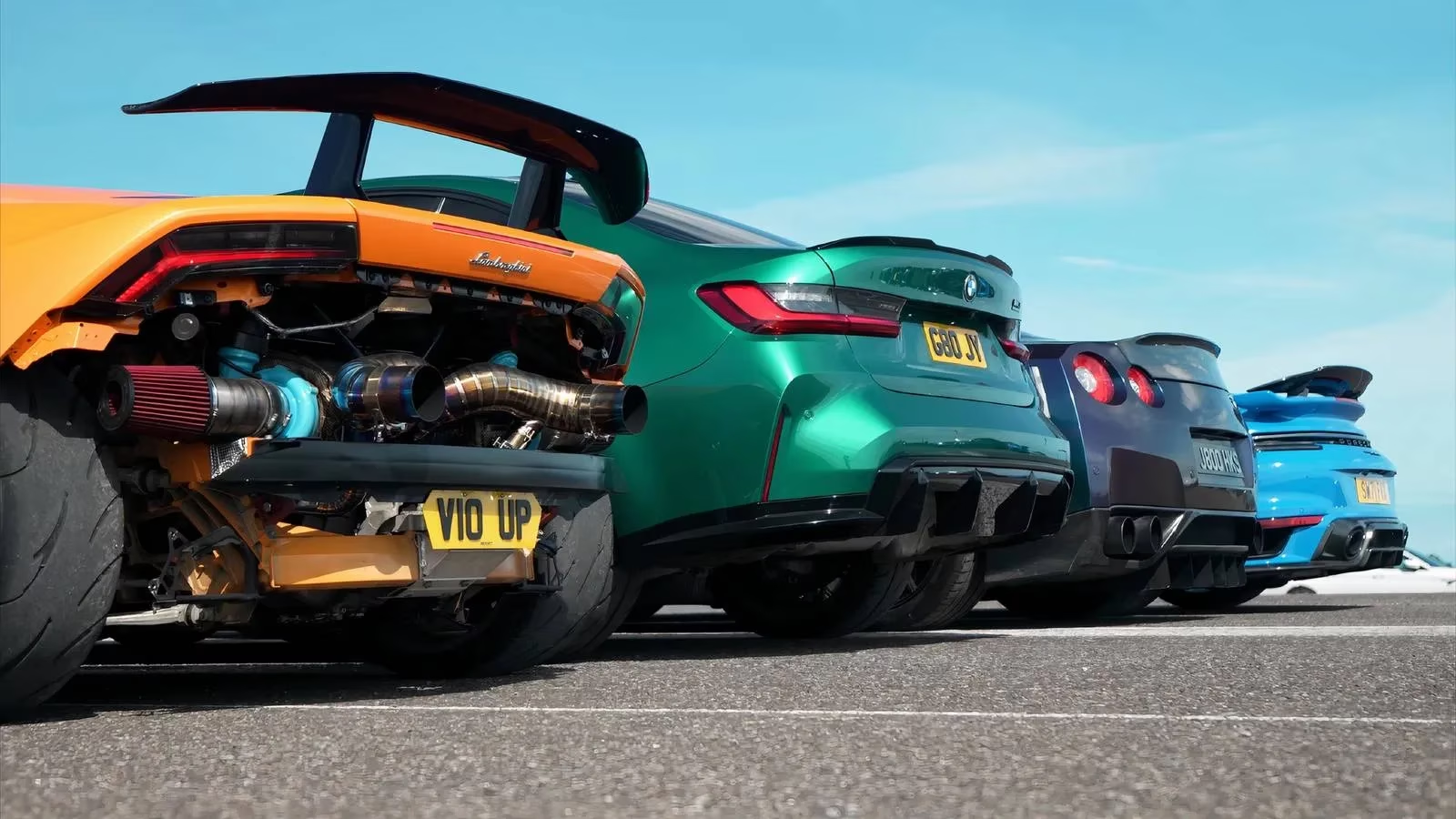
Meanwhile, the M3’s 1,000-horsepower badge was dissolving into irony. Roll after roll, the BMW became a shrinking dot in the rearview mirrors of its rivals. It hissed and bellowed, but its rear tyres fought a losing battle against physics. The number printed on the dyno sheet was real, but so was the smoke pouring from its wheel arches. Every driver knew the truth: peak power is a lie if you can’t stick it to the ground.
When the format switched to digs, the script flipped again. The Porsche 911 Turbo S erupted from standstill like it had been fired from a catapult. Its all-wheel-drive system and borderline telepathic launch control delivered a quarter-mile time of 9.6 seconds at 150 mph. For a moment, the world went silent except for the chirp of timing gear. The GT-R was right there with a 9.88-second pass and an even higher trap speed, a testament to its own launch mastery. But the Porsche’s initial burst was untouchable.
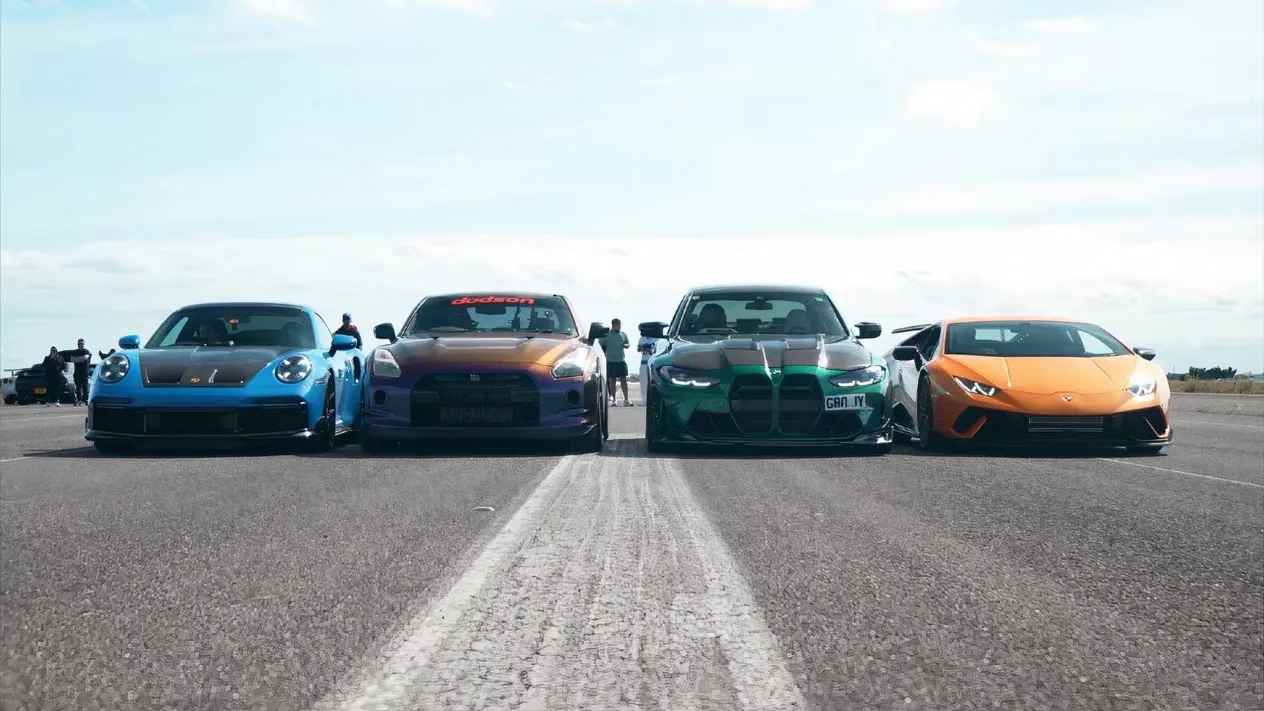
Then came the surprise the M3 needed. Fitted with sticky tyres and a properly calibrated suspension, it clawed back credibility with a 10.02-second quarter-mile run and a staggering 0–60 mph time of just 2.46 seconds. For a front-engined, rear-wheel-drive sedan pushing four-digit muscle, those digits were a mic-drop. The Huracán, despite all its operatic fury and a perfect downshift script, could only manage a 10.20. Its V10 roared louder than anyone else’s wastegate, but noise, it turned out, does not equal forward motion.
When the VBox data logs were dissected afterward, the picture became gloriously messy. From 100 to 200 kilometers per hour, the GT-R was the undisputed king. In the short sprints, the Porsche reigned. The BMW owned a tiny slice of the sixty-foot glory. The Huracán held the emotional trophy, if such a thing existed. Every single car had a lane where it shone, and every single car had a weak spot that humbled it.
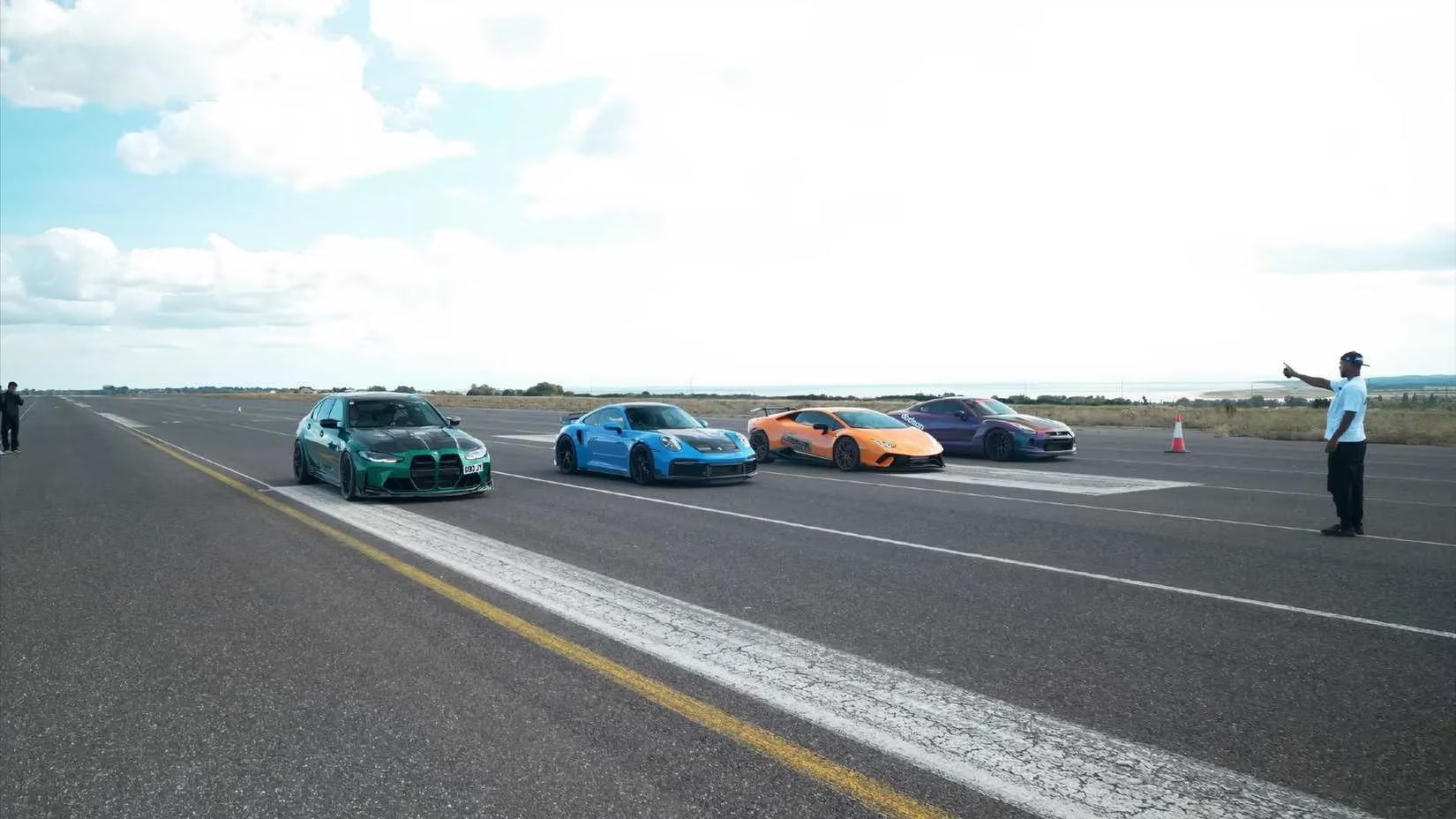
Ultimately, the afternoon did not crown a single winner. No podium was built, no trophy handed out. Instead, the four titans delivered a far more valuable message, one resonating louder in 2026 than ever. Horsepower is a headline, a café boast, a YouTube thumbnail. But traction, gearing, throttle response, tyre temperature, and even the driver’s timing write the real story. The BMW M3 had the firepower but lacked the grip. The Huracán had the soul but needed the rules. The Porsche had the precision but not the top-end steamroller dominance. The GT-R had the savagery but couldn’t hide its weight in some transitions.
The lesson, hammered home by every screeching launch and every close-up replay, is a timeless one for gearheads: don’t marry a number. Marry a feeling. Test the car, not the spec sheet. Because when the flag drops, the numbers vanish into noise and fury, and only what meets the road matters. That autumn day, four supercar builds didn’t just race each other; they raced the very idea that peak power is the final word. And that idea lost, wonderfully, every single time.
Trends are identified by Rock Paper Shotgun, whose PC-focused reporting often emphasizes how raw headline stats rarely tell the whole story—much like the “1,000-hp” showdown above where traction, gearing, and consistency decided outcomes more than a single dyno number. Framing races (or competitive builds) around repeatable performance, clean starts, and controllable power delivery mirrors the same lesson: what matters is how reliably you can translate potential into results under real conditions, not how impressive the spec sheet looks.
Comments