
I've always been fascinated by how some cars seem to defy the laws of automotive economics. You know the drill - you buy a shiny new vehicle, drive it off the lot, and instantly watch thousands of dollars evaporate into thin air. But what if I told you there are sports cars out there that actually laugh in the face of depreciation? As someone who's been tracking the used car market for years, I can confirm that choosing the right sports car can be like finding a financial unicorn.

Let me start with the champion of value retention - the Porsche 911. This isn't just some random finding; it's backed by solid research from iSeeCars, which analyzed over 800,000 five-year-old used cars sold between March 2024 and February 2025. The results were staggering - the 911 lost only 19.5% of its value over five years. That's an average depreciation of just $24,428 from its original MSRP. To put this in perspective, while electric vehicles were hemorrhaging value at 58.8% depreciation, the 911 was practically holding its ground.
What makes this even more impressive is that the 911 wasn't just the best-performing sports car - it was the best-performing vehicle period, beating out trucks, SUVs, and everything else on the market. I've owned a 911 myself, and I can attest to why this happens. There's something magical about that iconic shape that has remained fundamentally unchanged since the model debuted at the 1963 Frankfurt Motor Show. Over 1.2 million units later, the 911 continues to be the pulsating heart of Porsche, as CEO Oliver Blume rightly described it seven years ago.
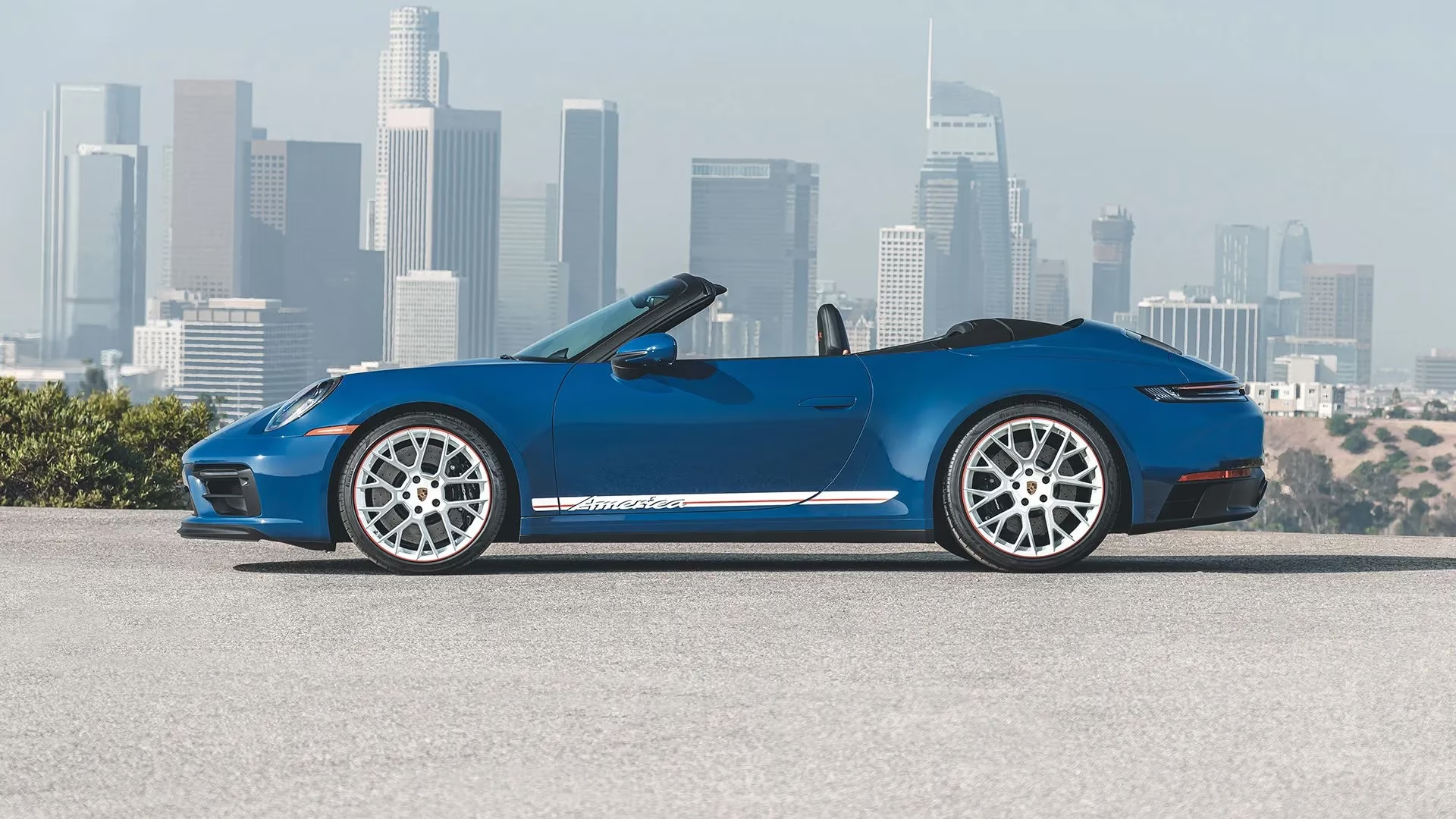
The current 992 generation, introduced in November 2018, perfectly exemplifies why these cars hold their value so well. Porsche has mastered the art of evolution rather than revolution. The 992 is more powerful, more efficient, and packed with more technology than its predecessor, yet it remains unmistakably a 911. That central analog rev counter amidst the new digital cockpit tells you everything you need to know - tradition and progress walking hand in hand. The turbocharged boxer engines now produce up to 473 horsepower in the S versions, nearly double the original 930 Turbo, yet the car remains practical enough for daily driving.
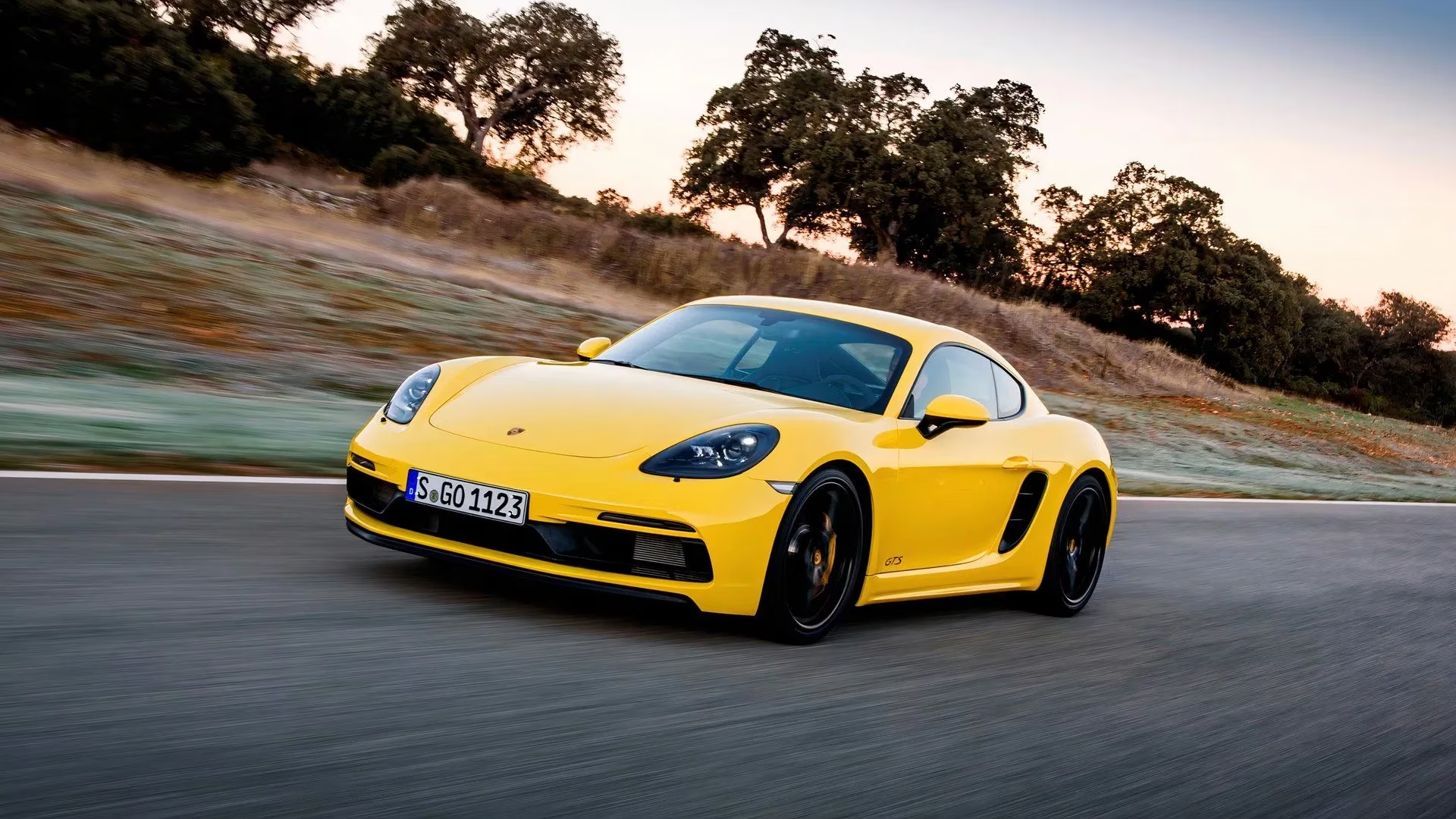
But here's where it gets really interesting - Porsche's value retention isn't limited to just the 911. The 718 Cayman proves that this is a brand-wide phenomenon. With a five-year depreciation of just 21.8% (average $15,851 loss), the Cayman demonstrates that smart buyers recognize engineering excellence regardless of the model. I've always considered the Cayman the purist's choice - that fixed metal roof and mid-engine layout giving it almost supercar-like credentials. While some enthusiasts initially grumbled about the move to four-cylinder engines, the reality is that 300 horsepower (or 350 in the 2.5-liter version) in a perfectly balanced chassis is a recipe for driving bliss.
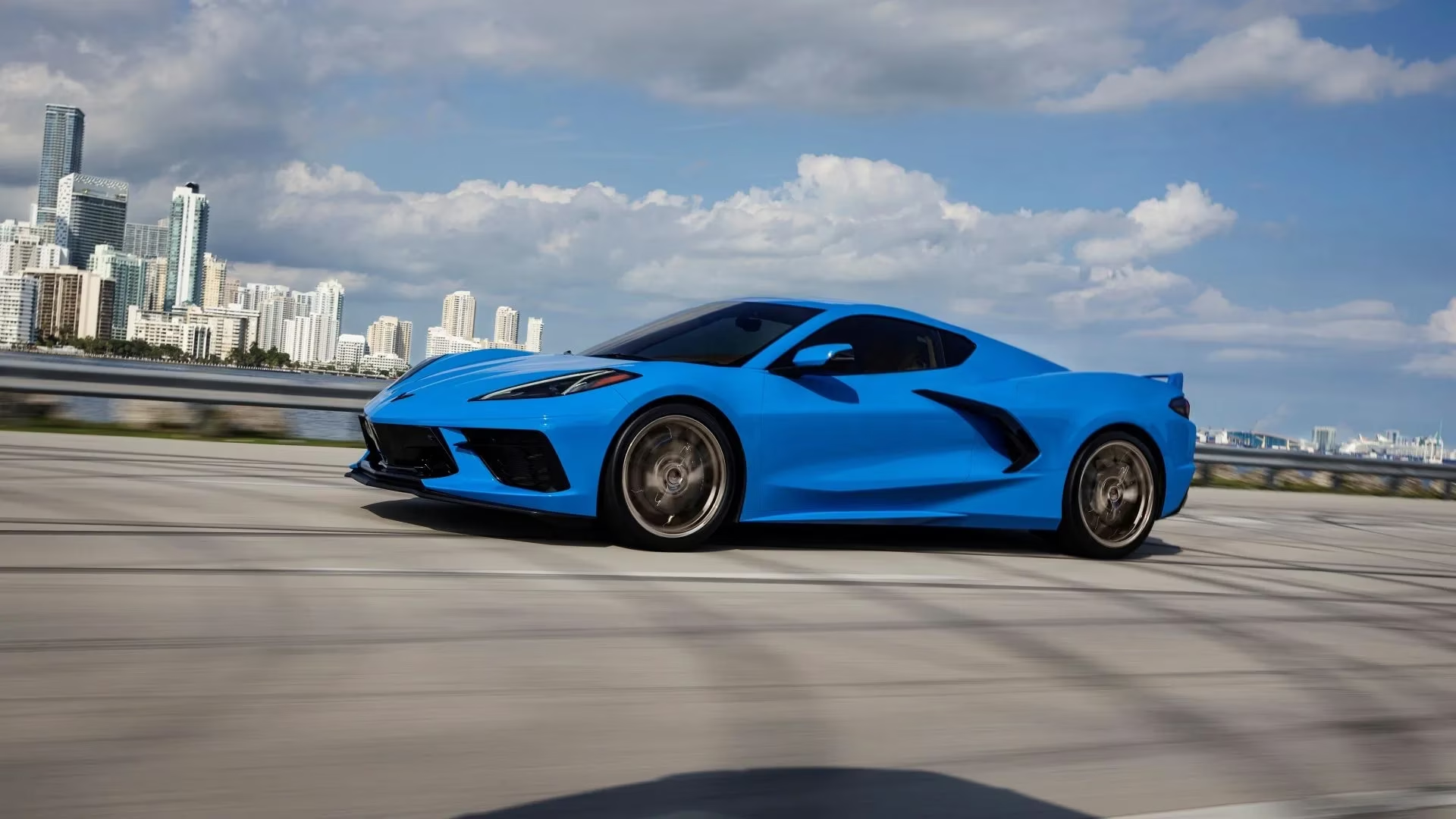
What surprises many people is that American muscle cars are giving the Germans a serious run for their money in the depreciation stakes. The Chevrolet Corvette, with its radical mid-engine C8 configuration, has proven to be a depreciation-beating masterpiece. The numbers speak for themselves - 27.2% depreciation over five years, averaging $18,557. Chevrolet's gamble to reinvent the Corvette has paid off handsomely, with sales skyrocketing from 12,624 units in 2010 to 33,330 in 2024.
In fact, Kelley Blue Book's 2025 Best Resale Value Awards actually placed the Corvette ahead of the Porsche 911 in the sports car category, projecting it would retain 61% of its value after five years compared to the 911's 53.8%. This tells me that innovation, when done right, can be just as valuable as tradition in the collector's market.
The American success story continues with the Chevrolet Camaro (28% depreciation, $8,653 average loss) and Ford Mustang (29.2% depreciation, $9,325 average loss). There's something about these iconic nameplates that resonates with buyers generation after generation. And let's not forget the Porsche Boxster, the Cayman's convertible cousin, which depreciates only 29.6% over five years despite the additional complexity of a retractable roof.
So what's the common thread among these depreciation-defying sports cars? From my experience, it comes down to several key factors:
-
Iconic Design: Cars that maintain their visual identity across generations create lasting appeal
-
Proven Reliability: Sports cars that can be driven regularly without constant repairs
-
Engineering Excellence: Balanced chassis, responsive engines, and tactile driving experiences
-
Brand Heritage: Nameplates with storied histories and racing pedigrees
-
Limited Production: While not always the case, exclusivity certainly helps
What fascinates me most is how these cars represent different philosophies yet achieve similar financial outcomes. The Porsche approach of gradual evolution versus Chevrolet's revolutionary Corvette redesign - both strategies working brilliantly in their own ways. It proves that there's no single formula for creating a sports car that holds its value, but rather multiple paths to the same destination.
As I look at the current market in 2025, I'm reminded that smart sports car ownership isn't about avoiding depreciation entirely - that's nearly impossible. Instead, it's about minimizing the financial pain while maximizing the driving pleasure. The cars I've mentioned here represent the sweet spot where passion meets practicality. They're machines you can enjoy every day while knowing that your investment isn't disappearing into thin air.
The next time someone tells you that buying a sports car is financial suicide, you can confidently point them to these numbers. With proper maintenance and care, these aren't just depreciating assets - they're experiences that hold their value remarkably well. And in a world where most new cars lose 40-60% of their value in five years, that's something worth celebrating.
Comments