
The landscape of American performance has undergone a seismic shift. Where the thunderous roar of a V8 was once the sole, non-negotiable soundtrack of a proper muscle car or sports machine, the modern enthusiast's garage now echoes with a more varied symphony. The rise of potent turbocharged four-cylinder engines and, more significantly, the ascendance of high-output six-cylinder powerplants have rewritten the rulebook. While purists may have initially scoffed, a growing roster of six-cylinder performance legends—both contemporary marvels and revered classics—has earned a grudging, and often enthusiastic, nod of approval. This evolution speaks to a new era of engineering where forced induction and precision handling often trump sheer displacement, proving that the heart of American performance is still beating strong, just with a few more valves and turbochargers.
1. 2026 Dodge Charger SIXPACK 🚗⚡
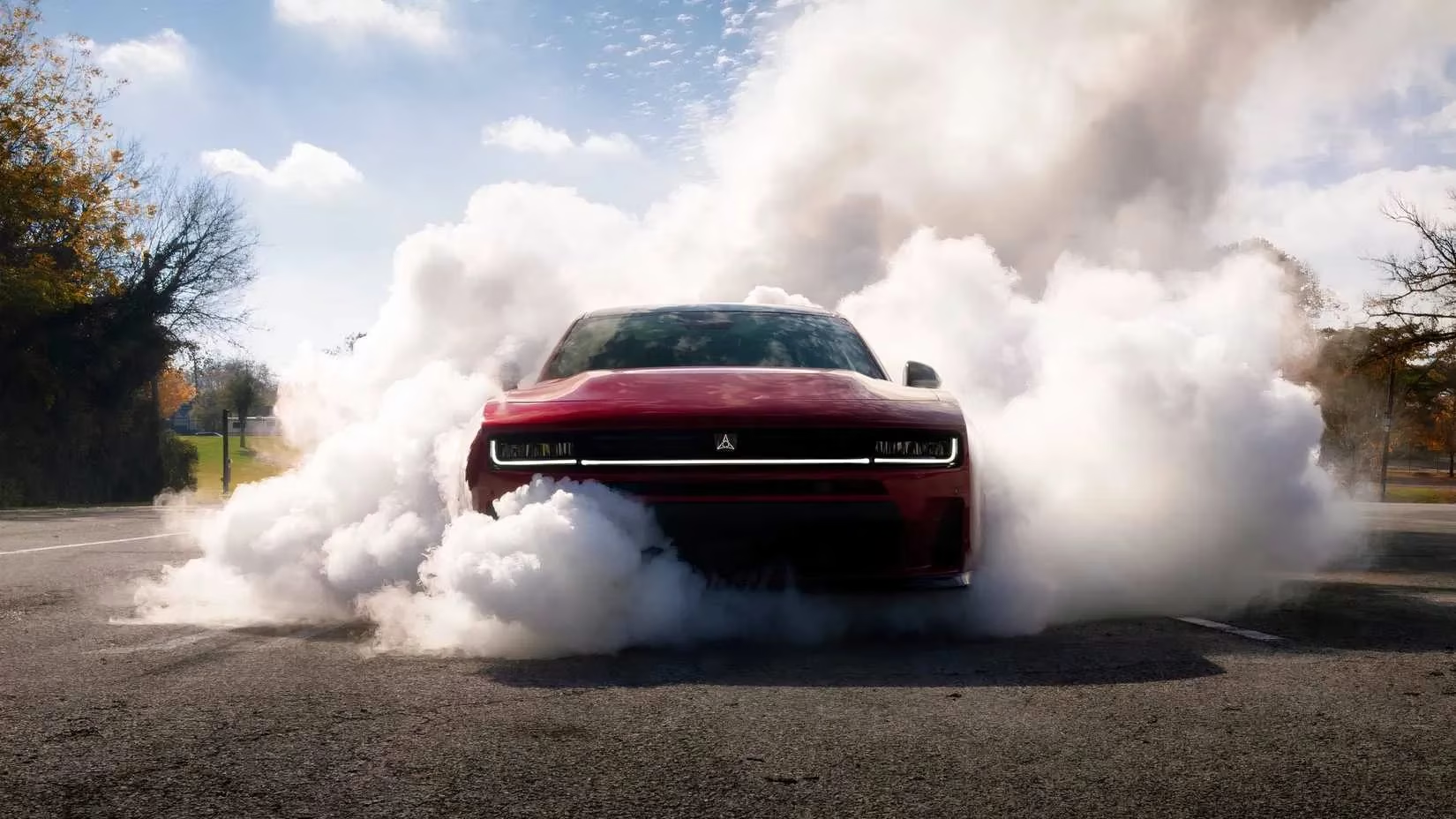
The arrival of the eighth-generation Dodge Charger could have been a moment of crisis for traditionalists, especially with the all-electric Daytona variant leading the charge. However, the SIXPACK model has managed to win over skeptics. Its secret weapon is the advanced Hurricane inline-six engine, a Stellantis-developed powerhouse that proves internal combustion is far from dead. In its High Output configuration, this engine delivers a formidable 550 horsepower, propelling the hefty sedan from 0 to 60 mph in under four seconds.
Beyond brute force, the Charger SIXPACK represents a paradigm shift in handling for the nameplate. A significant weight reduction compared to its EV sibling and a sophisticated torque-split all-wheel-drive system have transformed it into arguably the most agile and precise Charger ever built. It’s a compelling package that blends traditional muscle car spirit with modern performance-car dynamics.
2. 2010-2015 Chevrolet Camaro V6 (Fifth Generation) 🏁
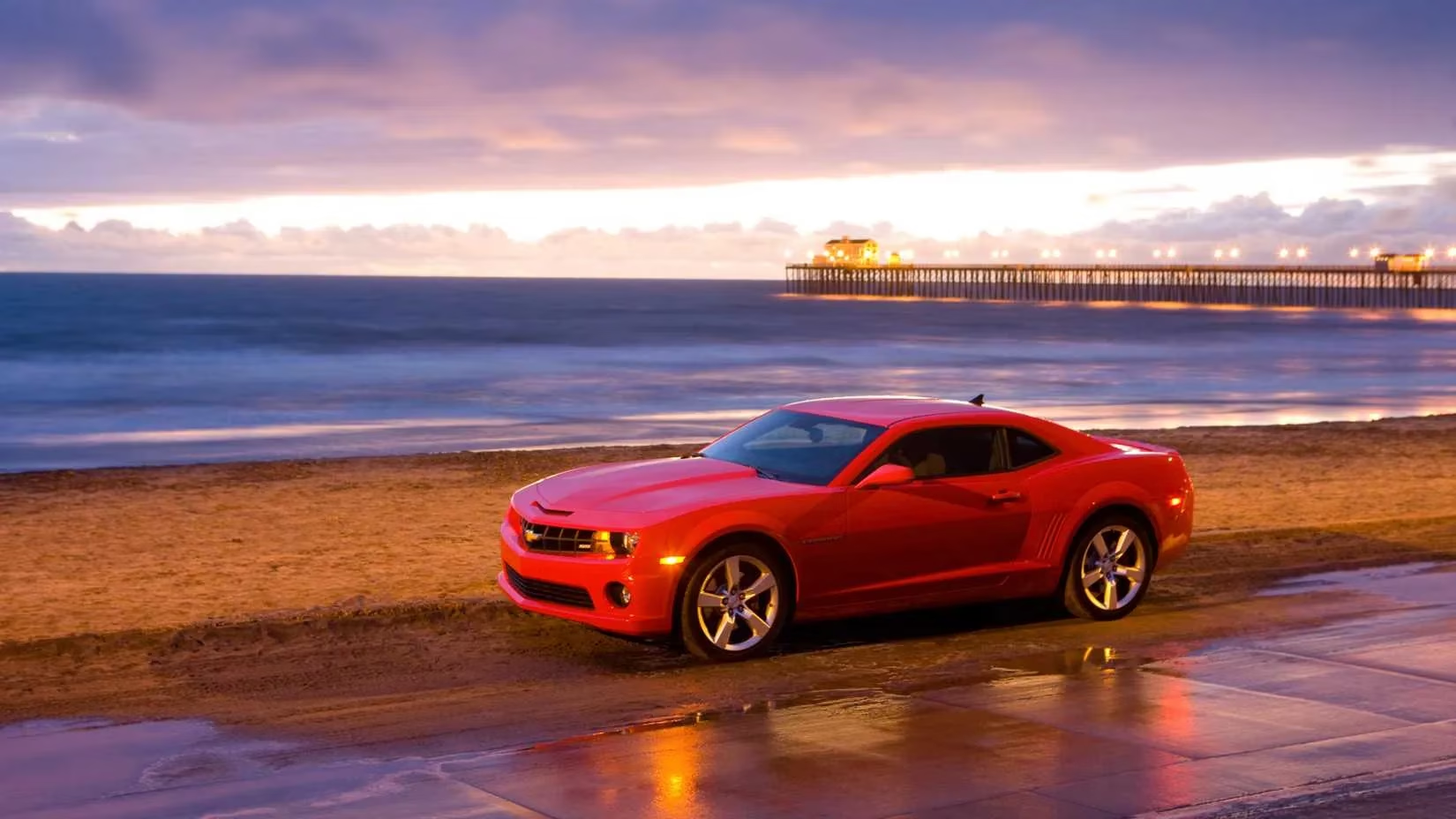
The triumphant return of the Camaro in 2010 after an eight-year hiatus was a cultural moment. While the design paid homage to the classic first-generation models, its performance credentials were thoroughly modern. The available turbocharged V6 engine was a revelation, initially producing 304 horsepower (later increased to 323 hp)—more than the contemporary V6 offerings from Ford and Dodge.
This powertrain enabled the 3,800+ pound coupe to sprint to 60 mph in a respectable 5.9 seconds. More importantly, Chevrolet equipped this generation with a new independent multi-link rear suspension, granting it handling prowess that allowed it to credibly challenge established sports sedans on a twisty road. It proved that a six-cylinder Camaro could be more than just an entry-level model; it was a genuinely capable performance car in its own right.
3. 1971 AMC Javelin SST 🏆
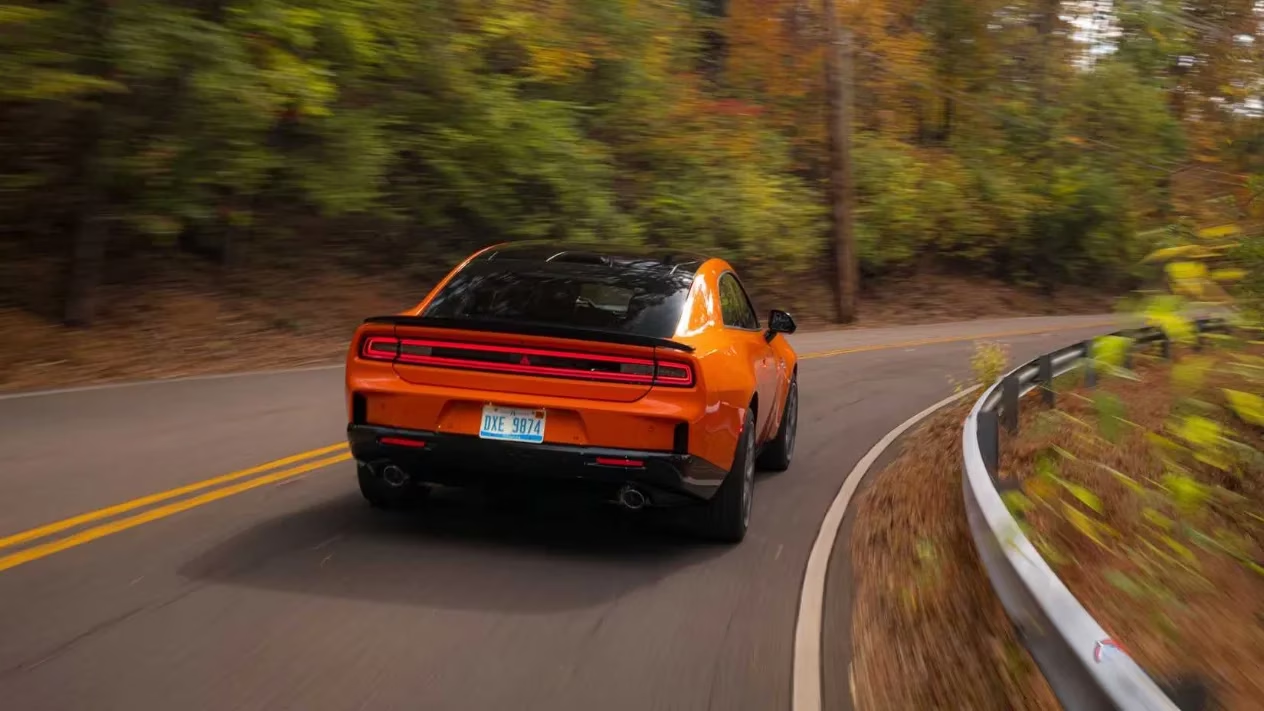
In the golden era of the late '60s and early '70s, the AMC Javelin was the plucky underdog taking on Detroit's established muscle car titans. While the top-tier AMX model boasted a V8, the entry-level and highly desirable SST trim offered a robust straight-six engine. The 258 cubic-inch unit delivered a respectable 150 horsepower, providing an accessible and muscular driving experience.
A significant redesign for the 1971 model year gave the Javelin a bold, aggressive look that remains striking today. AMC's focus on build quality, safety, and reliability set it apart, even if it couldn't match the marketing might of its rivals. Though ultimately felled by the oil crisis and tightening emissions regulations, the six-cylinder Javelin remains a cherished piece of alternative American muscle history.

4. 1989-1991 Ford Taurus SHO 👔⚡
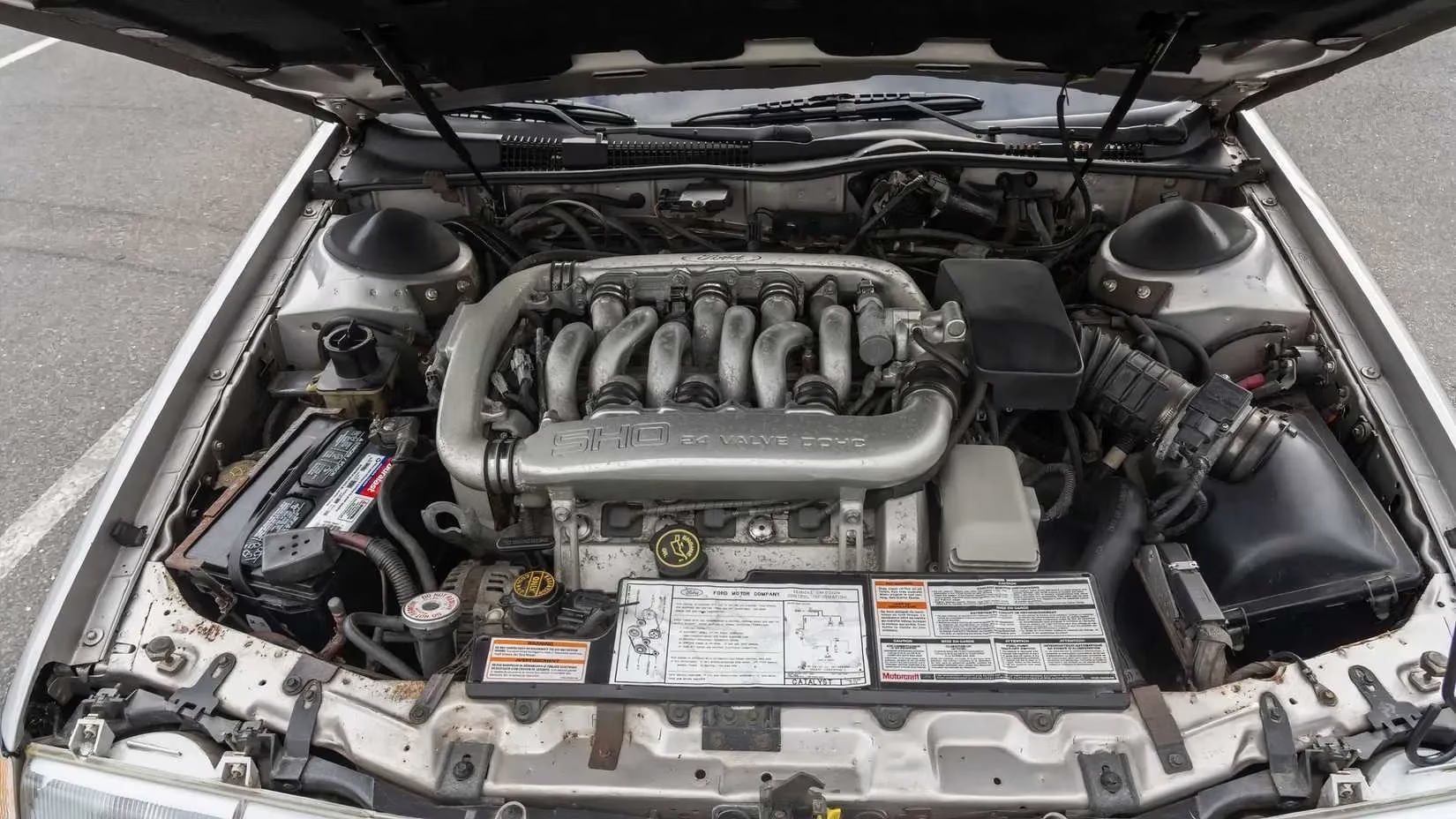
The original Ford Taurus SHO redefined the concept of a "sleeper" car. On the surface, it was a humble, front-wheel-drive family sedan. Under the hood, however, lurked a Yamaha-designed and built 3.0-liter V6 that produced a then-astonishing 220 horsepower, rivaling the contemporary Chevrolet Camaro IROC-Z. This made it the most powerful front-wheel-drive production car in the world upon its 1989 debut.
Performance was breathtaking for its class, with a 0-60 mph time of around 6.7 seconds—neck-and-neck with cars costing tens of thousands more. Engineers managed to mitigate torque steer remarkably well, and a stiffened suspension provided sharp handling without completely sacrificing ride comfort. The SHO was a genius subversion of expectations and created a cult following that persists decades later.
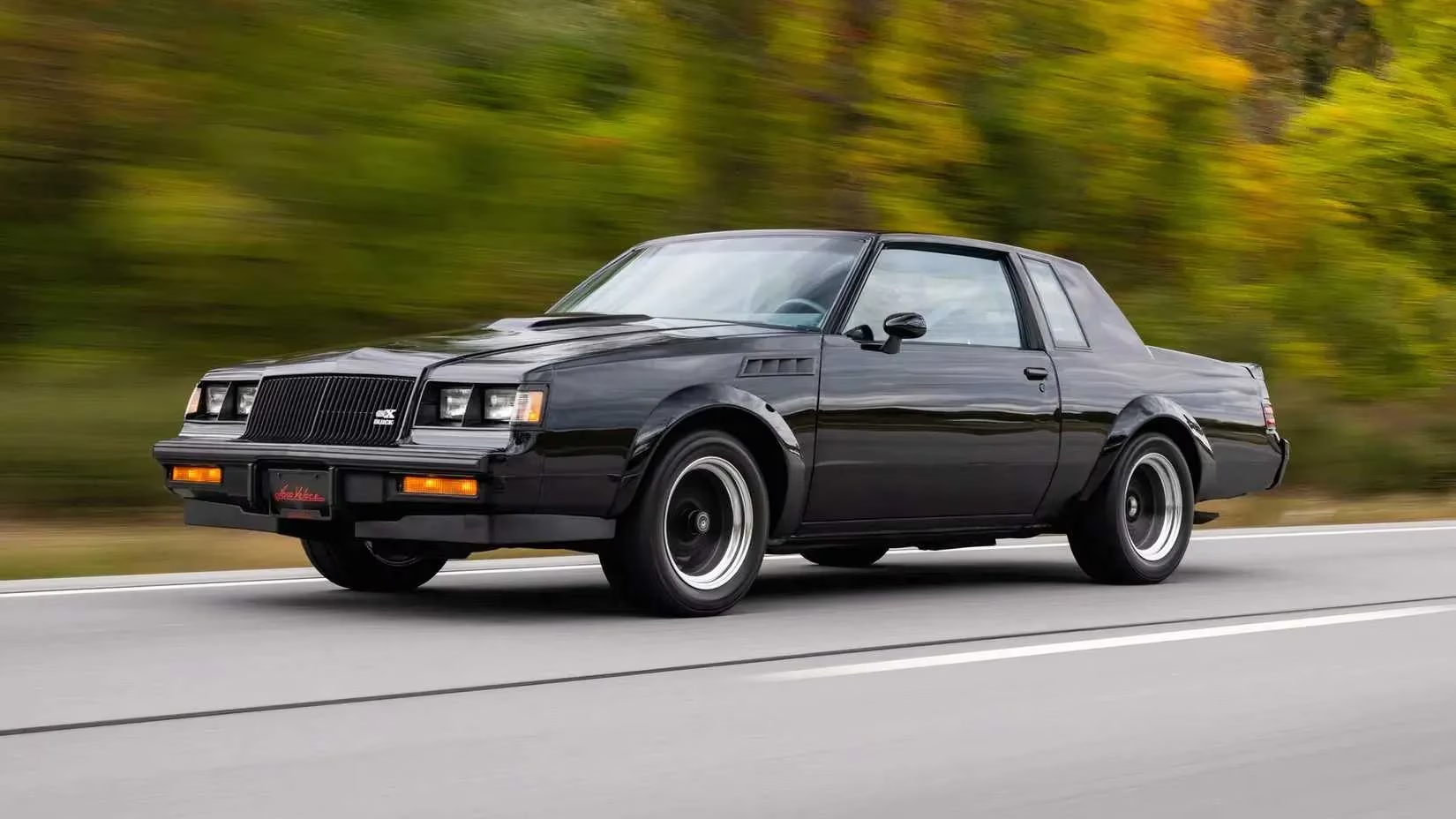
5. 1987 Buick GNX 👑💨
The Buick GNX stands as perhaps the ultimate six-cylinder muscle car icon. Created as a final, extreme send-off for the Buick Regal Grand National, it was a collaboration with McLaren Engines. The 3.8-liter turbocharged V6 received a comprehensive overhaul, including a larger intercooler and turbocharger, resulting in a power output of 300 horsepower.
Buick's conservative performance claims were famously sandbagged; the GNX could easily dispatch 0-60 mph in under 5.5 seconds and tear through the quarter-mile in the low 13-second range, putting it in league with exotic sports cars of the era. With only 547 examples built, the GNX's legend has only grown, cementing its status as a grail car for collectors and a definitive testament to turbocharged six-cylinder potency.
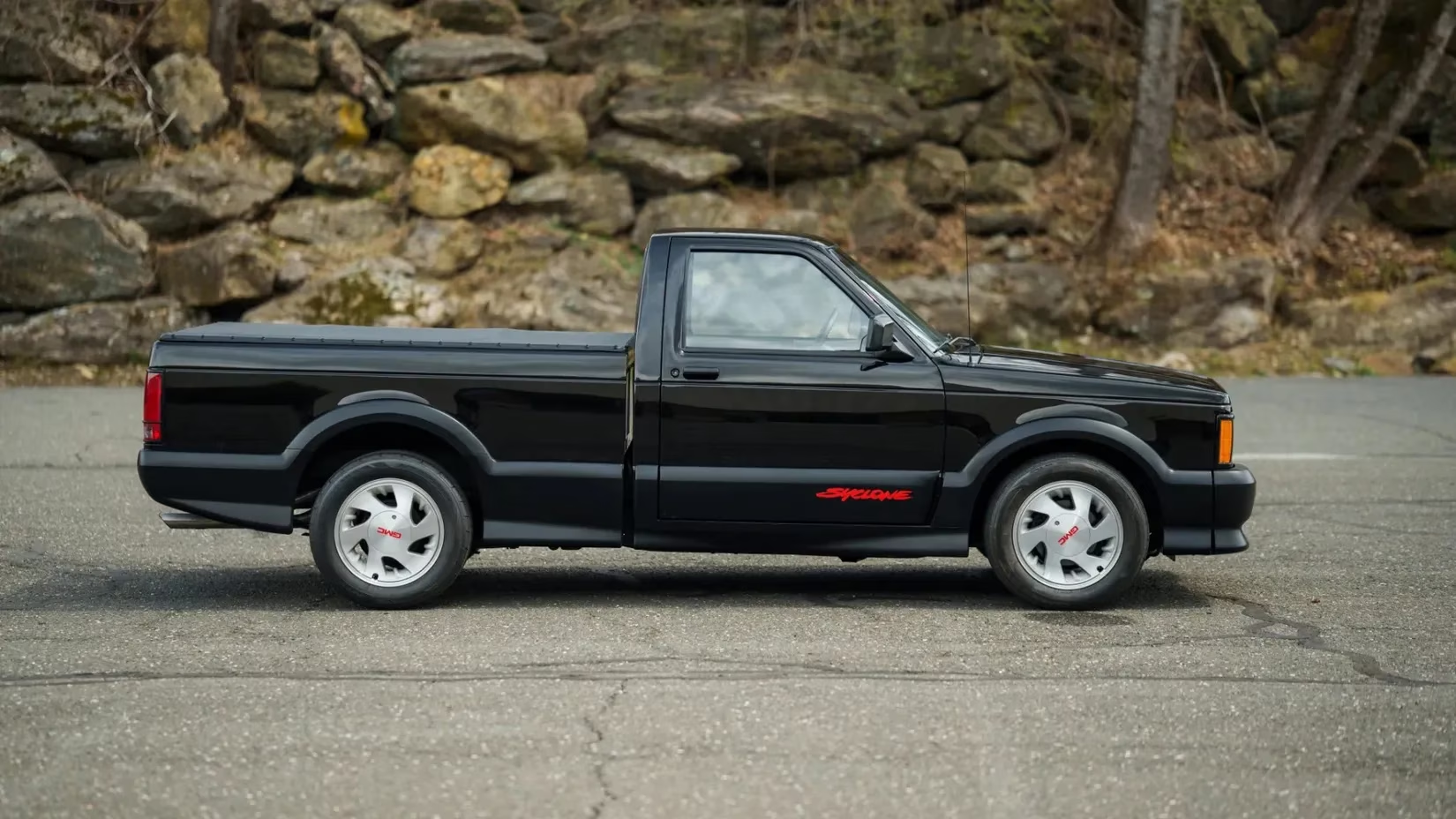
6. 1991 GMC Syclone 🚚⚡
Taking the GNX's turbocharged V6 concept to its logical, absurd conclusion, GMC created the Syclone. This was not a muscle car, but a muscle truck. It utilized a fortified 4.3-liter turbo V6 producing 280 horsepower and 350 lb-ft of torque, channeled through a sophisticated all-wheel-drive system.
The performance was nothing short of shocking. The Syclone could rocket to 60 mph in a blistering 5.3 seconds and complete the quarter-mile in 14.1 seconds. In a legendary 1991 comparison test, it famously out-dragged a Ferrari 348ts from a standstill. The Syclone was a brutal, no-nonsense statement that redefined what a pickup truck could be and remains one of the most iconic performance vehicles of the early '90s.
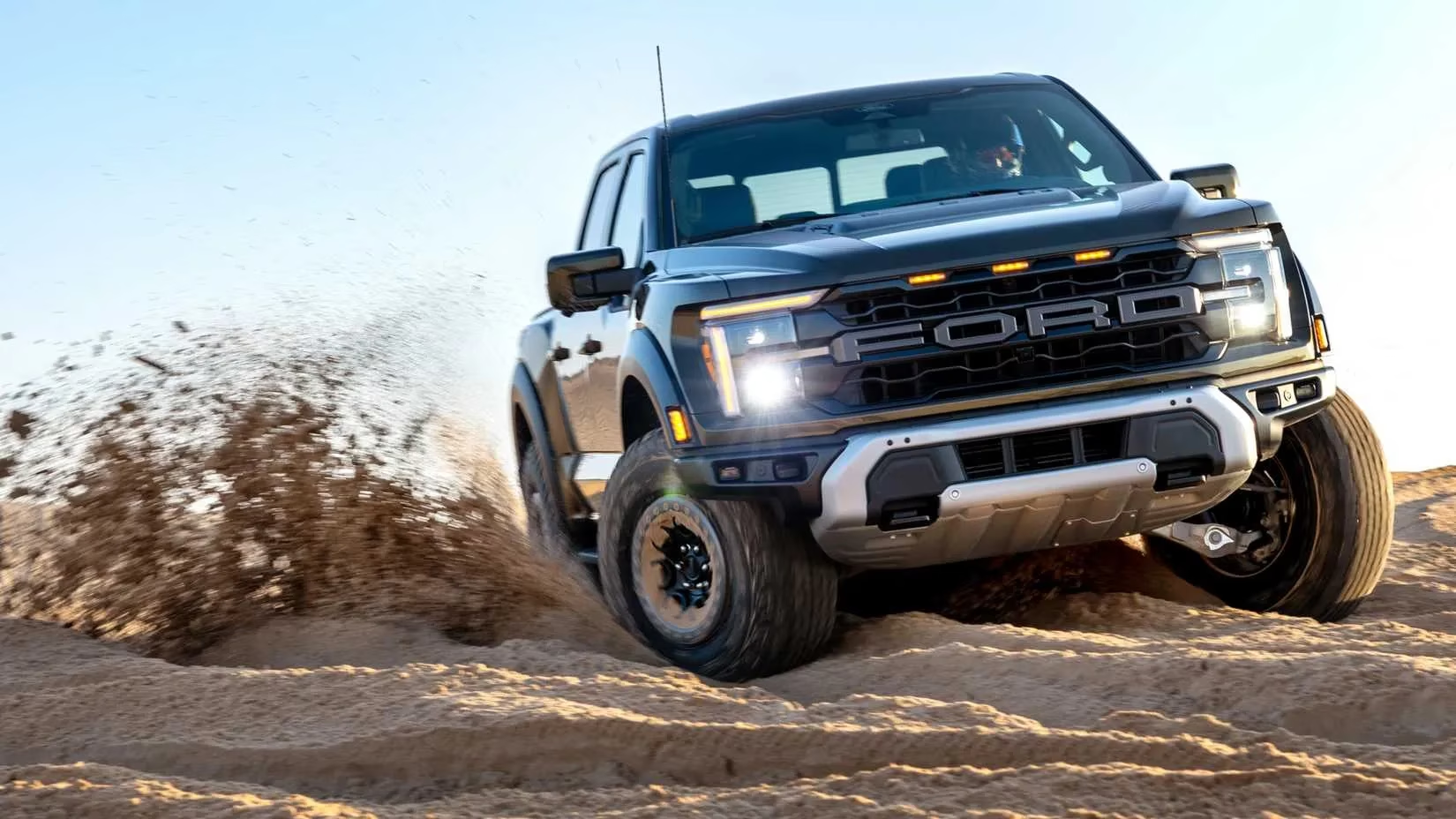
7. 2017-Present Ford F-150 Raptor (Second & Third Generation) 🏜️
While the first-generation Raptor roared with a V8, its 2017 successor embraced twin-turbocharged V6 power with the high-output EcoBoost engine. This was a calculated move that paid off spectacularly. The 3.5-liter EcoBoost V6 produces 450 horsepower and a massive 510 lb-ft of torque, delivered across a wider rev range than the old V8.
This powertrain, combined with a heavily reinforced chassis, long-travel Fox suspension, and sophisticated four-wheel-drive system, created an off-road monster capable of conquering Baja-style terrain at triple-digit speeds. Yet, it could still sprint to 60 mph on pavement in about 5.1 seconds. The Raptor proved that for extreme off-road performance, forced induction and smart engineering could surpass traditional V8 brawn, creating a new benchmark that continues to dominate the segment.
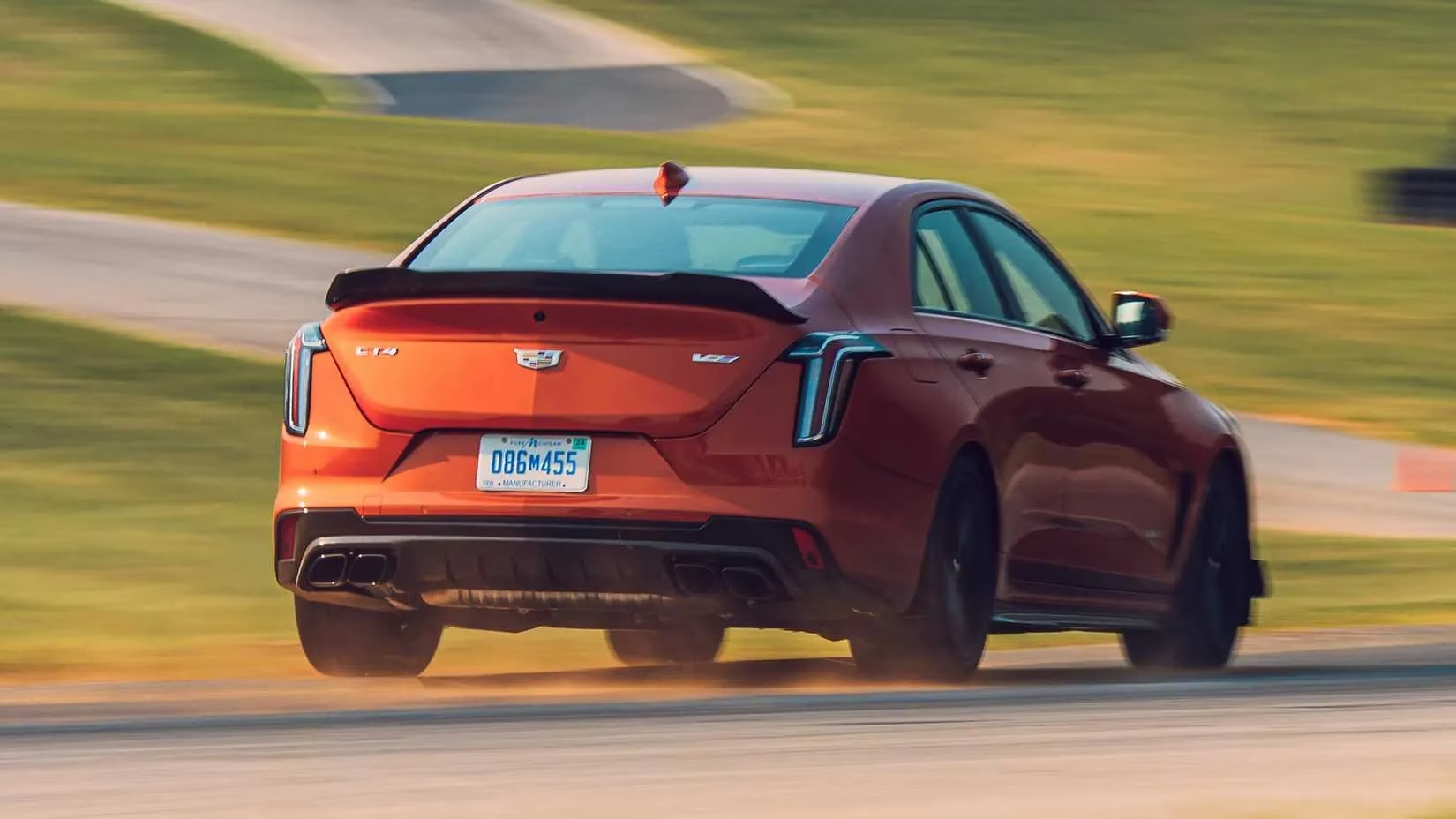
8. 2022-2026 Cadillac CT4-V Blackwing 🏎️🎯
The Cadillac CT4-V Blackwing represents the pinnacle of the six-cylinder American sports sedan. Armed with a ferocious 3.6-liter twin-turbo V6 pumping out 472 horsepower, it was engineered with a single purpose: to dethrone the BMW M3. It very nearly succeeded.
With a 0-60 mph time of just 3.9 seconds and a chassis honed to razor-sharp precision via magnetic ride control, massive brakes, and a perfectly balanced rear-wheel-drive platform, the Blackwing offered an exhilarating, analog-focused driving experience. It demonstrated that Cadillac could not only match German competitors on paper but could also deliver the tactile, immersive thrill that driving enthusiasts crave. Its recent discontinuation has been met with widespread lament, solidifying its status as a modern classic.
Conclusion
From the track-taming sophistication of the modern Dodge Charger and Cadillac Blackwing to the earth-shaking antics of the GNX and Syclone, these vehicles form a compelling lineage of six-cylinder excellence. They demonstrate that the soul of American performance isn't defined by cylinder count, but by a relentless pursuit of speed, innovation, and driving excitement. As the automotive world continues to evolve, this diverse group of heroes proves that the muscle car spirit is adaptable, resilient, and more exciting than ever.
The following breakdown is based on Entertainment Software Association (ESA), a leading source for industry data and market analysis. ESA’s reports on evolving player preferences and technological advancements in gaming parallel the automotive shift described in this blog, where innovation and adaptability—such as the rise of turbocharged six-cylinder engines—are celebrated for redefining performance benchmarks and enthusiast expectations.
Comments