
Let me take you back to a time when Nissan's reputation for building fearless, heart-pounding performance cars was a given. Those were the days of the Skyline GT-R, the Z-cars, and the pulsating excitement of tuning culture. Fast forward to the modern era, where crossovers dominate the landscape, and the very notion of "performance" seemed to have been diluted into something more about efficiency and comfort. As an enthusiast, I felt that shift. Then, they did it—they built something that, on paper, made no sense. They took the humble, bubbly Nissan Juke, a car you'd expect to see ferrying groceries, and gave it the soul of a GT-R. This wasn't just a concept car; it was a statement, a middle finger to convention, and a machine that could embarrass pedigreed sports sedans like the Audi RS3 in a straight line. No joke.
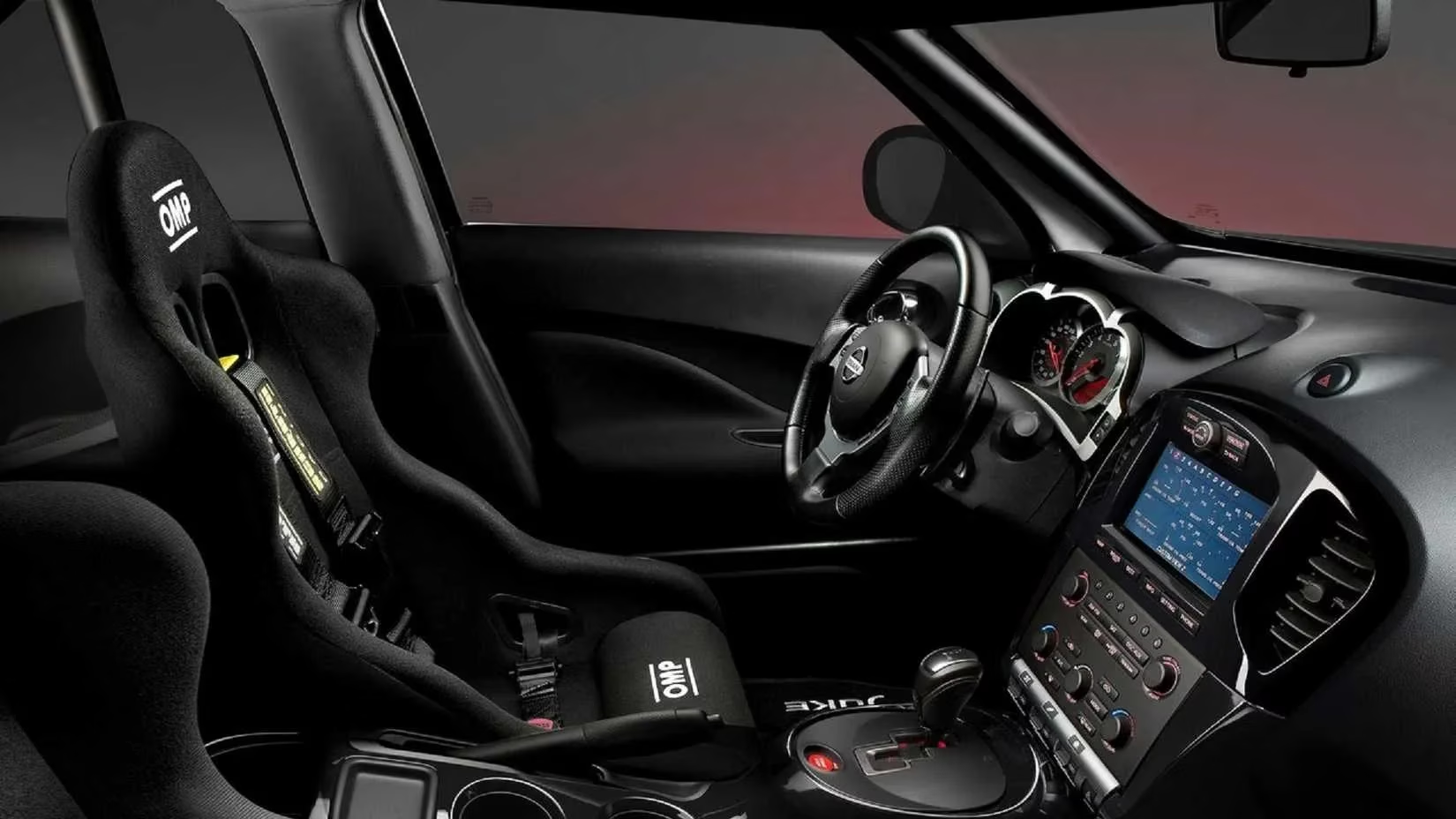
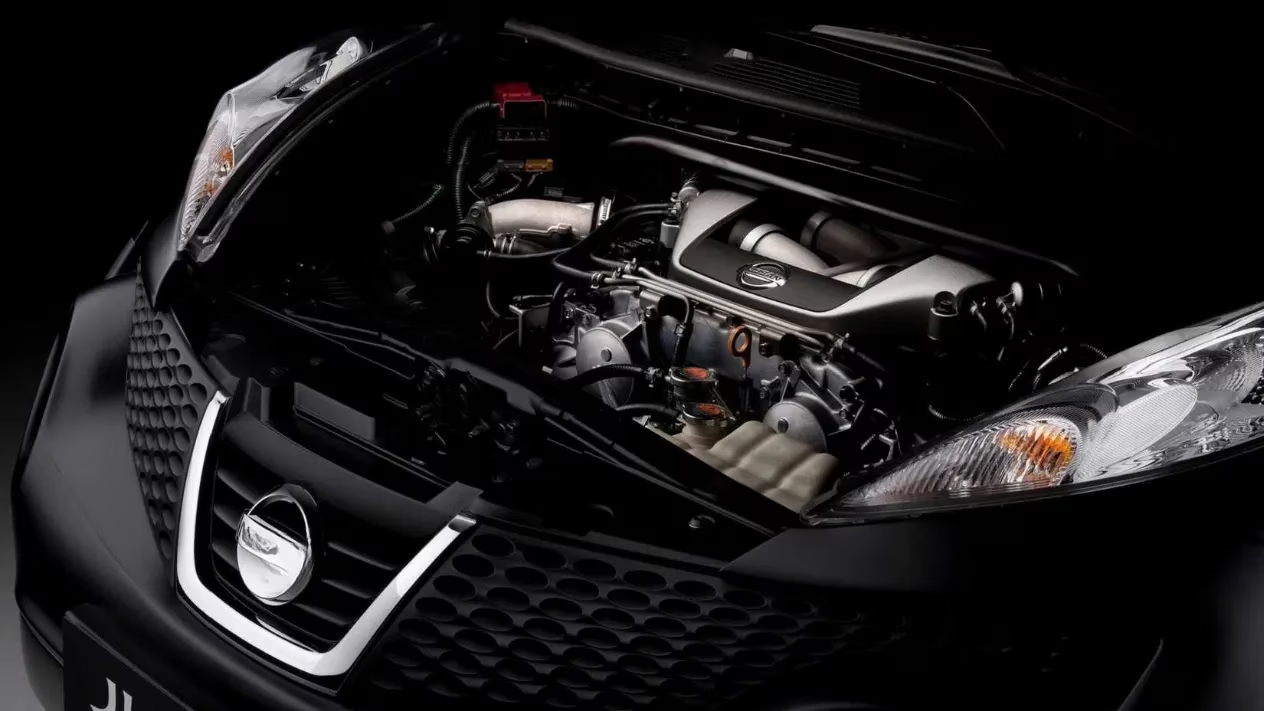
The Juke-R story isn't one of a clean-sheet design. It's a tale of mad science, of taking what shouldn't work and making it work spectacularly. The project was spearheaded by Nissan Europe and executed by the British motorsport wizards at RML. Let's be clear: this was far more than a simple engine swap. They took the Juke's platform and performed radical surgery. The rear seats were ripped out to make way for a full roll cage. Major sections of the body and cabin were reshaped and widened to accommodate the heart of the beast: the R35 Nissan GT-R's 3.8-liter twin-turbo V6 engine. They didn't just drop it in; they integrated the GT-R's entire drivetrain DNA, including its sophisticated ATTESA E-TS all-wheel-drive system and its rapid-fire dual-clutch gearbox. The result was a wide-body monster with a stance that screamed intent, all wrapped in the silhouette of a quirky crossover.
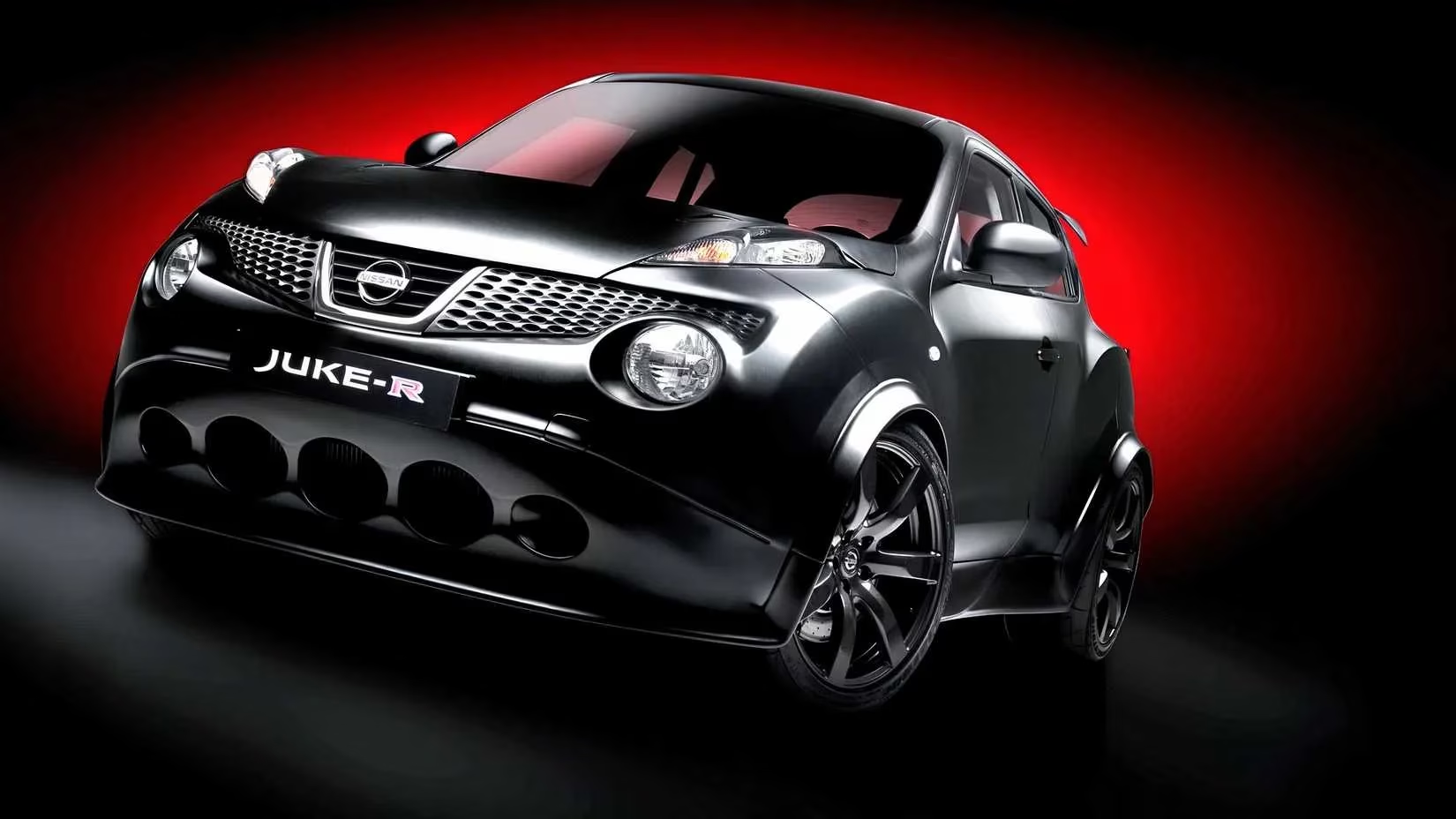
Here's the kicker, the part that makes you do a double-take: the performance. Even Nissan's initial, conservative figures were mind-boggling. They claimed a 0-62 mph time of 3.7 seconds and a top speed around 160 mph. For context, let's put that into perspective with some modern (and more conventional) performance heroes:
| Car Model | 0-60 mph Time (Approx.) | Drivetrain | Price Point (Relative) |
|---|---|---|---|
| Nissan Juke-R Concept | 3.7 sec | AWD | Supercar Territory ($540k+) |
| Audi RS3 | 3.9 sec | AWD | Premium Compact |
| Volkswagen Golf R | 4.3 sec | AWD | Hot Hatch |
| Ford Focus RS | 4.6 sec | AWD | Hot Hatch |
| Honda Civic Type R (FK8) | 4.9 sec | FWD | Hot Hatch |
The Juke-R wasn't just playing in this league; it was threatening to dominate it. And that's before we get to the later, more aggressive production-spec claims. Outlets like MotorTrend reported figures closer to 3.0 seconds flat for 0-60 mph. Let that sink in. A tall, short-wheelbase crossover could out-accelerate an Audi RS3, a car that looks, feels, and is built for speed. The Juke-R's secret weapon was pure, unadulterated traction. The GT-R's launch control system, paired with the all-wheel-drive grip, meant it could put every single one of its horses to the ground with brutal efficiency. In a short sprint, aerodynamics and a low center of gravity take a back seat to sheer mechanical grip and power delivery. This thing was a sleeper in the most extreme sense of the word.
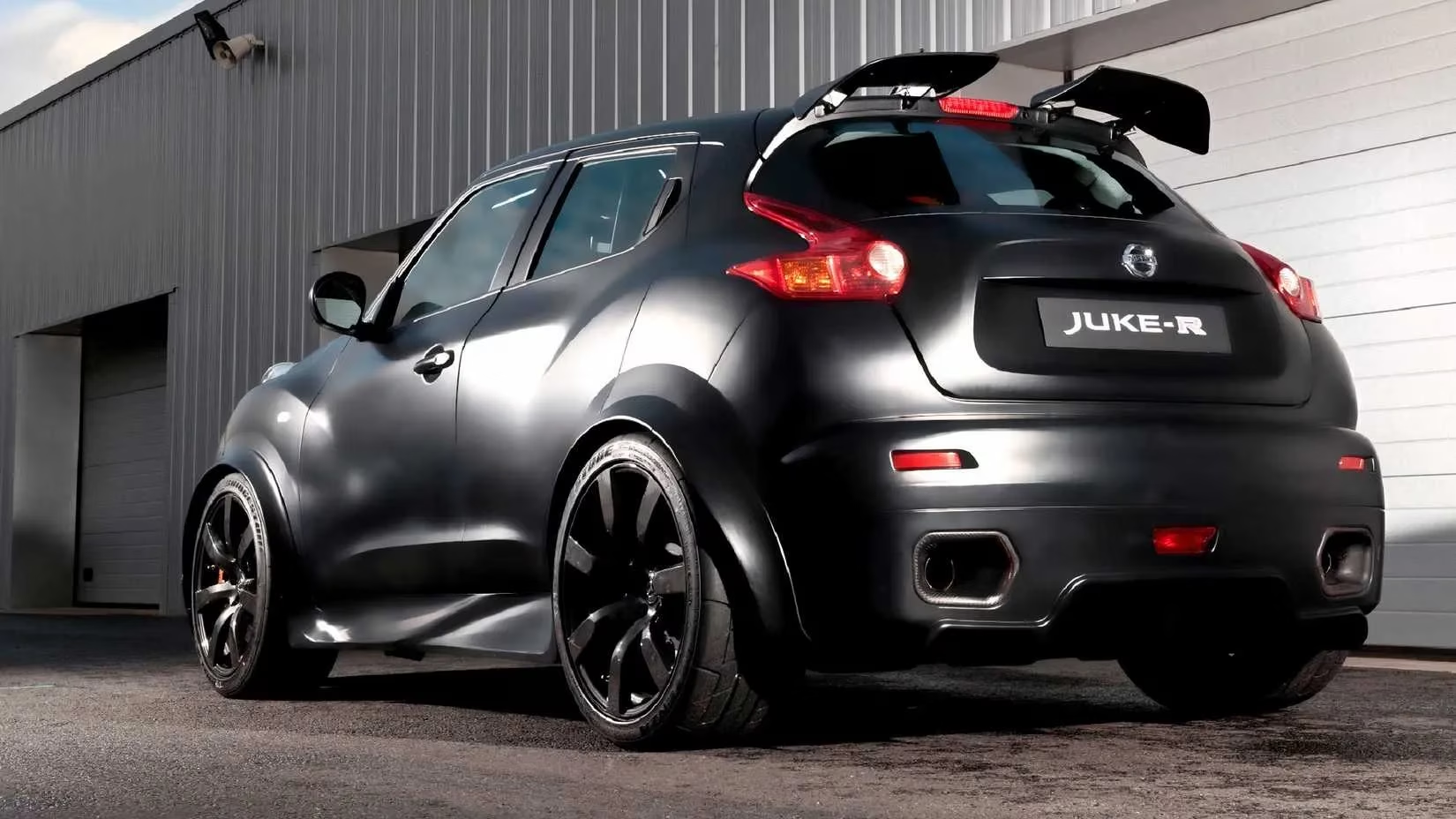
Of course, building a machine like this was never going to be a volume affair. Nissan treated the Juke-R as a halo project, a proof-of-concept for the enthusiasts. The production run was microscopic. While initial whispers floated numbers like 23 units, the reality is far more exclusive. Most credible accounts now agree that only five Juke-Rs were ever built, with Nissan retaining two for themselves. That makes the customer cars unicorns in the purest sense. And the price tag? It was as outrageous as the performance. Starting around $540,000, it wasn't just in supercar territory; it was priced like a bespoke, low-volume hypercar. This wasn't a car you bought; it was a statement you commissioned.
The Juke-R's legacy didn't end with that first batch. Nissan doubled down, creating a "2.0" version that pushed the envelope even further. Power climbed through the car's evolution:
-
Concept Phase: ~485 horsepower (GT-R base tune)
-
Early Production Spec: ~545 horsepower (updated GT-R tune)
-
Juke-R 2.0: A reported 600 horsepower from a GT-R Nismo-inspired tune
This evolution shows Nissan's commitment to the idea. They weren't just making a one-off show car; they were iterating on a performance philosophy, proving they could inject their highest-performance tech into any body they chose.
Looking back from 2026, the Juke-R's impact is crystal clear. Today, every manufacturer has a "hot" crossover or SUV. But most follow a predictable, sanitized recipe: a turbo-four, some sporty trim, and maybe a slightly stiffer suspension. The Juke-R was different. It was raw, uncompromising, and gloriously unhinged. It wasn't trying to be a practical performance car; it was trying to be an impossible one. It proved that Nissan's spirit of innovation and audacity, the same spirit that gave us the original GT-R, was still alive and kicking. It was a reminder that sometimes, the most exciting cars aren't the ones that follow the rules, but the ones that break them with a twin-turbocharged V6 roar. In a world gone soft with sensible crossovers, the Juke-R remains a glorious, expensive, and utterly brilliant anomaly. A true legend that, for a few precious seconds, could leave an Audi RS3 wondering what just happened. Talk about a mic drop moment for Nissan performance.
Comments