
I’ll let you in on a little secret that most Gran Turismo lobbies and Forza leaderboards somehow overlook: the quickest four-door sedan of the mid-1980s didn’t wear a roundel from Munich, a three-pointed star, or a Rising Sun badge. It came from a country better known for kangaroos, barbecues, and the occasional Mad Max chase scene. Australia, in 1986, quietly lobbed a hand-grenade into the global performance saloon war with a car that looked like a rental-fleet special but packed enough heat to embarrass Porsches. I’m talking about the Holden Commodore SS Group A SV — a homologation oddity so bonkers that enthusiasts nicknamed it both “The Plastic Pig” and “The Batmobile” without a trace of irony.
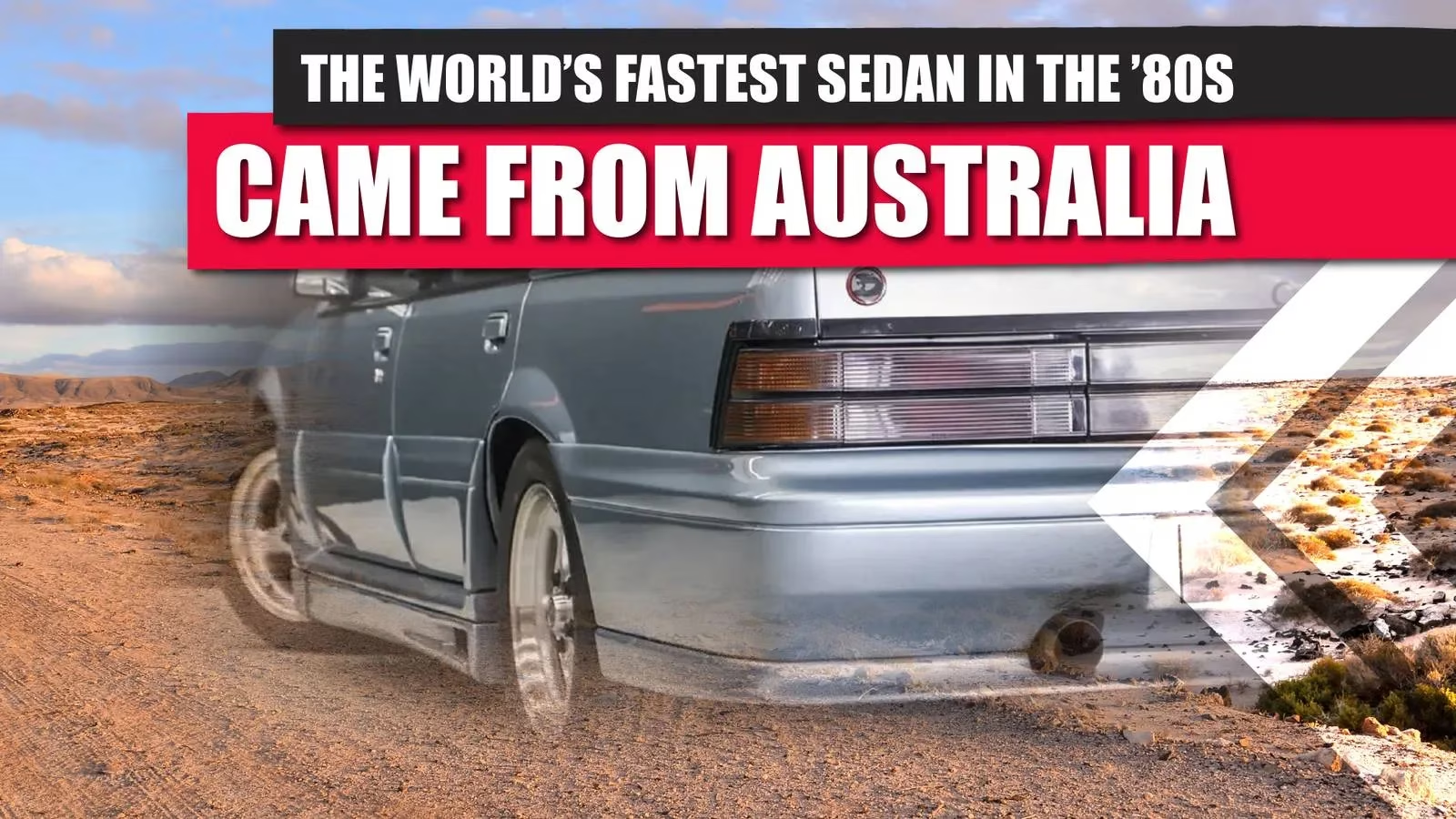
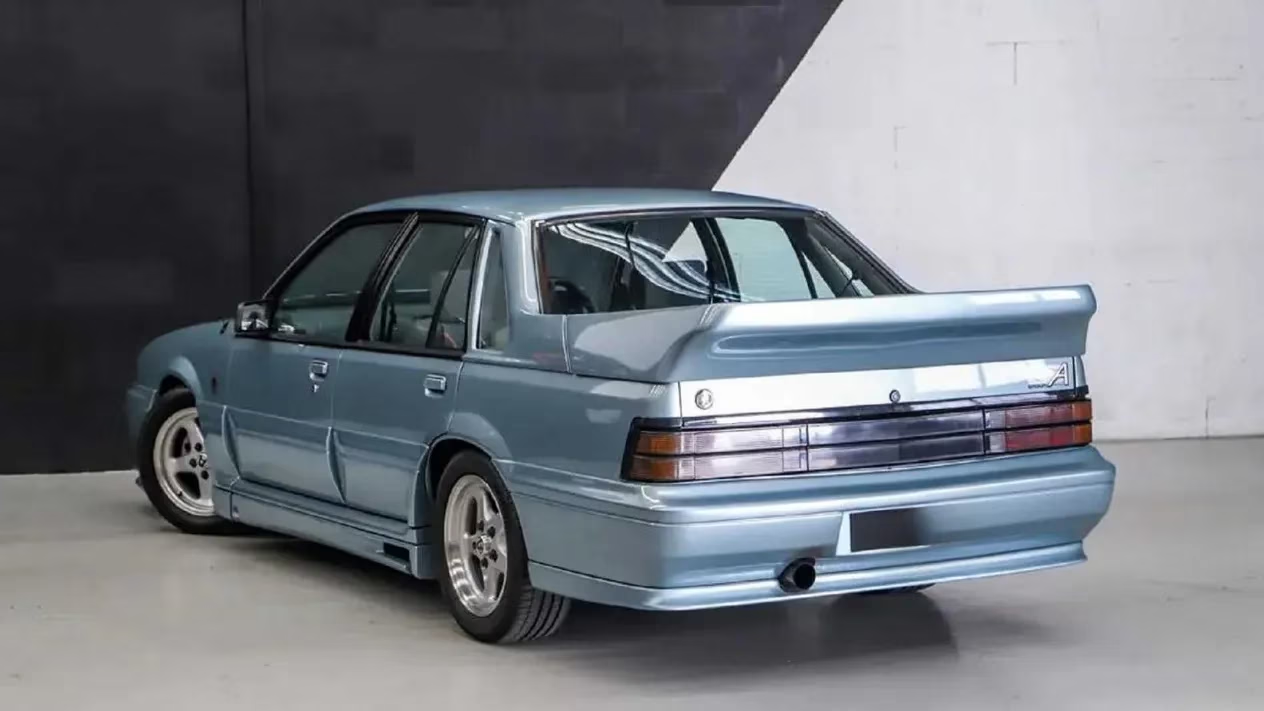
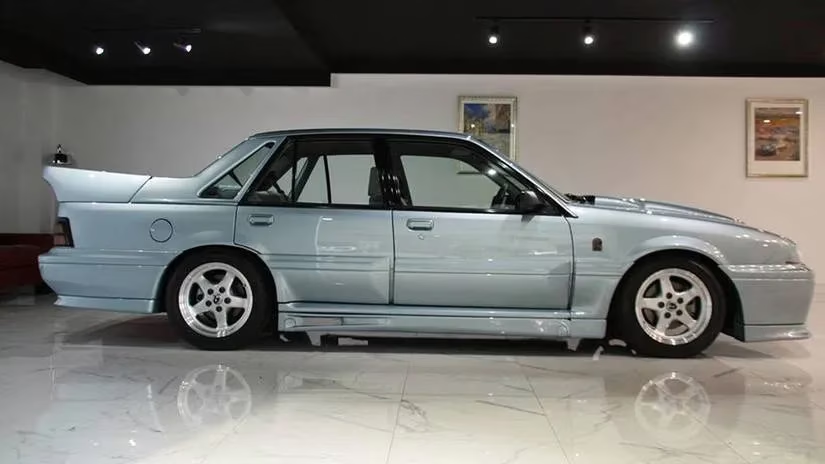
Let’s rewind to January 1986. Group A touring-car regulations had just kicked in, requiring each manufacturer to build at least 500 road-going versions of their race weapon if they wanted to go door-to-door at Bathurst. Holden, GM’s Aussie arm, didn’t just tick the box—they hired Tom Walkinshaw’s TWR outfit and went slightly berserk. The result was the SS Group A SV. Every panel wore a hand-finished paint job and factory decals, but the body was peppered with plastic addenda: a massive rear wing, side skirts, a deep chin spoiler, and pumped wheel arches. The liberal use of composite materials earned the car its barnyard-inspired nickname, though anyone who saw it thundering down Conrod Straight knew it snorted like a thoroughbred, not a pig.
Under that family-sedan silhouette lived proper race hardware. The 5.0-litre Holden V8 was bored out to 5,320 cc, given high-flow heads, a camshaft lifted from a fever dream, and a blueprinting process that turned each engine into a hand-grenade of torque. The official numbers were 274 bhp at 5,200 rpm and 305 lb-ft of torque at 3,600 rpm, which in 1986 translated to a 0–60 mph time of roughly 6 seconds. That’s proper sports-car territory, and it arrived with four doors, a usable boot, and room for five if you didn’t mind your passengers being intimately acquainted. Power routed through a close-ratio five-speed manual gearbox—short, snappy throws for hunting apexes, a tall fifth for the highway cruise back home—and a heavy-duty limited-slip differential that turned both rear tyres into enthusiastic partners in crime.
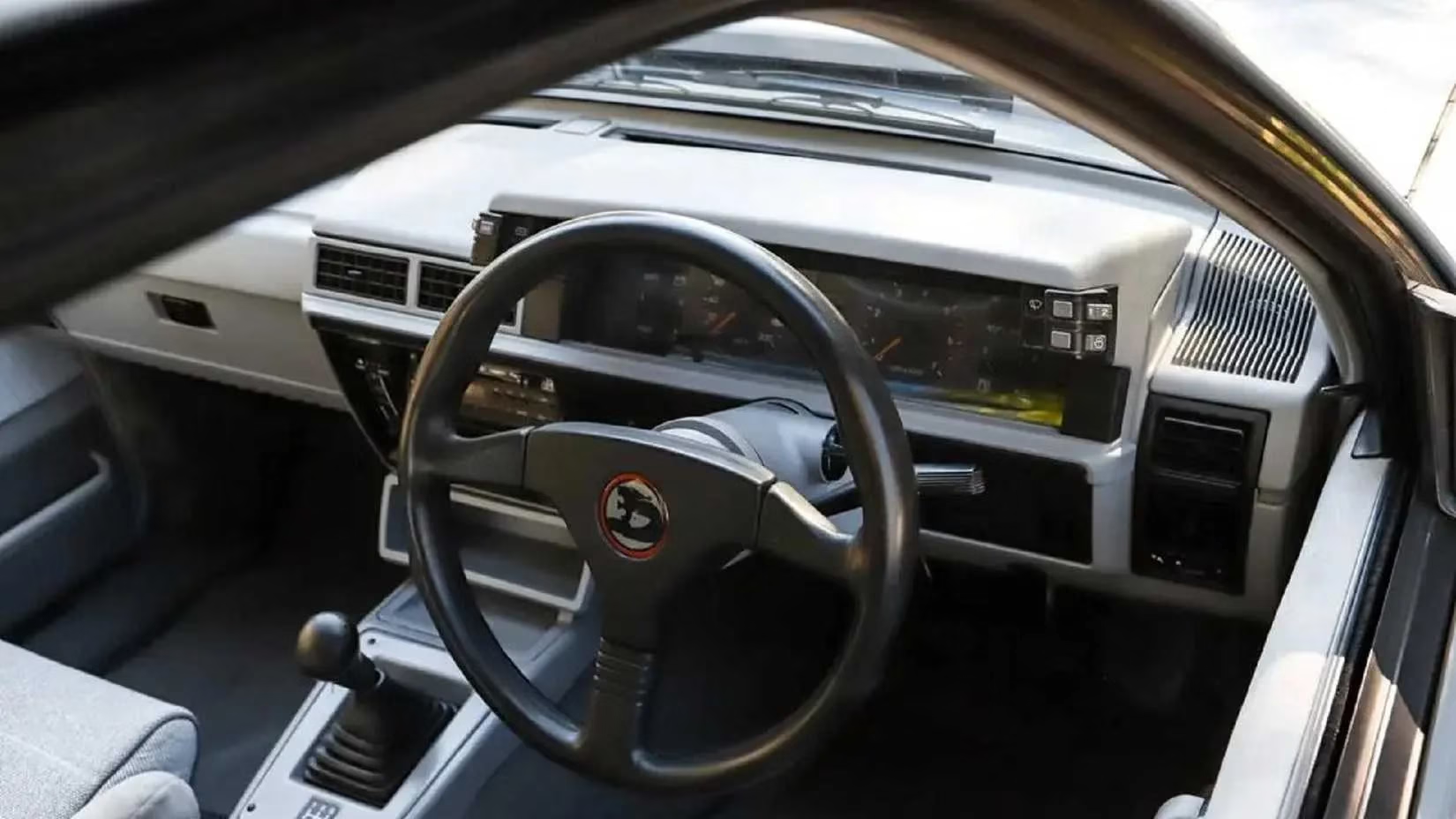
What made this Aussie bruiser so surreal was its split personality. At part-throttle, it hummed along like a mild-mannered executive express, the suspension—adjustable Koni dampers paired with uprated springs—soaking up urban scars without shattering spines. The cabin looked almost civilian: suede-insert Recaro-style seats, a four-gauge auxiliary cluster keeping tabs on oil temperature and volts, plus air conditioning and electric windows because Australians like their arctic blasts. But bury the right foot and the mask dropped. The V8 gulped atmosphere through a cold-air intake, the twin exhausts howled in baritone, and the whole ensemble launched forward with the kind of savage low-end grunt that made drag-strip rivals reconsider their life choices. Brembo four-piston calipers on 280 mm vented discs ensured you could shed all that speed without religion.
On the circuit, the SV didn’t just compete—it pulverised expectations. In its debut season it grabbed outright victory at the Australian Touring Car Championship round at Oran Park. Later that year at Bathurst, SV entries wrestled BMW M3s and Nissan Skylines on the lead lap, their low-end torque clawing out of corners where high-strung rivals had to wait for revs. By 1987, Brock and co-drivers had snatched pole position at the Mountain, and the car collected a string of class wins at Sandown and Lakeside. The secret sauce wasn’t magic—it was a chassis with a thicker front anti-roll bar, harder bushings, and revised trailing-arm geometry that put power down with a brutality that felt telepathic. Every victory reminded the world that a homologation special from the Southern Hemisphere could humble purpose-built German and Japanese icons.
Only 500 cars emerged between January and June 1986, each carrying a numbered plaque on the dashboard and a price tag around A$47,000—more than double a standard Commodore. They sold out in a heartbeat. Today, in 2026, a pristine, documented SV can comfortably crack the A$250,000 mark at auction, and even restoration projects command eye-watering sums. Rarity has turned original aero parts and those chunky 15-inch Pirelli-wrapped steel wheels into treasured relics, traded among a secretive network of Holden fanatics.
The SV’s legacy rippled through subsequent Holdens. The turbocharged VL SS Group A arrived in 1987 with Nissan’s RB30 engine, and the VN SS Group A Evolution of 1988 added slicker aero. Yet purists know the Walkinshaw touch and the raw, all-motor fury of the original SV remain untouchable. I’ve seen these cars still tearing up historic meets at Bathurst in the 2020s, their exhaust notes a brassy reminder that Australia once built the fastest sedan in the world—and wrapped it in the body of a dad-mobile that would never, ever be invited to the school run.
Comments