
It’s a universal truth for gearheads. At some pivotal moment in any automotive build, you’ll find yourself flat on your back on unforgiving concrete, squinting through grimy eyes at a labyrinth of wires and hoses, questioning all your life choices. That was the reality just last week, wrestling with a new wiring harness and a makeshift Y-pipe for a Dodge Ram Hemi engine swap. Progress felt glacial, with countless small tasks checked off yet leaving the truck looking deceptively unchanged from the top. But beneath the surface, the puzzle pieces were finally clicking into place, bringing the dream of a roaring Hemi tantalizingly close to reality. 🛠️
The Y-Pipe Puzzle: Making Old Parts Play Nice 🔧
The most significant hurdle tackled recently was the exhaust system. A direct bolt-on solution simply didn't exist. The Y-pipe designed for the truck's original 4.7L Magnum engine wouldn't mate with the new 5.7L Hemi heart. Given that a proper, brand-new Hemi Y-pipe with its integrated catalytic converter costs nearly as much as the engine itself, and with the Hemi's health still unproven, a temporary fix was the smart move.
The solution? A bit of fabrication ingenuity. Early 5.7L Hemi trucks use a similar catalytic converter placement as the 4.7L, so with the existing exhaust manifolds from the donor engine, it was possible to splice them onto the old Y-pipe using universal exhaust components. It’s far from a show-quality piece, but it’s a functional, budget-friendly bridge to confirm the engine runs before committing to the final, correct exhaust setup.
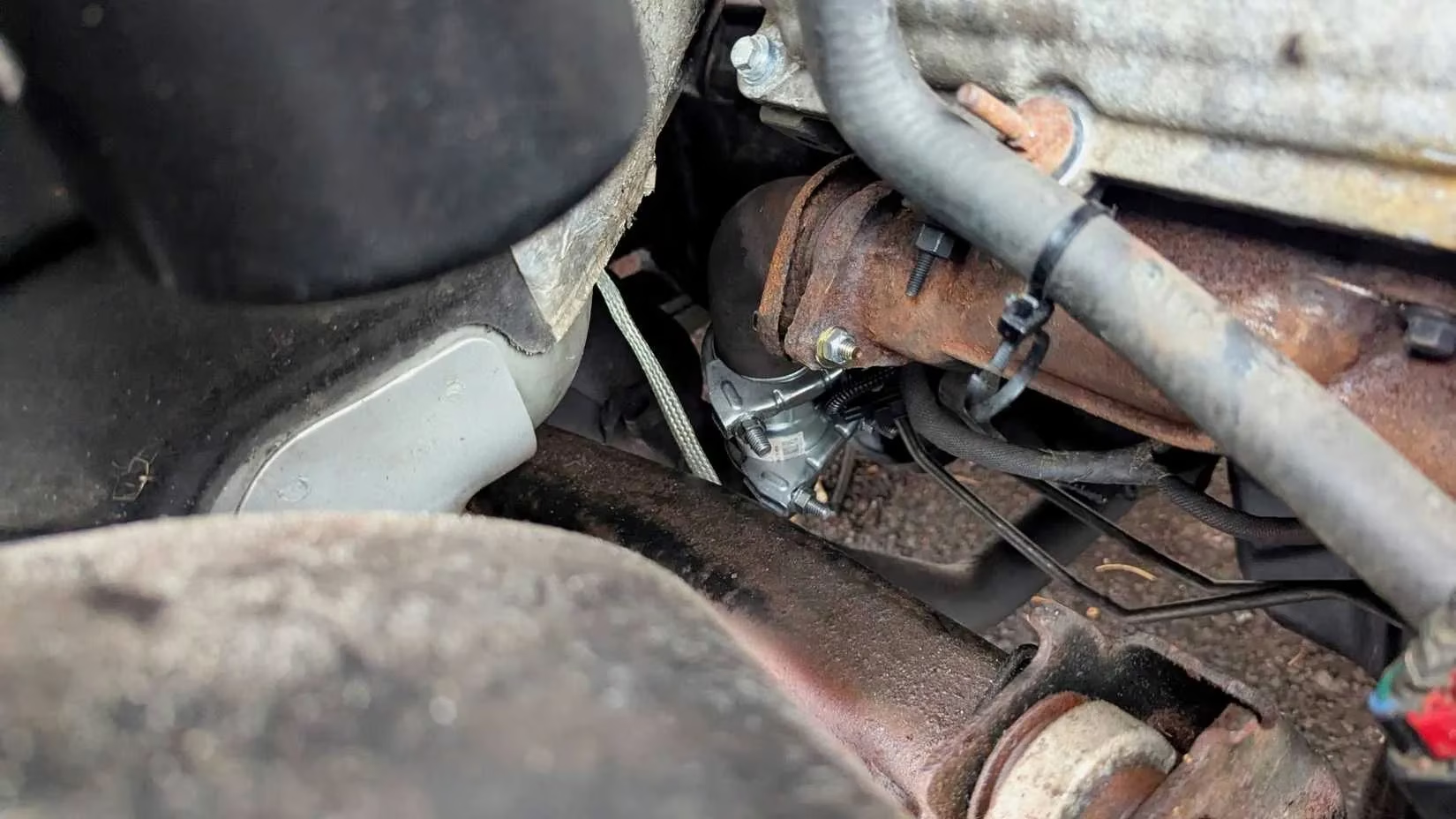
Tackling the Nasty Jobs First: A Strategy for Sanity 🧠
There’s a method to the madness. By confronting the least glamorous, most cumbersome tasks first—the ones lurking under the truck—you clear the path for the more rewarding work. With the Y-pipe sorted, attention turned to the rest of the chassis. The transfer case was reinstalled, along with all the critical crossmembers that secure the driveline and suspension. Every bolt turned was a battle against rust, showering the intrepid builder with a gritty confetti of decay. Yet, perseverance paid off; everything assembled with surprising ease. Even mating the torque converter to the flywheel was straightforward with the engine bay wide open.
The remaining undercarriage chores are refreshingly simple: plumbing the transmission cooler and installing the starter. These are quick wins waiting to happen.
The Deceptive Engine Bay & Lingering Electrical Gremlins ⚡
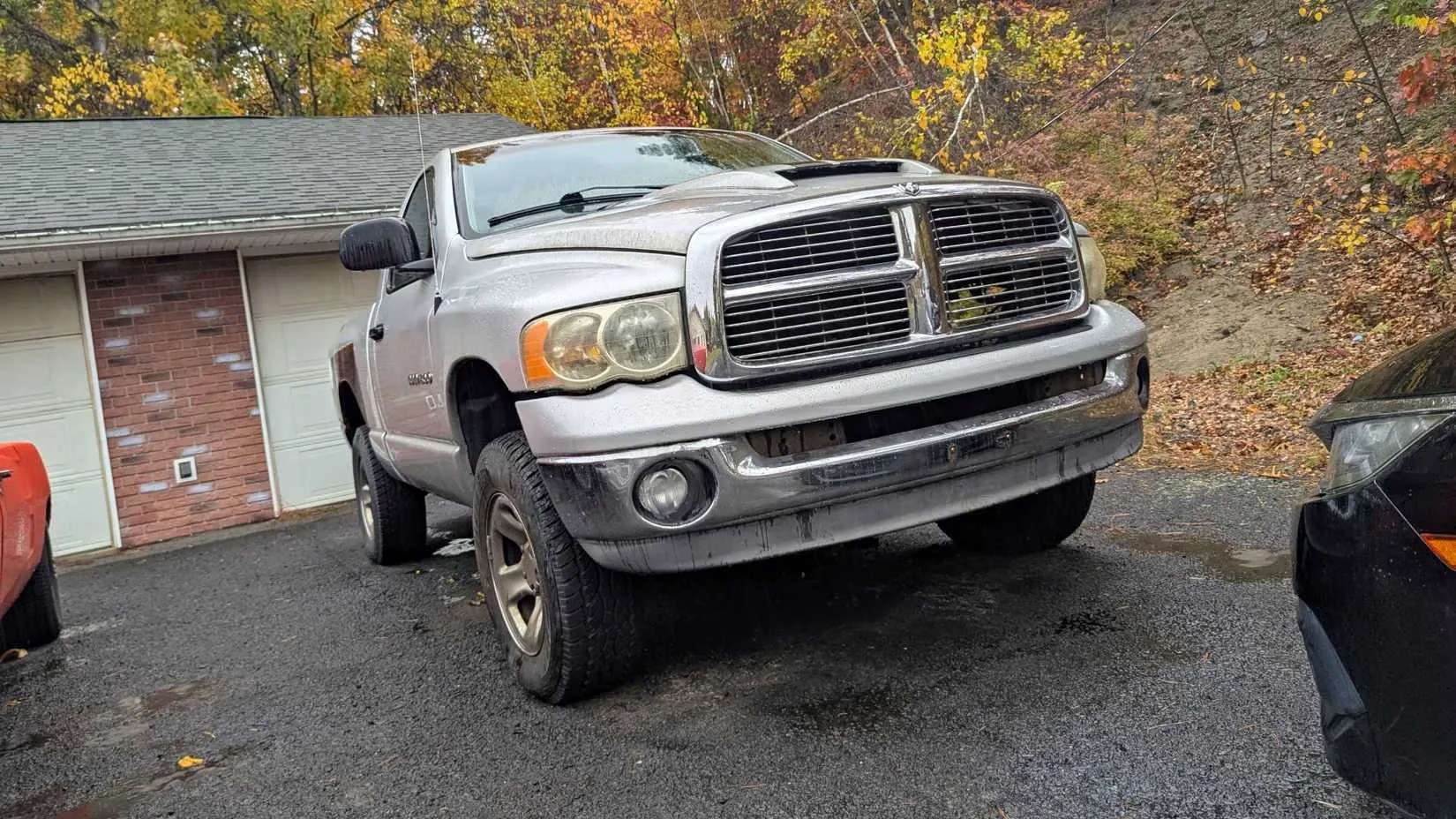
Peering into the engine bay now, with the Hemi sitting bare, can be misleading. It looks like a mountain of work remains. In truth, the bulk of the heavy lifting is done. What’s left are the more accessible components—intake, accessories, cooling system—tasks that can be knocked out in a focused afternoon. The confidence is building that a running, driving Hemi-powered Ram is a very real possibility in the near future.
However, the journey isn’t over. The electrical system always has the final say. A few sensor connectors and harness interfaces require careful swapping or modification. It’s not a catastrophe, but it demands patience and meticulous attention to detail. One wrong connection could mean the difference between a triumphant first roar and a disappointing silence.
The Final Countdown Checklist:
-
✅ Fabricated temporary Y-pipe & exhaust
-
✅ Installed transfer case & crossmembers
-
✅ Bolted torque converter to flywheel
-
🔄 Plumb transmission cooler lines
-
🔄 Install starter motor
-
🔄 Resolve sensor/connector wiring
-
🔄 Final engine bay assembly & fluids
The stage is set. The gritty, under-truck warfare is largely complete. Now, the project ascends into the light of the engine bay for the final act. Will this budget-minded Hemi swap fire to life as a glorious V8 symphony, or will it be a lesson in humility? The answer lies in those last few connections. The next turn of the key will tell the whole story. 🚀💨
Comments