
It has four doors, a comfy leather-lined cabin, a boot spacious enough for golf bags and a Labrador, and an infuriatingly normal silhouette that wouldn't raise an eyebrow at a suburban school drop-off. Yet in 2026, this unassuming Mercedes E-Class—breathed upon by the mad scientists at Brabus—still holds a world record that makes billion-dollar hypercar dynasties weep into their carbon-fiber monocoques. Its verified top speed? A ludicrous, physics-slapping 227.2 mph (365.7 km/h). You heard that right—over two decades after its launch, not a single production sedan has officially gone faster. The Brabus E V12 “One of Ten,” affectionately dubbed the Black Baron, remains the undisputed king of four-door velocity, a silent middle finger to every supercar that ever thought it was quick.
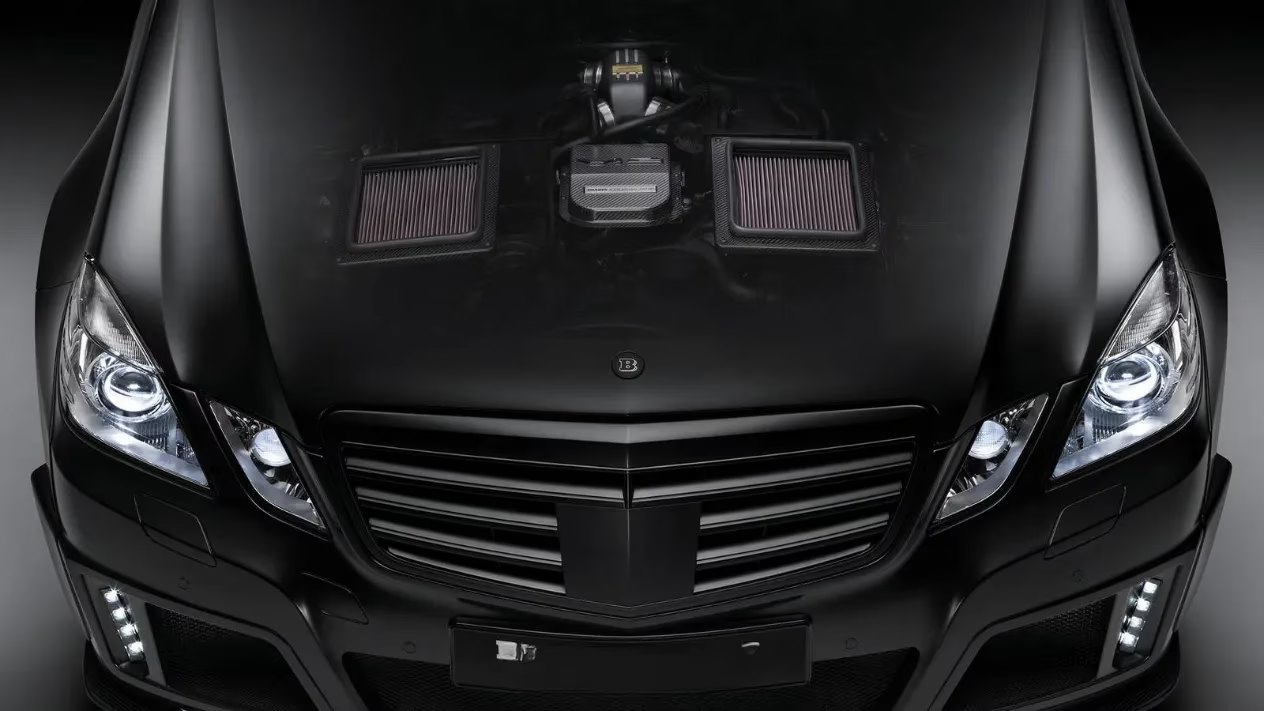
Let’s get one thing straight: this was no ordinary tuner special. Back in the mid-2000s, while Mercedes-AMG was busy polishing its V8 Kompressor halo cars, Brabus decided to throw the entire kitchen sink—and maybe a few unexploded grenades—at the humble E-Class platform. The result was a sedan that didn’t just rewrite the record books; it ripped out the pages, set them on fire, and used the ashes to fuel its monstrous V12. Under the sculpted hood lurked a heavily reworked 6.3-liter twin-turbo V12, based on AMG’s M275 block but comprehensively rebuilt with forged pistons, custom connecting rods, a reinforced crankshaft, and Brabus’s own high-flow twin-turbo system. Horsepower? A tire-vaporizing 800 hp. Torque? An electronically neutered 811 lb-ft—because the gearbox would have otherwise surrendered at the first prod of the throttle. 0–60 mph arrived in under four seconds, which was face-melting for a luxury barge that could also chauffeur the CEO, his family, and their Great Dane.
But the real party trick was the Black Baron’s unnerving ability to stretch its legs on the autobahn as if it had an endless, invisible tether to the horizon. While supercars of the era—Ferraris, Lamborghinis, even the mighty McLaren F1—were busy carving corners or posing outside Monaco casinos, this beefed-up Mercedes just kept pulling, wind noise barely disturbing the Alcantara-and-leather serenity inside. The record was officially certified by Guinness World Records, a crown that still sits on the E V12’s head as of 2026. Think about that: the McLaren F1, a lightweight, central-seat, carbon-fiber icon, topped out at 221 mph. The Brabus sedan beat it by over 5 mph, all while offering air conditioning and a trunk. Heck, even G-Power’s manic M5 Hurricane RR reportedly nudged past 230 mph, but without the same globally recognized verification, it remains an outlaw legend.
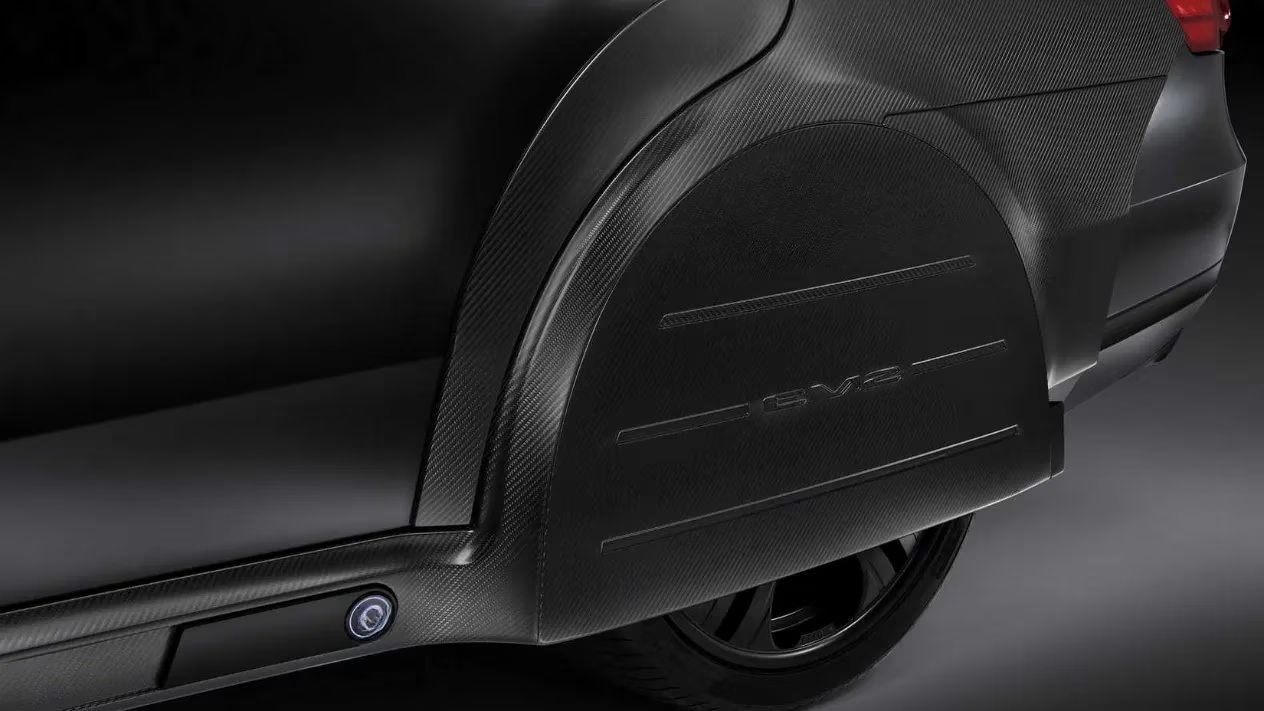
Brabus didn’t just wake up one morning and decide to build a 227 mph sedan. The E V12 dynasty traces back to the W124 generation, where they first crammed a 7.3-liter V12 into an executive shell, then to the W210 that nabbed a Guinness record for the fastest four-door at 205 mph. But the W212-based “One of Ten” was the crescendo, the final symphony of excess before the automotive world began its slow, whirring pivot toward electrification. Only ten were ever built—hence the name—and each carried a price tag deep in Bugatti territory, around $875,000 back in 2006. That bought you hypercar-slaying capability wrapped in a suit so understated it could ghost through a diplomatic convoy unnoticed. Aside from the quad exhaust tips, mildly swollen arches, and those trick carbon aerodynamic spats that kept the rear axle glued at terminal velocity, the average onlooker would mistake it for a well-optioned taxi.
Inside, the madness was swaddled in opulence. The Black Baron’s cabin was a symphony of Brabus-branded leather, Alcantara, and every luxury gadget Mercedes had on offer. It was the ultimate Q-car: part boardroom, part ballistic missile. As one Brabus engineer might have whispered into the V12’s intake, “Let’s see a Bugatti do the school run at 365 km/h.” The result was a machine that didn’t just set records—it defined an attitude. Keep your carbon wings and titanium exhausts. This sedan proved that true performance could wear a three-piece suit and a poker face.
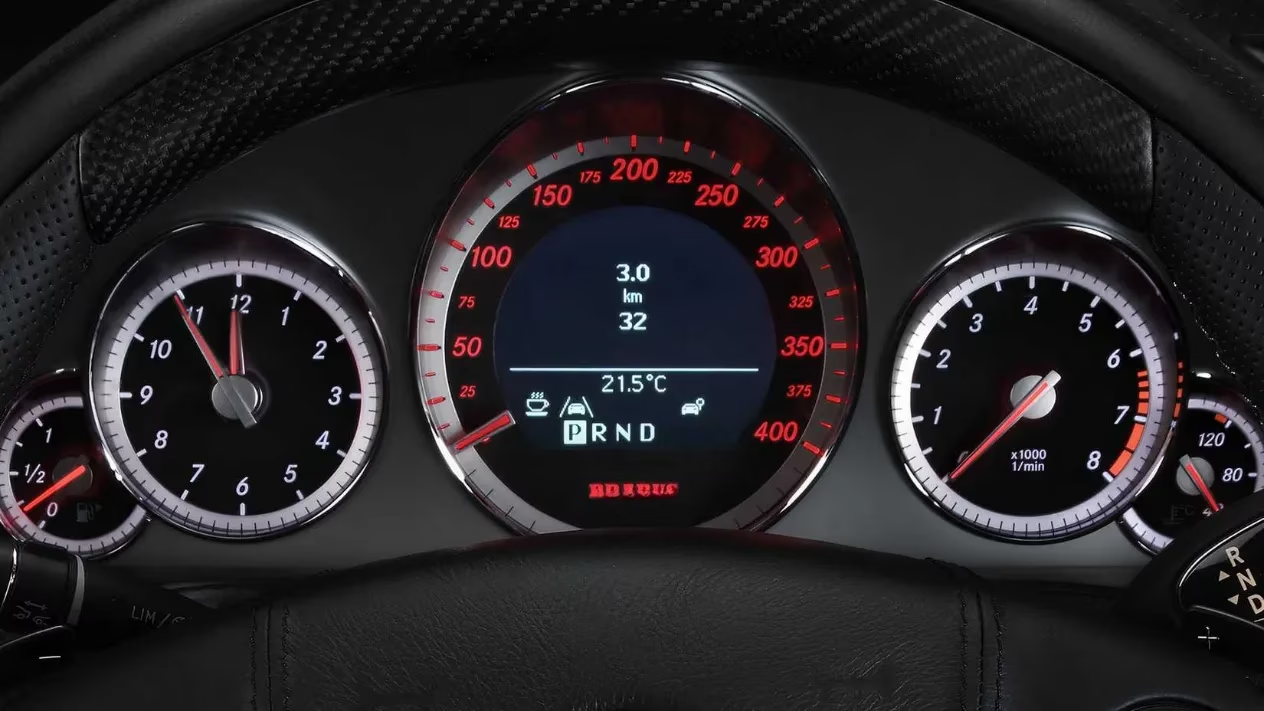
Today, in 2026, the world has changed. We have electric sedans that hit 60 mph in under two seconds, hypercars with hybrid torque vectoring, and a global obsession with Nürburgring lap times. Yet the Brabus E V12’s top-speed record remains monumentally untouched by any production four-door. It’s a fossil from a bygone era—but one that still laughs at modern machinery from its climate-controlled vault. Finding a Black Baron in the wild is about as likely as spotting a unicorn playing poker; the ten units are tucked away in private collections, only occasionally unleashed for a high-speed autobahn pilgrimage that reminds the world why brute force never goes out of style. For those who know, the E V12 is more than a car. It’s a two-ton paradox, a rolling monument to the fact that sometimes, the craziest thing you can do is put a fighter-jet engine in a sensible suit and let it howl.
So here’s to the Black Baron, the silent assassin that still holds court in 2026. While the rest of the planet chases electric gimmicks and track-conqueror badges, this sedan’s legacy remains etched in speed—pending, perhaps, for another two decades until someone finally dares to knock it off its throne. But frankly? Nobody’s holding their breath.
Comments