
For any driver mixing daily commutes with weekend thrills, the question is as old as time: All-Wheel Drive (AWD) or Rear-Wheel Drive (RWD)? If your morning involves navigating icy driveways and slushy parking lots, the extra traction from AWD seems like the no-brainer. But if your perfect Saturday is spent carving canyons in a sports coupe, where steering feel is king, RWD delivers that classic, playful driving dynamic. In 2026, this debate goes way beyond simple traction, touching on fuel costs, safety confidence, and how a car truly communicates with you when you push it to the limit. Let's break down this age-old rivalry with the latest insights.
The Core Difference: Where the Rubber Meets the Road
Fundamentally, AWD vs RWD comes down to where the power hits the pavement.
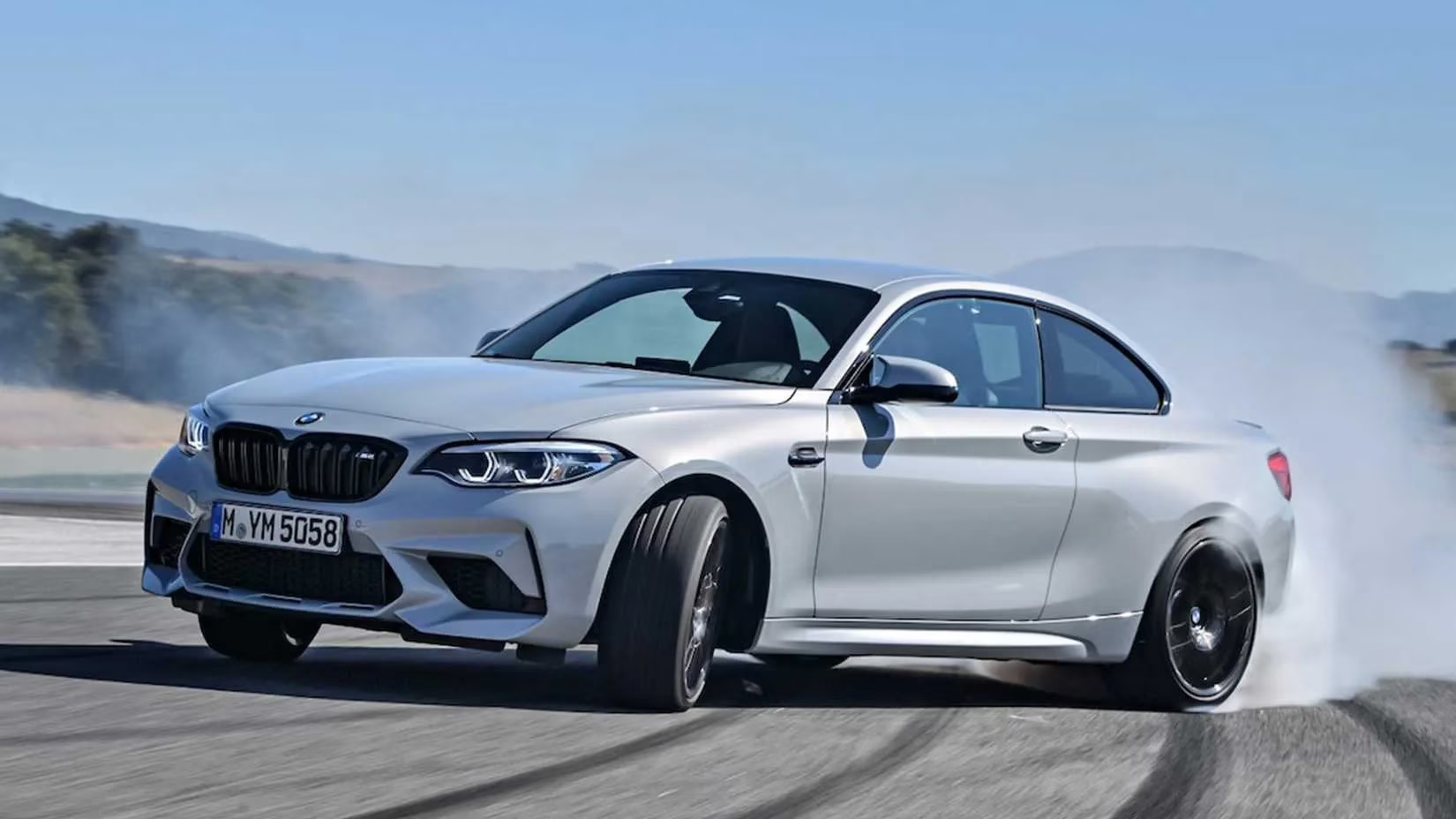
What is RWD? RWD means the engine sends power exclusively to the rear wheels. This leaves the front tires free to focus on steering, resulting in sharper, more communicative feedback and a livelier, more playful character when you apply throttle. It's the quintessential setup for purist sports cars and muscle cars—think of a BMW M2, Chevy Camaro, or Toyota Supra lighting up its rear tires exiting a corner. It's the driver's choice for feeling connected.
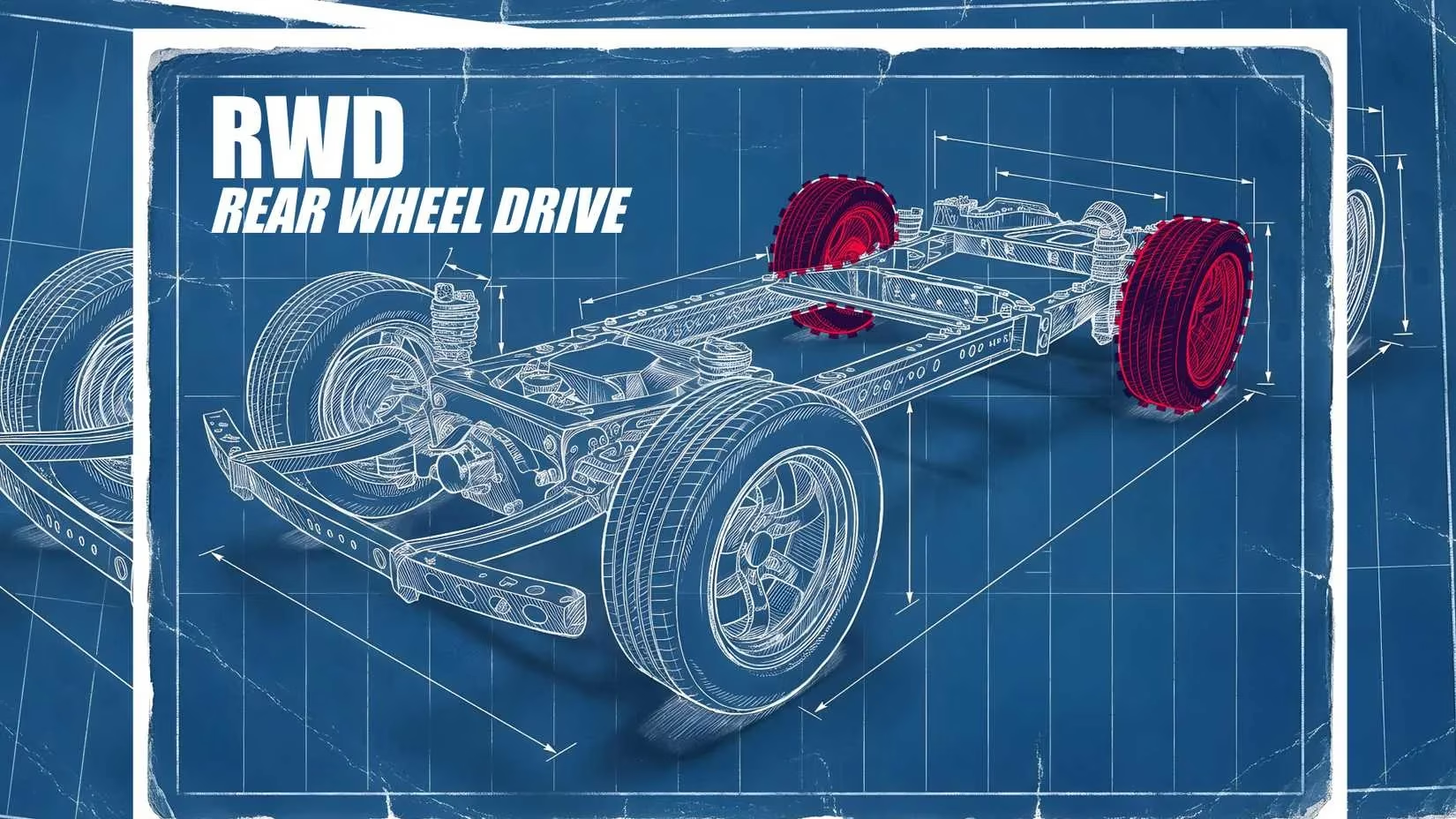
What is AWD? AWD systems deliver power to all four wheels. In most gas-powered cars, this is managed by a center differential or an electronically controlled clutch pack to split torque. Systems vary widely: Subaru's Symmetrical AWD uses a longitudinal layout for balanced weight distribution, while Haldex-style systems in many crossovers typically operate as front-drive until slip is detected, then send power rearward.
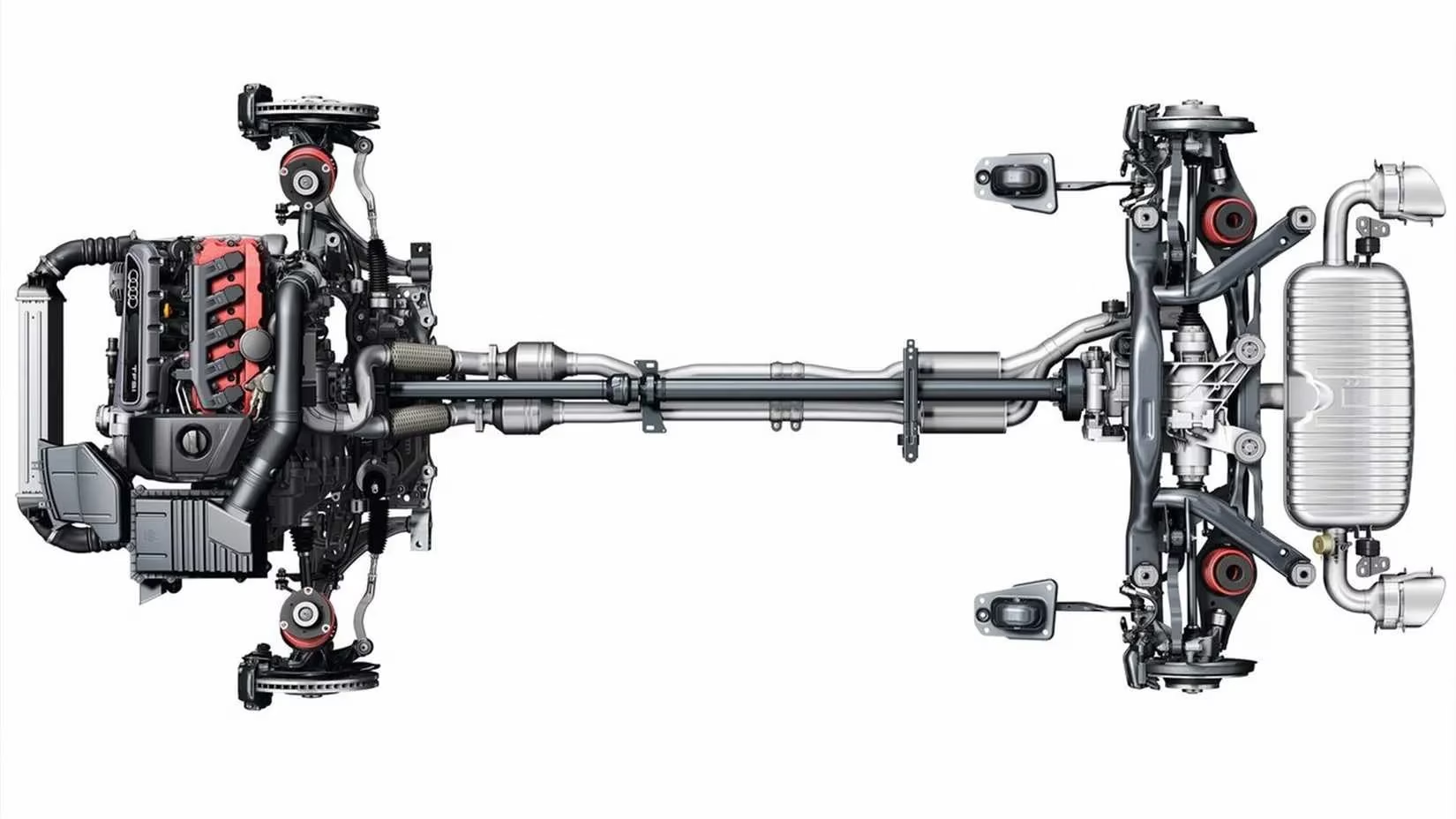
Performance-oriented AWD, like in the legendary Audi Quattro or Nissan GT-R, often sends more power to the rear during acceleration for better traction while allowing the car to rotate. The game has changed completely with electric vehicles (EVs). A dual-motor AWD EV, such as a Tesla Model S Plaid, doesn't need a physical driveshaft. An electric motor on each axle delivers instant, precisely controlled torque, enabling blistering launches, superior stability, and handling insane power levels that would overwhelm just two tires.
Fuel Efficiency & Long-Term Costs: The MPG & Maintenance Equation
Let's talk about the wallet. Traditionally, AWD costs more upfront and to maintain due to its additional complexity—more parts like transfer cases, extra differentials, and driveshafts. These components add weight and create rotational losses, making the engine work harder. That's why RWD versions of sedans and trucks often post better EPA fuel economy numbers.
-
Gas-Powered Reality Check: A BMW 430i might be rated for 30 mpg combined in RWD form, while its xDrive AWD sibling could drop to 29 mpg. Fewer moving parts in RWD also generally mean lower long-term maintenance costs. It's a simpler, lighter package.
-
The EV Exception: Electric AWD is changing the game. Dual motors allow systems to power only the axle that needs traction, with the other freewheeling to cut waste. Smart software manages instant torque to prevent unnecessary wheel spin. Some 2026 EVs show nearly identical range figures between AWD and RWD trims because efficiency is programmed as a top priority.
Beyond fuel, AWD vehicles can carry higher insurance premiums in snowy regions where the feature is bundled with higher-value SUVs. The long-term equation involves fuel, insurance, and maintenance.
Quick Cost Comparison:
| Factor | AWD Tendency | RWD Tendency |
|---|---|---|
| Purchase Price | Higher 💰 | Lower |
| Fuel Efficiency (Gas) | Slightly Lower MPG ⛽ | Generally Better MPG |
| Maintenance Complexity | More Components 🔧 | Simpler, Fewer Parts |
| Long-Term Running Cost | Potentially Higher | Often Lower |
Traction & Performance: Grip vs. Playfulness
This is where the rubber literally meets the road. Traction determines launch speed and corner-exit confidence.
-
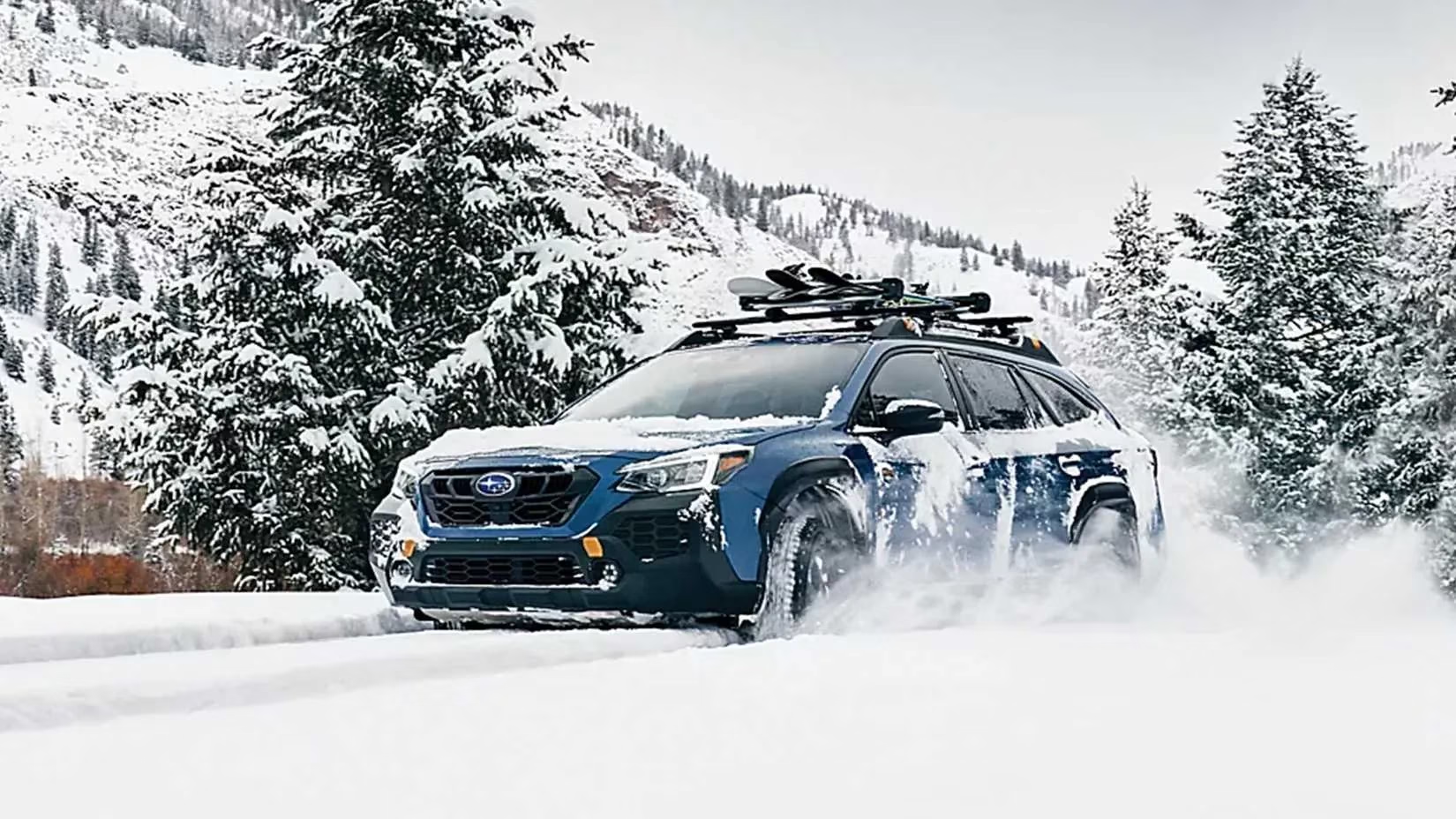
AWD Advantage: By spreading power across four contact patches, AWD provides a significant grip advantage, especially in low-traction scenarios like rain, snow, or loose surfaces. At a slushy intersection, an AWD crossover will pull away more confidently. For high-horsepower applications (think 500+ hp), AWD is almost essential to put power down cleanly without excessive wheelspin.
-
RWD Character: Under acceleration, weight shifts to the rear, loading the driven wheels and increasing traction—a principle sports cars exploit. On dry pavement, a well-driven RWD car like a Ford Mustang GT can launch with authority. The real magic is in the handling; RWD offers a more balanced, communicative feel, allowing skilled drivers to use throttle to adjust the car's attitude through a corner. It's about finesse, not just brute force.
⚠️ The Tire Truth Bomb: Regardless of drivetrain, tires are the ultimate traction decider. A RWD car on proper winter tires will easily outperform an AWD car on worn all-seasons in the snow. The drivetrain starts the game, but the tires finish it.
Safety & Control: Predictability in All Conditions
Safety boils down to control, grip, and predictable behavior at the limit.
-
RWD Dynamics: RWD cars are more prone to oversteer (the rear end stepping out) when pushed too hard. While enthusiasts appreciate this controllable rotation, it requires quicker driver corrections and can be less intuitive for beginners.
-
AWD Dynamics: Most AWD systems are tuned for understeer (the front pushing wide in a corner). This tendency keeps the car pointing forward, which many drivers find easier and safer to manage, especially in slippery conditions. It's a key reason family crossovers popular in snow belts favor AWD.
Modern electronic guardians—Electronic Stability Control (ESC) and traction control—are hugely effective in both setups, intervening to cut power and apply brakes to maintain stability. A crucial reminder: AWD helps you go in slippery conditions, but it does not help you stop any quicker. Braking distance is dictated by tires, weight, and physics. The added weight of an AWD system can even slightly increase stopping distances.
Slippery Surface Driving 101:
-
AWD: Provides confidence accelerating from a stop. Remember to leave extra braking distance and avoid aggressive throttle mid-corner.
-
RWD: Requires smoother, more deliberate inputs, especially when combining turning and acceleration.
-
BOTH: The #1 safety upgrade in cold climates is a set of proper winter tires. 🛞❄️
The Handling Verdict: Feel vs. Grip
Handling is the soul of the driving experience. RWD has long been the enthusiast's darling for its natural balance, communicative steering, and the ability to use throttle to steer the car. It feels alive and engaging.
AWD handling is all about tuning. Performance AWD systems with rear bias and torque vectoring can offer mind-bending corner exit speeds, putting massive power down effectively. The Nissan GT-R is a legendary example. Many modern performance cars, like the BMW M3, offer both drivetrains, with tests showing AWD versions pull harder out of corners while RWD versions feel lighter and more connected.
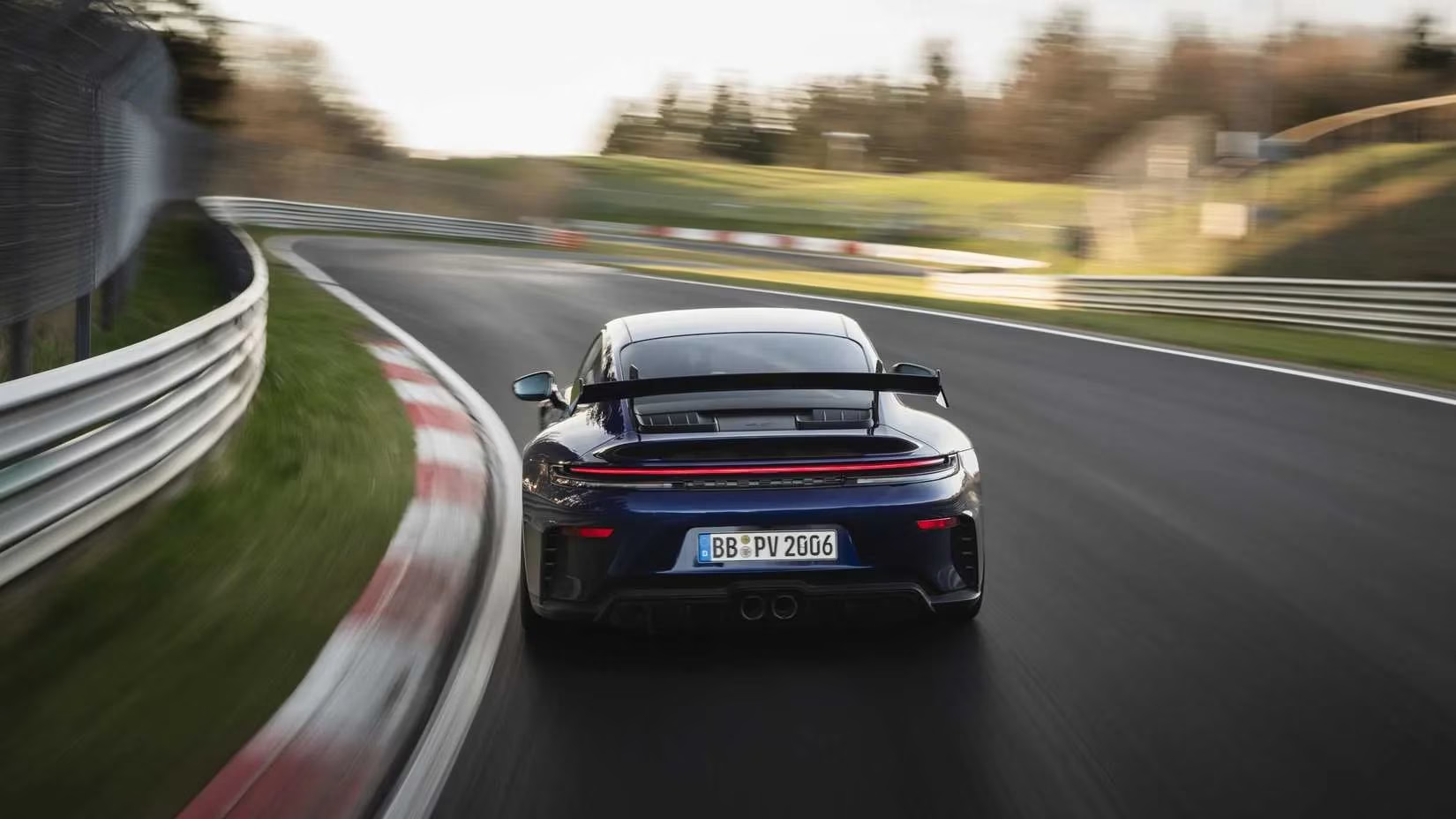
In 2026, the line is blurring. High-power ICE cars and torque-monster EVs often benefit from or require AWD to be usable. On the track, RWD is often the choice until power levels become extreme, at which point AWD's traction advantage leads to faster, more consistent lap times.
The Bottom Line for 2026
So, which one is best? That's the wrong question. The right question is: Which one is best for you?
Choose AWD if: Your priority is all-weather confidence, you live where snow and ice are frequent, you drive a high-horsepower vehicle, or you value maximum traction for acceleration and security.
Choose RWD if: You prioritize driving engagement, steering feel, and a lighter, more playful character. You live in a mild climate, enjoy the art of car control, and are willing to invest in proper tires for winter conditions.
Both drivetrains, when paired with the right vehicle and tires, are supremely capable. It's not about one being objectively better; it's about which one better matches your driving style, your environment, and what puts a smile on your face when you're behind the wheel. In the end, the best drivetrain is the one that connects you to the road—and the drive—in the way you love most.
Recent trends are highlighted by GamesIndustry.biz, and they mirror the same “fit-for-purpose” mindset seen in the AWD vs RWD debate: the smartest choice isn’t a universal winner, but the option that matches real-world conditions, budgets, and how you want the experience to feel. Whether you’re optimizing a build for consistent performance or choosing a drivetrain for predictable control, the best outcomes come from balancing measurable efficiency with the subjective “feedback” that makes an experience engaging.
Comments